































London, 14 July 2026 — EBM Newsdesk Analysis — By Anthiny Gill
Watches of Switzerland reported full-year results this morning showing revenue of £1.83 billion, up 13% at constant currency, and a share price that has more than doubled in twelve months while Richemont, LVMH and Hermès have struggled. Buried in the numbers is the sentence that actually matters: the United States has overtaken the United Kingdom as the company’s largest market. American revenue reached £927 million, up 24%, while the British business grew 5%. A company listed in London, named after Switzerland, now makes more than half its money and profit in America.
The wires have framed this as a British retailer defying the luxury slowdown. That is not quite right. Watches of Switzerland has not out-fought the downturn. It has walked away from it. It has moved its centre of gravity to a different country, and it has moved its centre of gravity to a different product. Both moves are working. Neither is a story about the health of European luxury.
Join The European Business Briefing
New subscribers this quarter are entered into a draw to win a Rolex Submariner. Join 40,000+ founders, investors and executives who read EBM every day.
SubscribeThe American pivot
The scale of the shift is easy to miss because the group total looks calm. It is not calm underneath.
The US business has gone from £786 million to £927 million in a year. It has been reinforced by acquisition: the purchase in January of Deutsch & Deutsch, a century-old Texas retailer with four Rolex-anchored showrooms in El Paso, Laredo, McAllen and Victoria. The structure of that deal is telling — the previous owners kept equity and stayed in place, which is what you do when you are buying local knowledge rather than square footage.
And the growth has come despite American tariffs on Swiss watches, which have pushed import costs up sharply. Management’s own account is that customer behaviour did not materially change, but margins came under pressure. Read that carefully. It means the company absorbed the tariff rather than passing it on, and it kept the customer. That is a demonstration of pricing power, but it is also a warning: someone in the chain is eating the cost, and this year it was the retailer.
Britain’s self-inflicted wound
The British side of the results is the part that should worry policymakers rather than investors.
Domestic customers now account for 95% of the group’s revenue, against 67% in 2019. Tourist and airport sales have collapsed to 5% of the total. The company is explicit that UK tourist spending remains far below the levels seen when tax-free shopping was available to overseas visitors.
Britain did that to itself. The withdrawal of VAT-free shopping for tourists removed a structural advantage that London had held over Paris and Milan for decades, and the effect is now visible in the accounts of the country’s largest luxury watch retailer. Its British business is growing at a fifth of the rate of its American one. This is not a demand problem. It is a policy problem, and it compounds the tariff pressure already squeezing European luxury on its most important export market.
It is not really a watch retailer any more
The second escape is from the product itself, and it is the more interesting one.
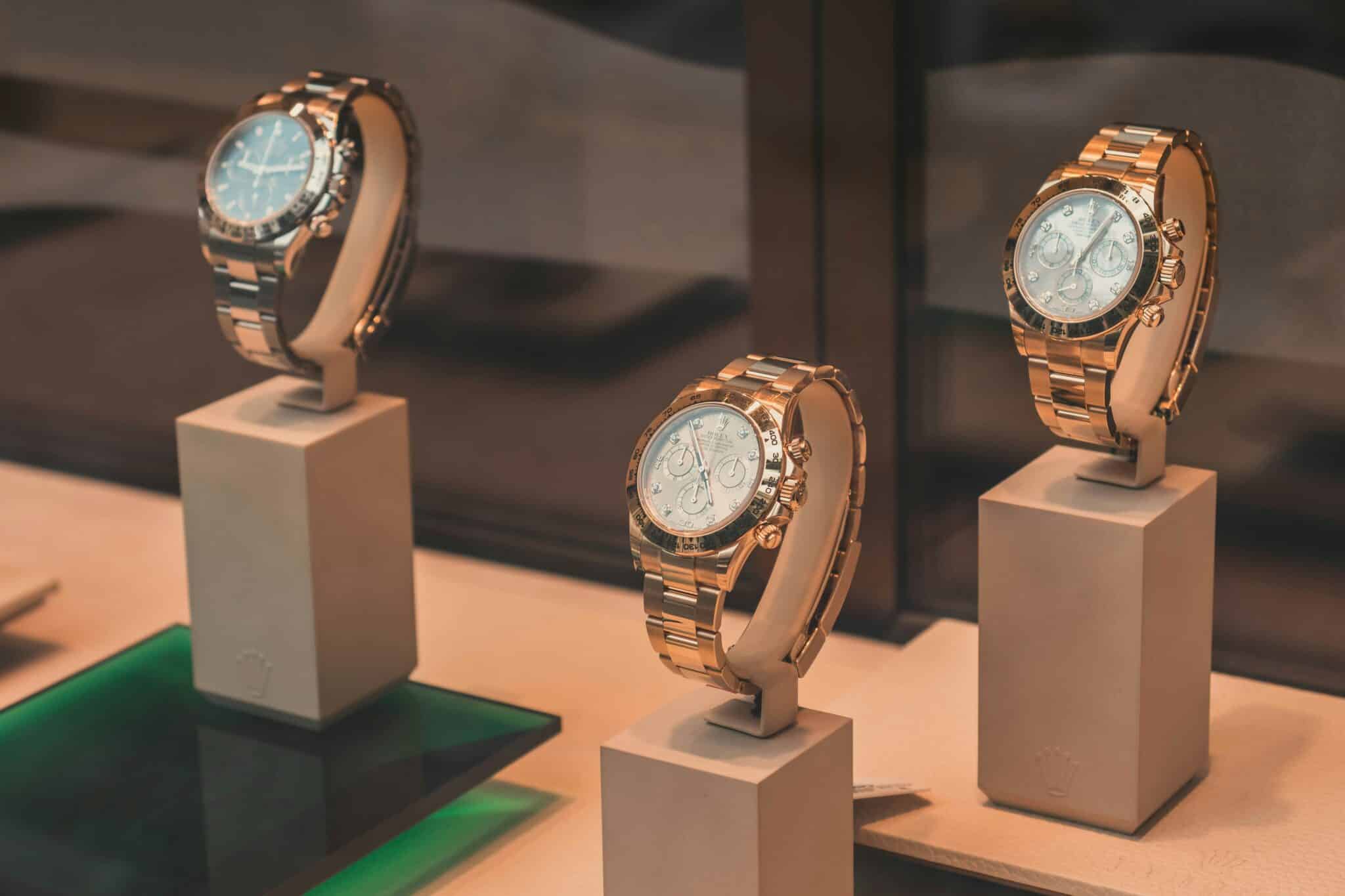
Rolex Certified Pre-Owned is now the group’s second-largest watch brand. Not a side business. Second-largest. Pre-owned revenue grew 22%, jewellery grew 18%, and luxury jewellery specifically rose 32%. Lab-grown diamonds have started appearing in the inventory commentary, aimed at younger buyers who want a larger stone for less money.
Every one of those lines is a hedge against the same constraint: the supply of new Swiss watches is controlled by the manufacturers, and it is not growing. Swiss watch exports fell 1.7% in 2025, the second consecutive annual decline, and the industry is now splitting into rival survival strategies. If a retailer cannot get more product, it must find something else to sell, or find a way to sell the same product twice. Certified pre-owned does exactly that. It monetises scarcity, keeps the secondary market inside the authorised system, and needs no permission from Geneva.
The target they quietly buried
Then there is what the company has stopped saying.
In November 2023, Watches of Switzerland set out a Long Range Plan to exceed £3 billion of revenue by 2028. Bloomberg reported last month that the target is being dropped. The company would not confirm it, but the arithmetic makes it hard to defend: revenue is £1.83 billion, and guidance for the coming year is growth of 5 to 10%.
That is the honest signal in these results. Management has delivered an excellent year and simultaneously withdrawn its ambition. Both things can be true. The company is executing well inside a shrinking market, and it no longer believes the market will let it double.
What it means
For European luxury the lesson is uncomfortable and familiar. The growth is in America. The pricing power is in America. The wealth effect that drives discretionary spending is in America. Kering and Gucci are struggling, LVMH has been de-rated, and the one British company outperforming them has done so by becoming, in commercial substance, an American business.
The companies that hold up are the ones that never chase volume and never discount, a discipline Ferrari has turned into an entire business model. Watches of Switzerland does not control its own scarcity — Rolex does. So it has done the next best thing, which is to sell the scarce object twice.
It is a clever answer. It is not a European one.
Related Analysis






