




























Dubai, 13 July 2026 — EBM Newsdesk Analysis — By Anthony Gill
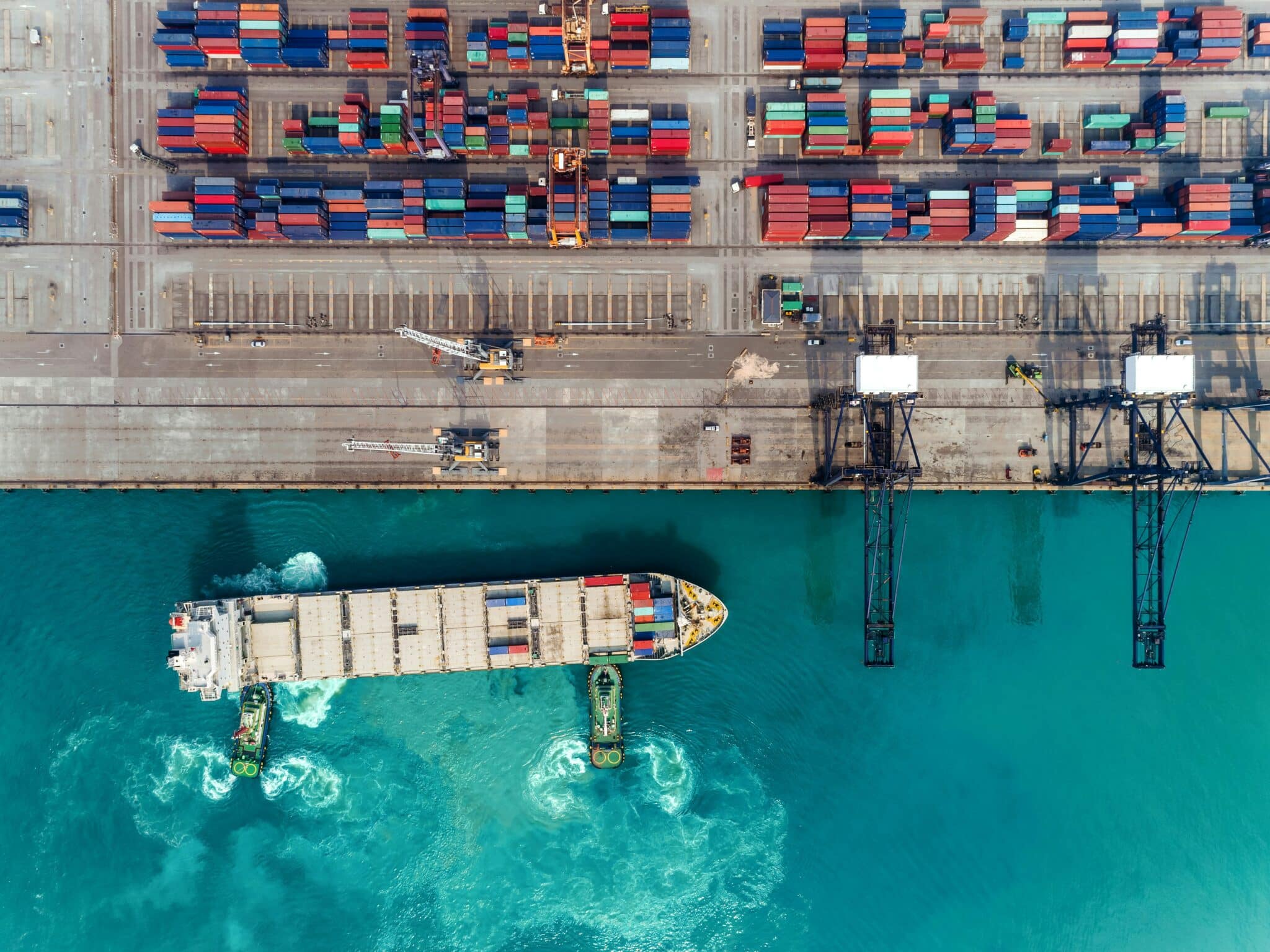
DP World is in talks to build a new multipurpose port at Fujairah, on the United Arab Emirates’ east coast, along with a new terminal at the existing harbour there, according to the Financial Times. The point of it is geography. Fujairah sits on the Gulf of Oman, outside the Strait of Hormuz, which means containers could enter and leave the country without passing through the waterway Iran has been blocking since February. Cargo would then be trucked overland to Dubai, Abu Dhabi and the neighbouring Gulf states. The number that explains the urgency is this: during the war, container traffic through Jebel Ali, Dubai’s flagship port and one of the largest in the world, fell from around 40,000 a day to 1,000.
That is a 97% collapse, and it is why this is not a contingency plan. Ports take years to build and cost billions. A company does not commit that capital to hedge a temporary disruption. DP World is writing off the assumption that the Strait of Hormuz will ever again be reliably open, and it is spending accordingly. That assessment, from the people with the best information and the most at stake, is the story.
Join The European Business Briefing
New subscribers this quarter are entered into a draw to win a Rolex Submariner. Join 40,000+ founders, investors and executives who read EBM every day.
SubscribeThe trap Dubai built for itself
The vulnerability is structural and it was decades in the making. Jebel Ali and Khalifa Port, the two facilities that carry almost all of the UAE’s container trade, sit inside the Strait of Hormuz. Every box that arrives at them passes through a waterway roughly 21 miles wide at its narrowest point, with Iranian territory on one side.
For fifty years that was a tolerable risk, because closing Hormuz was considered unthinkable. Since February it has been a fact. Khalifa alone handled around 5.5 million containers in 2024. When the strait closed, that capacity became stranded behind a chokepoint.
The east coast ports were the escape route, and they proved too small. Khor Fakkan has a theoretical capacity of five million containers a year but has never processed more than three. Fujairah handles around 720,000. Between them they could not absorb what Jebel Ali normally moves. The UAE resorted to air freight and rerouted cargo through Egypt and India to keep supply chains alive.
What they are actually building
The response is not one port. It is a second national trade artery.
Trade minister Thani Al Zeyoudi has set out a programme covering expansion at Fujairah, Khor Fakkan and Dibba, at least one additional harbour on the same coastline, new pipelines, and the rail and road links needed to connect the eastern ports to the country’s oil and gas fields. Construction of a second pipeline that would double crude export capacity through Fujairah has been accelerated and is due to be operational by 2027. A third petroleum pipeline is under study. No cost estimate has been given, but the investment will run to billions.
The existing Abu Dhabi Crude Oil Pipeline already carries up to 1.5 million barrels a day from Habshan to Fujairah, bypassing the strait entirely. It has been running since 2012. What is new is the intent to do for containers, petrochemicals and gas what has already been done for crude.
It will not be cheap, and the officials have been honest about that. Trucking containers overland from the east coast costs more than shipping them directly to Jebel Ali. Liquefied natural gas and aluminium are far harder to reroute than crude. And the UAE still depends on its Gulf-side ports for imports, so the exposure does not disappear.
Everyone is building except the people who need it most
Look at what the last five months have produced.
Saudi Arabia has leaned on its East-West pipeline to move crude to the Red Sea, bypassing Hormuz entirely. The UAE is fast-tracking pipelines and building ports outside the strait. In West Africa, Aliko Dangote’s refinery became the world’s largest exporter of jet fuel, supplying Europe precisely because the Gulf could not.
Every producer with exposure to the chokepoint is spending money to route around it. The one region that has built nothing is the one that suffers most when it closes.
Europe imports the consequences of Hormuz without owning any of the infrastructure that could soften them. It closed its refineries as unprofitable and leaned on Gulf supply. It has no pipeline alternative, no strategic terminal outside the strait, and no equivalent of DP World spending billions on a hedge. When the strait shut, the IEA recorded the largest supply disruption in its history, European airlines were warned they had weeks of jet fuel left, and the chemicals sector was pushed into crisis by feedstock costs it could not control.
The strait has not even reopened properly. Fresh attacks on shipping pushed Brent back above $75 last week, and President Trump has now suggested the United States will “keep the strait” and “probably run it,” adding that America “should be reimbursed” for doing so. Iran says it will not permit that under any circumstances.
So the chokepoint is becoming a permanent feature of the trading system rather than a temporary emergency, and access to it may in future carry a price set in Washington.
Dubai has looked at that and started building. It is worth asking what Europe is doing.
Related Analysis