






























As fertilizer markets continue to react to geopolitical tensions, supply chain disruptions and broader economic uncertainty, growers across Europe are increasingly looking for ways to reduce their exposure to input cost volatility without sacrificing productivity.
For many farmers, the answer is not necessarily using less fertilizer, but using it more efficiently. Across Europe, precision irrigation and fertigation technologies are gaining momentum as growers seek to maximise every unit of input, reduce waste and maintain profitability in an increasingly unpredictable operating environment.
Fertilizer markets have remained particularly sensitive to geopolitical developments since Russia’s invasion of Ukraine in 2022, highlighting the vulnerability of global agricultural supply chains and reinforcing the need for technologies that can help farmers improve resource efficiency.
Join The European Business Briefing
New subscribers this quarter are entered into a draw to win a Rolex Submariner. Join 40,000+ founders, investors and executives who read EBM every day.
SubscribeAccording to Fernando Castro, EMEA Strategic Development Director at Netafim, a global precision agriculture company and part of Orbia’s Precision Agriculture business, fertilizer volatility is fundamentally changing the way farmers think about resource management.
“Farmers across Europe are operating in a much more volatile environment today, where input costs can shift quickly due to geopolitical tensions, supply chain disruptions and broader market uncertainty,” Castro says.
“Fertilizer is one of the clearest examples, because it is both essential to productivity and highly exposed to external shocks. When prices spike, growers face immediate pressure on margins, particularly in sectors where profitability is already under strain.”
What this means on the ground, he says, is that farmers are looking much more closely at input efficiency.
“They are asking not only how to reduce costs, but how to do so without compromising crop performance or long-term resilience,” Castro explains. “Agriculture is being forced to become smarter and more sustainable in response to growing resource pressures and more unpredictable supply conditions.”
That shift is helping redefine the role of precision irrigation across European agriculture.
While traditionally viewed as a water-saving technology, precision irrigation is increasingly being adopted as a broader farm management tool that supports nutrient efficiency, operational efficiency and risk reduction.
“Water efficiency remains a core benefit of precision irrigation, but growers increasingly understand that it is also an important tool for nutrient management, operational efficiency and risk reduction,” Castro says. “It is no longer just about saving water – it is about using all key inputs more precisely.”
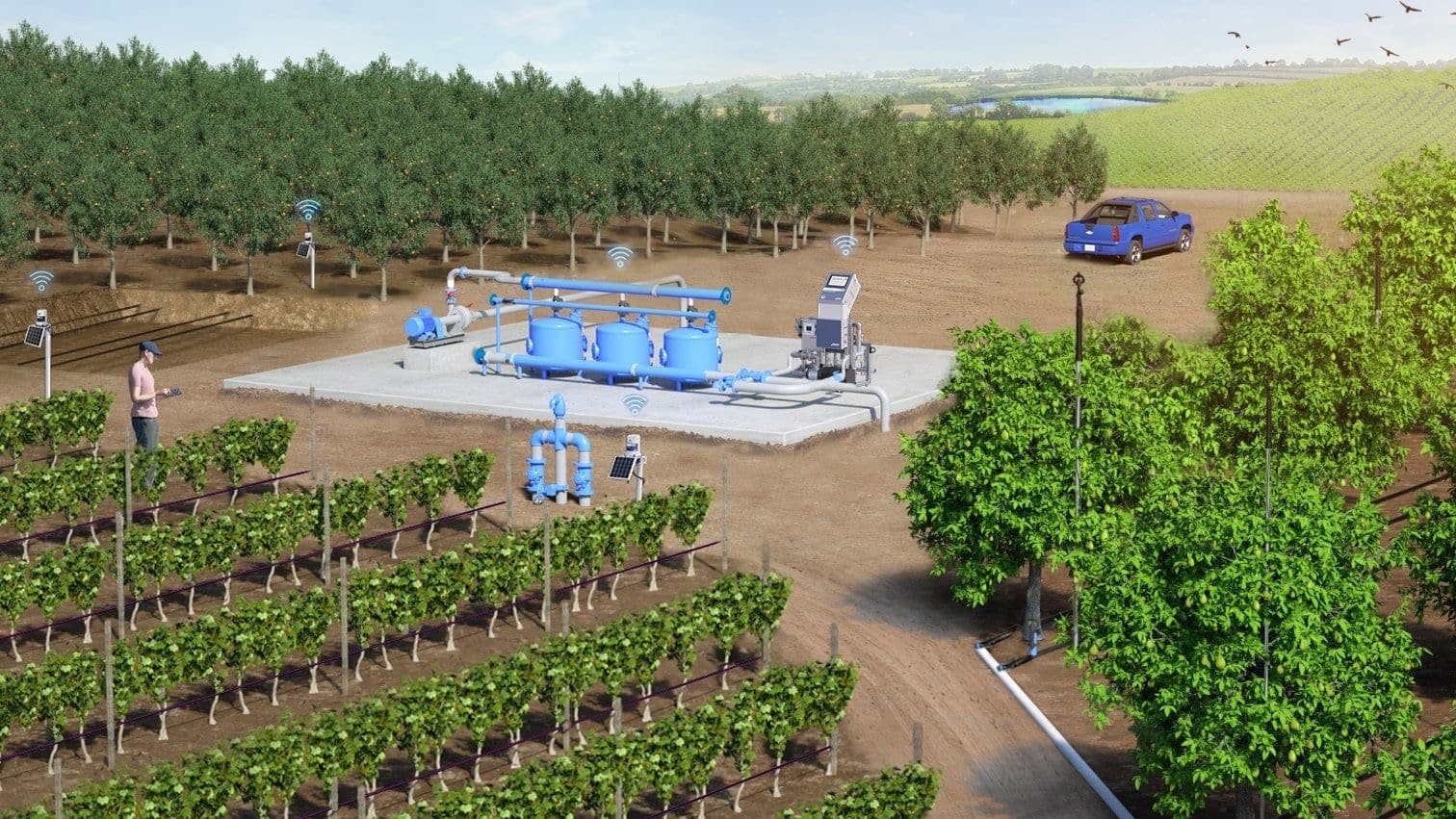
A growing focus of this transition is fertigation, the practice of delivering nutrients directly through irrigation systems. By synchronising nutrient application with crop demand and delivering fertilizers directly to the root zone, farmers can significantly improve nutrient use efficiency compared with conventional broadcast fertilisation methods.
According to Castro, fertigation can increase nitrogen recovery rates into the 70–90% range, compared with approximately 30–50% under conventional systems. In many cases, fertilizer application rates can be reduced by 20–40% without compromising yields.
“When fertilizer prices are volatile, systems like fertigation become much more than a technical upgrade,” he says. “They become a practical strategy for controlling costs and reducing exposure to market instability.”
The financial implications can be substantial, particularly during periods of elevated fertilizer prices.
“When nutrients are delivered through well-managed drip systems, farmers can often reduce fertilizer application rates by about 20–40% while maintaining or improving yields,” Castro notes.
Beyond fertilizer savings, precision irrigation can generate broader efficiency gains such as yield improvements of up to 50%, depending on the crop, geography, soil conditions, and other local factors. In some cases, even higher yield increases have been recorded. In addition, drip irrigation often leads to significant improvements in crop quality, resulting in more uniform produce and higher market value.
“If growers can achieve the same or better crop performance with less fertilizer, that has a direct impact on profitability,” Castro says. “Precision irrigation helps optimize both water and nutrient delivery directly to the root zone, increasing productivity while reducing waste. That combination is exactly what farmers need when input costs are under pressure.”
The growing focus on fertigation reflects a practical reality facing farmers across Europe: improving input efficiency is becoming just as important as increasing productivity.
Netafim is one of the world’s leading providers of precision irrigation solutions. Operating in more than 100 countries, the company develops drip irrigation, digital farming and fertigation technologies designed to help growers increase productivity while reducing water, fertilizer and energy consumption. Its solutions are used across a wide range of crops and production systems, from open-field agriculture to orchards and greenhouse operations.
As fertilizer prices, water availability and climate conditions become increasingly unpredictable, precision irrigation is increasingly being viewed across the sector as a tool for improving agricultural resilience.
The strongest adoption is already taking place in parts of Europe where farmers face a combination of climate pressure, water scarcity and rising input costs.
“We are seeing the strongest adoption in parts of Europe where growers face a combination of water pressure, climate volatility and the need to improve input efficiency,” Castro says.
High-value agricultural sectors are leading the transition, particularly orchards, greenhouse vegetables and selected open-field crops where the return on investment is especially compelling.
In practice, adoption is particularly strong in advanced agricultural markets such as Spain, the Netherlands, Italy and other Mediterranean regions, where growers are under increasing pressure to maintain productivity while using water and fertilizers more precisely.
Similar patterns are emerging across much of European agriculture, as growers increasingly prioritise technologies that improve efficiency, reduce waste and help protect margins.
Policy support is also evolving, although implementation still has room to catch up with political ambition.
“There is clear progress in the policy conversation,” Castro says. “Europe has made water resilience, sustainability and climate adaptation far more central to its agricultural agenda, and initiatives such as the Green Deal and broader sustainable finance frameworks are helping direct greater attention and investment toward sustainable agricultural practices.”
However, challenges remain. Precision irrigation is still only partially represented within parts of the EU Taxonomy framework, leaving what Castro describes as an opportunity to further recognise the role these technologies can play in water efficiency, climate adaptation and nutrient optimisation.
While water and nutrient efficiency are increasingly recognised as strategic priorities across Europe, greater incentives and more practical implementation pathways are still needed to accelerate adoption.
“Ultimately, if policy ambition is to translate into meaningful change on the ground, growers need clear and practical pathways to adoption that reflect the operational realities they face every day,” Castro says.