































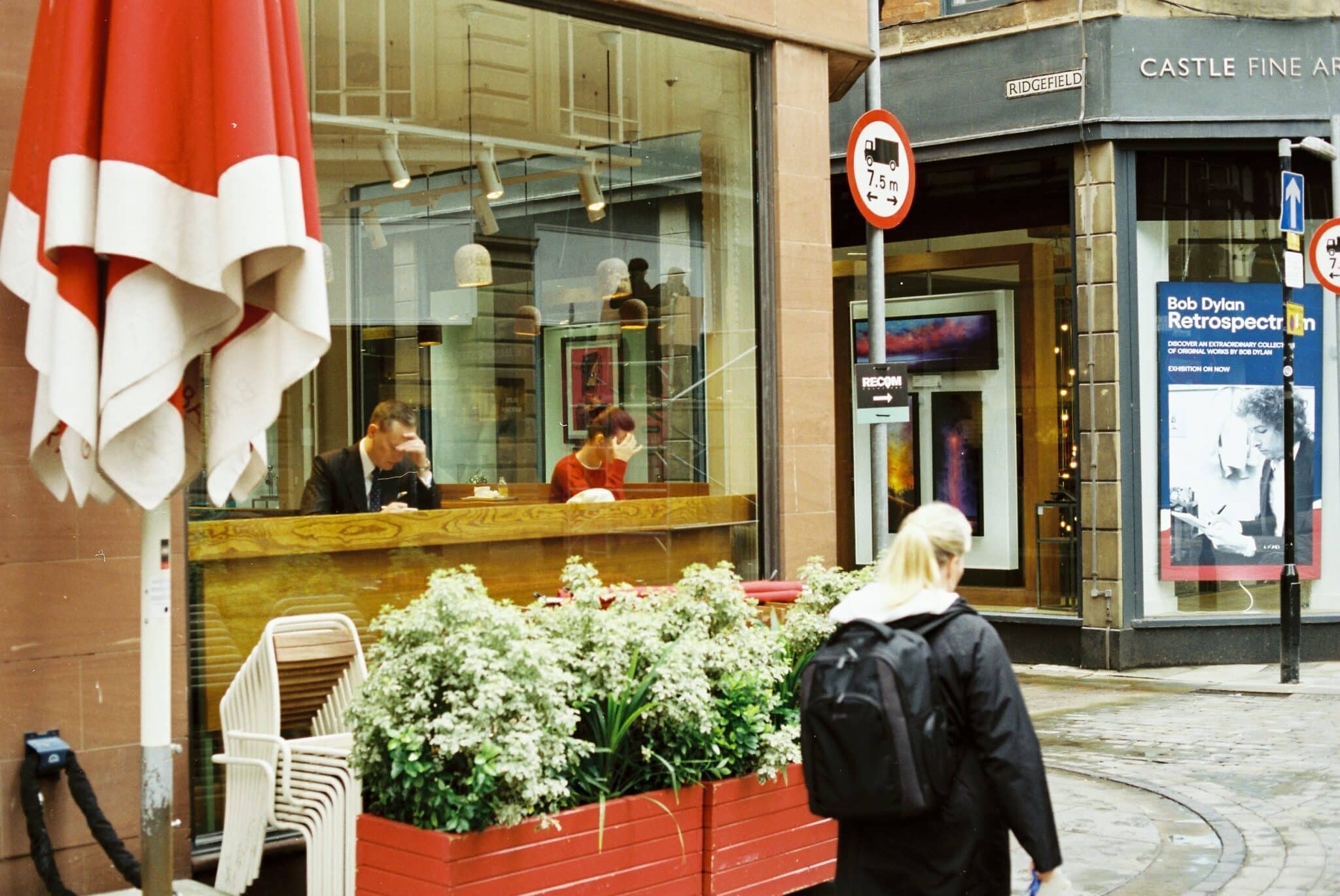
Boardroom conversations about operational efficiency in European hospitality and retail groups tend to focus on energy costs, labour markets and supply chains — rarely on cleaning equipment. Yet as multi-site operators scrutinise every line of facilities spend more closely, floor-care technology has become one of the smaller but genuinely measurable areas where operational costs, water usage and staff time all intersect.
A cost line that’s easy to overlook
Contract cleaning remains standard practice for larger European retail and hospitality portfolios, but the model is under pressure. Labour costs across much of Western Europe have risen faster than general inflation over the past two years, and multi-site operators are increasingly reviewing whether every location needs the same level of outsourced cleaning provision, or whether in-house equipment can handle daily maintenance more efficiently between scheduled deep cleans.
Floor care sits at the centre of that review. Hard flooring in entrances, hospitality dining areas and retail units accounts for a disproportionate share of daily cleaning labour, precisely because it requires two separate processes — vacuuming and mopping — done by hand in most legacy setups across the continent.
Join The European Business Briefing
New subscribers this quarter are entered into a draw to win a Rolex Submariner. Join 40,000+ founders, investors and executives who read EBM every day.
SubscribeWhere the equipment itself has changed
The wet and dry vacuum cleaner category has matured considerably as a response to exactly this inefficiency, combining vacuuming and washing hard flooring into a single mechanical pass rather than two separate labour steps. For operators managing dozens or hundreds of sites, that consolidation isn’t a lifestyle upgrade — it’s a measurable reduction in labour hours per site, per day.
Tineco is among the manufacturers that have expanded into this space commercially, with a wet and dry vacuum cleaner range spanning multiple tiers, from simpler models through to more advanced, self-maintaining units aimed at reducing the ongoing labour required to keep the equipment itself functioning well.
Hygiene standards and the ESG angle
Hygiene compliance has become a more visible boardroom concern since the pandemic, particularly for hospitality groups operating across multiple European jurisdictions with varying inspection regimes. The Tineco FLOOR ONE S9 S9 Boost Steam Wet Dry Vacuum Cleaner adds a steam sanitising function to its standard wash cycle, a detail increasingly relevant as some operators fold facilities hygiene metrics into broader ESG and guest-experience reporting.
Retrofitting older commercial floorplans
A large share of Europe’s older retail and hospitality stock — heritage buildings, converted premises, historic city-centre units — was never designed around modern cleaning equipment, with fixed fittings and limited clearance beneath display units and furniture. The Tineco FLOOR ONE S7 Stretch Ultra Cordless Wet Dry Vacuum Cleaner is built with a lower-profile head specifically for this kind of restricted-clearance environment, relevant for operators managing a mix of modern and legacy sites.
How the wider market is positioning itself
Tineco operates in a competitive field. Dreame has invested heavily in self-cleaning and self-drying docking stations, a design philosophy that reduces staff time spent on equipment maintenance itself. Dyson entered the wet-dry category more recently, leaning on its established suction engineering, though independent testing generally places its mopping performance behind dedicated specialists — a relevant distinction for procurement decisions based on measurable cleaning outcomes rather than brand recognition. Shark’s HydroVac and Bissell’s CrossWave remain reliable, longer-established options, if less refined on self-maintenance than newer entrants, while Vax serves lower-footfall sites reasonably well at a lower cost base.
Quick answers for facilities decision-makers
Is a wet-dry vacuum more efficient than separate vacuuming and mopping?
Generally yes, on labour time per site.
Is Tineco a credible option for commercial procurement?
For hard-flooring sites with moderate-to-high footfall, it performs competitively against established rivals.
Tineco vs Shark or Bissell?
Tineco tends to lead on self-cleaning convenience; the others carry longer commercial track records.
Tineco vs Dreame or Vax?
Dreame is a close competitor on features; Vax suits lower-traffic sites and tighter budgets.
Are these machines suitable for laminate, LVT or sealed hardwood?
Yes, on sealed surfaces, using appropriate settings — common across much of Europe’s retail and hospitality flooring.
The bigger picture
None of this replaces professional deep cleaning for demanding or high-footfall sites, and it’s unlikely to feature prominently in any annual report. But as European operators continue tightening facilities budgets while keeping half an eye on hygiene and sustainability metrics, floor-care efficiency is a small, unglamorous line item quietly earning more scrutiny than it once did — a reminder that operational efficiency gains often accumulate in the parts of the business least likely to make the boardroom agenda.
The Overlooked Facilities Metric: Why Europe’s Operators Are Rethinking Everyday Floor Care
Operational efficiency in European retail and hospitality is usually discussed in large numbers.
Energy consumption.
Labour costs.
Supply chains.
Occupancy.
Store productivity.
Procurement.
Cleaning equipment rarely enters the boardroom conversation.
Yet for businesses running tens, hundreds or even thousands of physical locations, small recurring tasks matter precisely because they repeat at scale.
Floor care is one of them.
Entrances, corridors, food-service areas and other hard-floor zones need attention every day. In many locations, the process still involves separate dry-debris removal and wet cleaning, followed by maintenance of the equipment itself.
None of those steps is especially expensive in isolation.
Across a portfolio, however, repeated labour minutes become operating cost.
That is why developments in wet-dry cleaning technology are worth looking at from a business perspective — not necessarily as direct commercial procurement recommendations, but as evidence of where facilities automation is heading.
Labour economics are making small efficiencies more visible
European operators have good reason to examine repetitive physical tasks more closely.
Eurostat reported that hourly labour costs rose by 3.6% across the EU and 3.2% in the euro area in the first quarter of 2026 compared with a year earlier. In 2025, estimated average hourly labour costs reached €34.90 in the EU and €38.20 in the euro area.
Those averages hide large differences between countries, but the direction is relevant to multi-market operators.
When labour becomes more expensive, businesses start asking different questions.
Not simply:
“How much does this equipment cost?”
But:
“How many staff interventions does this process require?”
That distinction is particularly relevant in hospitality and retail, where the physical environment has to be reset repeatedly without disrupting customers or guests.
Floor care is a workflow, not just a machine
Traditional hard-floor maintenance can involve several separate stages:
remove loose debris → wet clean → deal with dirty water → clean equipment → dry equipment
Modern wet-dry machines attempt to combine some of those stages.
A wet and dry vacuum cleaner , for example, can collect suitable debris while washing compatible hard flooring during the same cleaning session.
At household scale, that is mainly sold as convenience.
At portfolio scale, the underlying idea is more interesting:
process consolidation.
If one mechanical workflow can replace two repeated passes, the relevant metric becomes labour minutes per clean.
But that does not automatically mean a consumer wet-dry cleaner belongs in a commercial site.
The distinction between technology concept and procurement suitability is critical.
Consumer innovation is moving faster than many facilities workflows
Consumer floor-care manufacturers have been adding increasingly sophisticated systems to solve several recurring problems:
- debris and water handling;
- hair tangling;
- roller contamination;
- under-furniture reach;
- post-use drying;
- automatic adjustment.
Tineco provides a useful illustration.
Its Tineco FLOOR ONE S9 Boost Steam Wet Dry Vacuum Cleaner currently combines 25kPa suction with HyperStretch, FlashDry/SilentDry and AI SmoothDrive.
The Tineco FLOOR ONE S7 Stretch Ultra Cordless Wet Dry Vacuum Cleaner, meanwhile, is built around a 180-degree lay-flat architecture designed to reach beneath low furniture.
For a domestic buyer, these are product features.
For a facilities strategist, they represent a broader design trend:
equipment is increasingly being engineered to eliminate small manual interventions around the main cleaning task.
That may ultimately matter more than incremental increases in headline power.
Self-cleaning is really about reducing secondary labour
The most revealing innovation may be what happens after cleaning.
A wet roller can retain:
- water;
- hair;
- food residue;
- dirt;
- organic material.
Historically, maintaining the machine could undo part of the convenience gained during cleaning.
Newer systems increasingly automate:
- roller rinsing;
- internal cleaning;
- heated drying.
That changes the facilities equation.
The relevant question is no longer simply:
“How quickly does it clean?”
It becomes:
“How much staff time is needed across the complete clean-use-reset cycle?”
For multi-site businesses, that is a much better metric.
Layout is another hidden cost variable
European property portfolios are rarely uniform.
A hotel group might operate:
- modern airport hotels;
- converted historic buildings;
- city-centre properties;
- resorts.
A retailer may have:
- flagship stores;
- compact high-street units;
- shopping-centre locations;
- older converted premises.
Cleaning equipment that works perfectly in one footprint may be inefficient in another.
Low furniture, fixed displays and limited clearance create additional manual work if staff have to move objects or switch equipment.
This is why 180-degree or low-profile floor-care designs are interesting from an operational perspective.
The engineering proposition is not simply:
“the machine bends further.”
It is:
“the process may require fewer furniture-moving steps.”
That is exactly the kind of small intervention that becomes material when repeated across many sites.
Where steam fits — and where ESG claims should stop
Steam and heated cleaning deserve similar scrutiny.
The S9 Boost Steam adds a thermal system intended to help tackle stubborn dried residue on compatible flooring.
That can be relevant to environments where food, drinks or heavy foot traffic create repeated marks.
But it should not automatically be translated into:
- guaranteed sanitisation;
- regulatory hygiene compliance;
- ESG improvement.
Those are different claims.
Cleaning technology may influence resource use or labour requirements, but a credible ESG case requires measurement.
For example:
- litres of water per square metre;
- electricity consumed per clean;
- detergent use;
- machine lifespan;
- consumable replacement;
- end-of-life treatment.
Without those numbers, sustainability remains a hypothesis rather than a procurement result.
That distinction is particularly important for European companies operating under increasingly formal sustainability and disclosure expectations. European Business Magazine itself regularly covers how environmental performance is moving from marketing into operational and reporting systems.
The procurement question is where consumer and commercial technology diverge
This is the most important caveat.
A product can demonstrate useful engineering without being designed for commercial duty.
Tineco UK’s current warranty applies to machines used for private household purposes and explicitly excludes use “for commercial or rental purposes.”
That means a hotel, retailer or facilities contractor should not interpret impressive domestic specifications as proof of commercial suitability.
Commercial procurement requires a different checklist.
Duty cycle
How many cleaning cycles can the equipment reliably perform per day?
Serviceability
Can technicians repair it quickly?
Parts availability
Are rollers, batteries, filters and pumps available across the markets where the business operates?
Warranty
Is commercial usage explicitly covered?
Training
Can staff use it consistently across multiple sites?
Downtime
What happens when the machine fails?
Standardisation
Can the same equipment specification be deployed across the portfolio?
Those questions matter more than whether one consumer model has slightly higher suction.
The right metric is total cleaning workflow cost
This is where facilities teams can borrow a principle from industrial operations.
Do not compare equipment solely by purchase price.
Compare:
total cost per completed cleaning cycle.
That calculation might include:
| Cost area | What to measure |
| Labour | Minutes per square metre or zone |
| Equipment | Purchase or lease cost |
| Consumables | Rollers, filters, solution |
| Water | Litres per clean |
| Electricity | Charging and heating |
| Maintenance | Staff intervention and servicing |
| Downtime | Cost of unavailable equipment |
| Training | Staff onboarding |
| Lifecycle | Expected useful life |
This produces a more realistic comparison between:
- conventional vacuum + mop;
- consumer-grade wet-dry machine;
- professional scrubber-dryer;
- outsourced cleaning;
- hybrid facilities models.
It may turn out that the most technologically advanced machine is not the lowest-cost solution.
That is exactly why procurement needs measurement.
Retail and hospitality may need different answers
One weakness in broad facilities strategies is assuming that all physical sites have the same needs.
They do not.
Small retail unit
May prioritise:
- quick opening/closing clean;
- compact storage;
- manoeuvrability;
- low noise.
Restaurant or café
May prioritise:
- grease and residue removal;
- food-service hygiene protocols;
- high-frequency cleaning;
- rapid drying.
Hotel corridor or lobby
May prioritise:
- noise;
- large-area efficiency;
- consistent finish;
- uptime.
Heritage hospitality property
May prioritise:
- low-clearance access;
- floor-material compatibility;
- compact equipment.
This is why a single pan-European equipment policy can sometimes be less efficient than a controlled number of site archetypes.
How the technology landscape is developing
Tineco is only one example of the broader trend.
Dreame has pushed strongly into heated cleaning and automated self-maintenance.
Shark HydroVac represents a simpler combined vacuum-and-wash model.
Bissell CrossWave is an established architecture in consumer wet-dry cleaning.
Dyson WashG1 takes another route again, using counter-rotating rollers, controlled hydration and mechanical extraction rather than conventional wet vacuum suction.
The strategic point is not which brand wins.
It is that manufacturers are experimenting with different ways to reduce:
- tool switching;
- manual water handling;
- roller maintenance;
- repeated passes;
- operator intervention.
That is precisely where facilities innovation normally starts.
Consumer technology can act as an R&D signal
Large operators should be cautious about deploying domestic hardware commercially.
But they should not ignore it.
Consumer devices can reveal where engineering investment is moving.
Today those areas include:
adaptive sensing
automated water control
anti-tangle systems
heated roller drying
lower-clearance chassis
automated maintenance
Some of these technologies will remain household conveniences.
Others are likely to migrate further into professional equipment.
That makes consumer floor care useful as an innovation signal even where the specific machines are unsuitable for corporate procurement.
IMAGE 2 — Suggested placement
Scene: A procurement/facilities visual showing three operational models: conventional vacuum + mop, smart wet-dry cleaner, and commercial scrubber-dryer, with staff-time and maintenance icons rather than consumer product glamour.
Alt text: Comparison of floor-care operating models for European retail and hospitality facilities.
Frequently Asked Questions
Are wet-dry floor cleaners more efficient than separate vacuuming and mopping?
They can reduce separate cleaning stages on compatible hard flooring, but commercial efficiency should be measured across the complete workflow, including refilling, maintenance and downtime.
Is Tineco suitable for commercial hotel or retail use?
Tineco UK’s standard warranty is for private household purposes and excludes commercial or rental use. It should therefore be treated as a consumer-technology example rather than automatically recommended for commercial procurement.
Why should facilities teams watch consumer floor-care technology?
Because consumer products are rapidly testing technologies such as sensing, automated maintenance, heated drying and lay-flat mechanical design that may influence future professional equipment.
Does self-cleaning eliminate maintenance?
No. Automated cycles can reduce some roller-cleaning work, but tanks, filters, debris paths and consumables still require attention.
Can steam replace hygiene protocols?
No. Steam-assisted floor cleaning should not automatically be treated as validated sanitisation or as a substitute for site-specific hygiene and compliance procedures.
Are wet-dry cleaners suitable for laminate, LVT and hardwood?
Only where the flooring manufacturer permits the relevant damp-cleaning or heated-cleaning method.
What should multi-site operators measure before changing equipment?
Labour minutes, water use, consumables, energy, maintenance, downtime, training, commercial warranty and equipment life are more useful than suction figures alone.
Should every site use the same floor-care equipment?
Not necessarily. Portfolio standardisation has benefits, but different property types, flooring and footfall patterns may justify a small number of predefined equipment configurations.
What matters more: purchase price or labour saving?
Neither should be considered alone. The better metric is total cost per completed cleaning workflow over the equipment’s useful life.
The bigger opportunity is operational discipline
Floor cleaning will probably never dominate a European corporate strategy meeting.
Nor should it.
But that is precisely why it is interesting.
Large efficiency programmes attract attention because the numbers are visible.
Smaller repetitive processes are easier to ignore.
Yet a business with hundreds of physical locations does not experience them once.
It experiences them hundreds of times, every day.
Eurostat’s latest labour data show that employment costs remain under upward pressure across Europe. At the same time, businesses are under pressure to improve productivity, manage resources more carefully and make sustainability claims more measurable.
That makes facilities a legitimate area for experimentation.
The lesson from the latest generation of wet-dry cleaning hardware is not that every hotel or retailer should buy a domestic smart floor washer.
It is more useful than that.
It shows where the next generation of facilities equipment is likely to focus:
fewer manual interventions, fewer repeated passes, better sensing, easier maintenance and more measurable workflows.
For European operators, the strategic opportunity is not chasing the newest machine.
It is identifying which repetitive facilities processes can be simplified, standardised and measured — and then choosing equipment designed for the operating environment in which it will actually work.
References
- Eurostat — Labour costs, Q1 2026. EU hourly labour costs increased 3.6% year-on-year; euro-area costs increased 3.2%.
- Eurostat — Hourly labour costs 2025. Average hourly labour costs reached €34.9 across the EU and €38.2 in the euro area.
- European Business Magazine — Sustainability coverage. European corporate sustainability, retail, property, technology and operational transition.
- European Business Magazine — Vouch Harnesses AI to Boost Hotel Efficiency and Revenue. Technology investment framed around hospitality operational efficiency and guest experience.
- European Business Magazine — CSDDD analysis. Sustainability performance increasingly entering business operations and procurement decisions.
- Tineco UK — FLOOR ONE S9 Boost Steam. Current product information including 25kPa suction, HyperStretch, FlashDry/SilentDry and AI SmoothDrive.
- Tineco UK — Warranty. Warranty applies to private household use; commercial and rental use is expressly excluded.






