































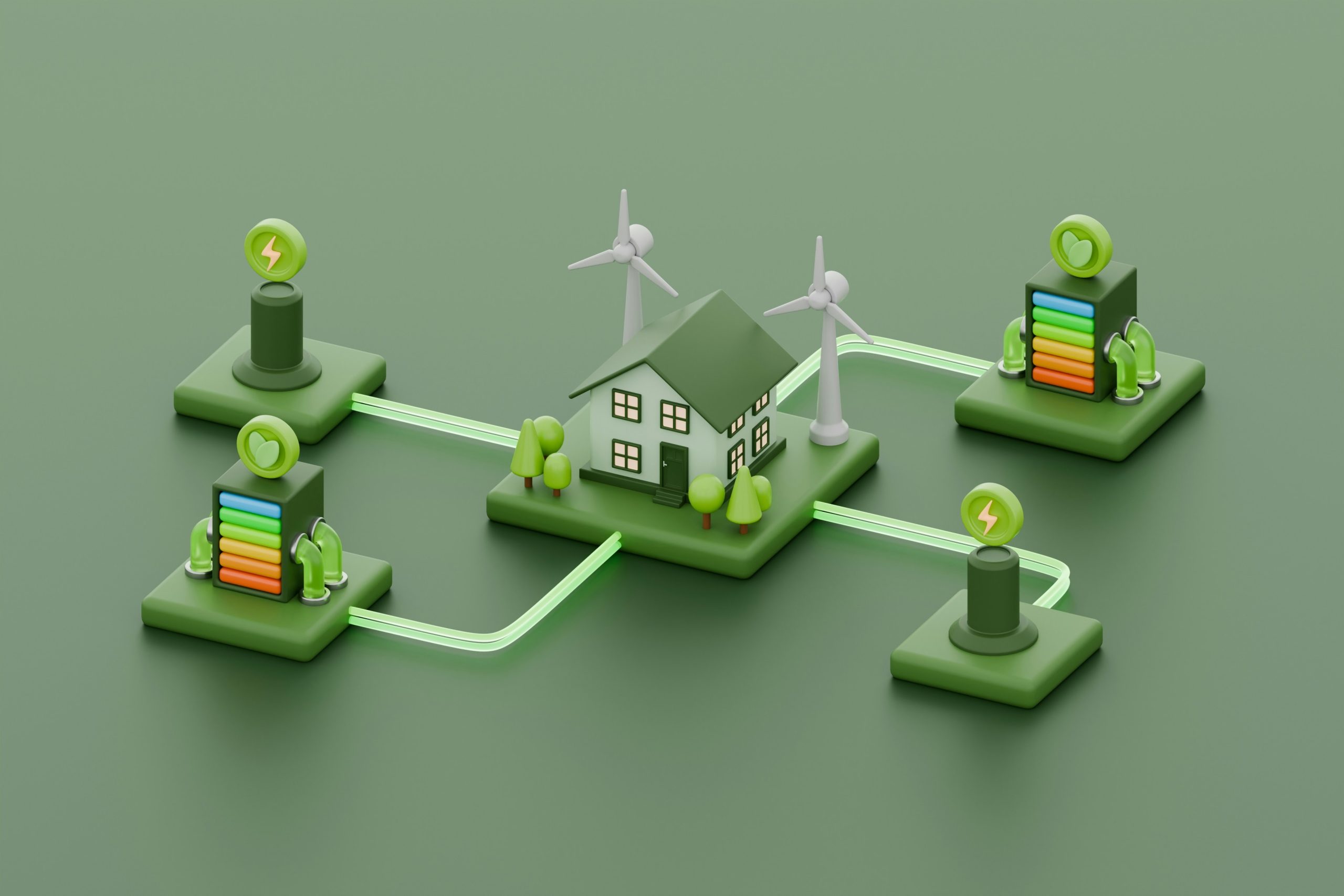
For years, backup power was something families thought about only during emergencies. A hurricane, an ice storm, or a neighborhood blackout would send people running to dust off the old gas generator. But today, things are shifting. Energy independence is no longer just about “what if.” It’s becoming part of everyday life.
Outages are more common. Energy costs keep climbing. And homeowners want more control over both their comfort and their bills. That’s why modern systems like the OCEAN Pro solar battery storage are changing the way we think about energy. They’re not only tools for surviving an outage—they’re part of a lifestyle built around security, savings, and independence.
The reality: outages and rising costs
Across North America, the grid is showing its age. Texas recorded more than 1,000 outages in 2024. California’s rolling blackouts left hundreds of thousands of residents powerless in 2025. And in Canada, winter storms have knocked out electricity for days at a time in provinces like Ontario and Quebec.
It isn’t just the blackouts. Energy prices are another pain point. Electricity costs have increased by an average of 2.67% annually over the last 25 years. That steady rise adds up, leaving families paying more for the same everyday comforts—lighting, heating, cooling, and appliances.
No wonder more households are exploring solar energy for home. Solar offers a way to cut bills and reduce reliance on a fragile grid. But solar panels alone don’t solve everything. Once the sun goes down, their benefits stop—unless you have storage.
Why storage makes independence practical
Here’s the difference: solar panels can only generate electricity during the day. Without storage, much of that free, clean power goes to waste. A home battery backup fixes this gap. It stores the excess energy your panels produce and makes it available at night, during storms, or when utility rates spike.
That simple addition changes the entire equation. Suddenly, solar isn’t just “daytime-only”—it becomes a 24/7 solution. And it shifts backup power from being an emergency-only tool into something families use daily.
-
Bills become predictable → You draw less from the grid, especially during expensive peak hours.
-
Outages stop being disruptive → Essentials like heat, air conditioning, or refrigeration keep running.
-
Energy feels under your control → Instead of depending entirely on utilities, families can manage their own supply.
Storage is what makes energy independence realistic, practical, and sustainable.
The financial lifestyle shift
One of the biggest reasons energy independence is gaining mainstream traction? Money. Families aren’t just looking at today’s electricity bills—they’re looking at the bigger picture:
-
Tax credits and rebates → The U.S. offers a 30% federal tax credit on solar and storage systems. Many states add their own rebates, making these systems more affordable than ever.
-
Daily bill reductions → Smart systems with AI optimization can cut bills by 40% or more by storing energy when it’s cheap and using it when prices are high.
-
Potential income → In some regions, Virtual Power Plant (VPP) programs allow households to sell extra energy back to the grid, turning storage into a small revenue stream.
-
Peace of mind → Systems like the Ocean Pro come with a warranty of up to 15 years, protecting your investment for the long term.
The financial side is clear: energy independence isn’t just about avoiding blackouts—it’s about building stability and reducing long-term costs.
Simplicity matters for busy households
Let’s face it: most people don’t want to tinker with generators, worry about refueling, or pay for expensive, complicated electrical work. That’s where plug-and-play systems have changed the game.
Modern energy storage systems are designed to be simple:
-
Easy setup → Many options are “plug-and-play,” with straightforward installation. Some still require an electrician, but compared to traditional systems, they’re faster and far less complex.
-
App-powered management → Track energy use, see savings, and control your system from a smartphone.
-
Quiet, clean, and low-maintenance → No fumes, no constant fuel runs, no noisy machines outside your window.
-
Scalable → Start with a smaller setup and expand later as your needs grow—ideal for families adding EV chargers or new appliances over time.
For busy households, simplicity makes energy independence a realistic goal rather than an overwhelming one.
EcoFlow’s product lineup: options for every household
EcoFlow doesn’t lock you into one solution. Its lineup has something for every type of household, from those wanting full-home coverage to families just starting out.
-
Ocean Pro Home Solar Battery: This is the flagship—the system designed to run your entire home. With 24kW continuous output and storage expandable from 10–80kWh, it can handle HVAC systems, EV chargers, and more. But what makes it stand out is the intelligence. The Ocean Pro uses AI to optimize usage and even sell extra energy back to the grid where available. Built tough, backed by a 15-year warranty, it’s designed to be a long-term cornerstone of energy independence.
-
DELTA Pro Ultra: Call this the “grow-with-you” option. It’s modular, expandable from 6kWh to a massive 90kWh, with an output range of 7.2–21.6kW. Pair it with the Smart Home Panel 2 and you’ve got advanced, centralized control without overwhelming complexity. It’s the choice for households that want flexibility and scalability.
-
DELTA Pro 3: This model is the versatile one—equally at home in suburban houses and off-grid cabins. With 4–48kWh capacity and 4–12kW output, it switches to backup in just 10 milliseconds (so fast most won’t notice). Multiple charging methods and portability make it a favorite for families that need both stability and flexibility.
-
DELTA Pro: Sometimes smaller is smarter. Starting at 3.6kWh and expandable to 25kWh, this system is compact yet dependable. It delivers 3600W output (boostable to 4500W), and when paired with a Smart Home Panel or Double Voltage Hub, it can scale up to 7200W. For many families, it’s the perfect entry point into home energy independence.
-
Smart Home Panel 2: Think of this as the conductor of your home’s energy orchestra. Managing up to 12 circuits, it automatically switches to backup in just 20 milliseconds. Beyond outages, it also helps households save by optimizing Time-of-Use rates. It ties the ecosystem together and works seamlessly with the DELTA Pro, DELTA Pro 3, and DELTA Pro Ultra.
This lineup makes energy independence accessible, whether you want partial coverage or full-house resilience.
Community-level benefits
Energy independence isn’t only a personal win—it helps entire neighborhoods and communities.
-
Less strain on the grid → When families use stored energy during peak hours, it eases demand on utilities.
-
Resilient neighborhoods → Homes with backup bounce back faster after storms, making communities safer and more stable.
-
Cleaner air → Less reliance on gas generators and fossil fuels means fewer emissions overall.
When one household adopts storage, the benefits ripple outward. Multiply that across neighborhoods, and the impact becomes significant.
From backup to lifestyle: the new normal
Not long ago, backup power was something you thought about once in a while, if at all. Today, it has become part of everyday life. Families want predictable bills, reliable comfort, and peace of mind—all things that energy independence delivers.
Just like air conditioning or Wi-Fi, energy storage is moving from luxury to necessity. It’s no longer about “what if”—it’s about “every day.”
And once households experience the freedom, stability, and convenience of managing their own energy, there’s no going back.






