






























When an online poker report shows more entries, it can sound like a bigger audience. Yet some entries may belong to players returning after elimination, while a fuller calendar gives regulars more events to join. The activity can increase, even when the group of people taking part stays the same.
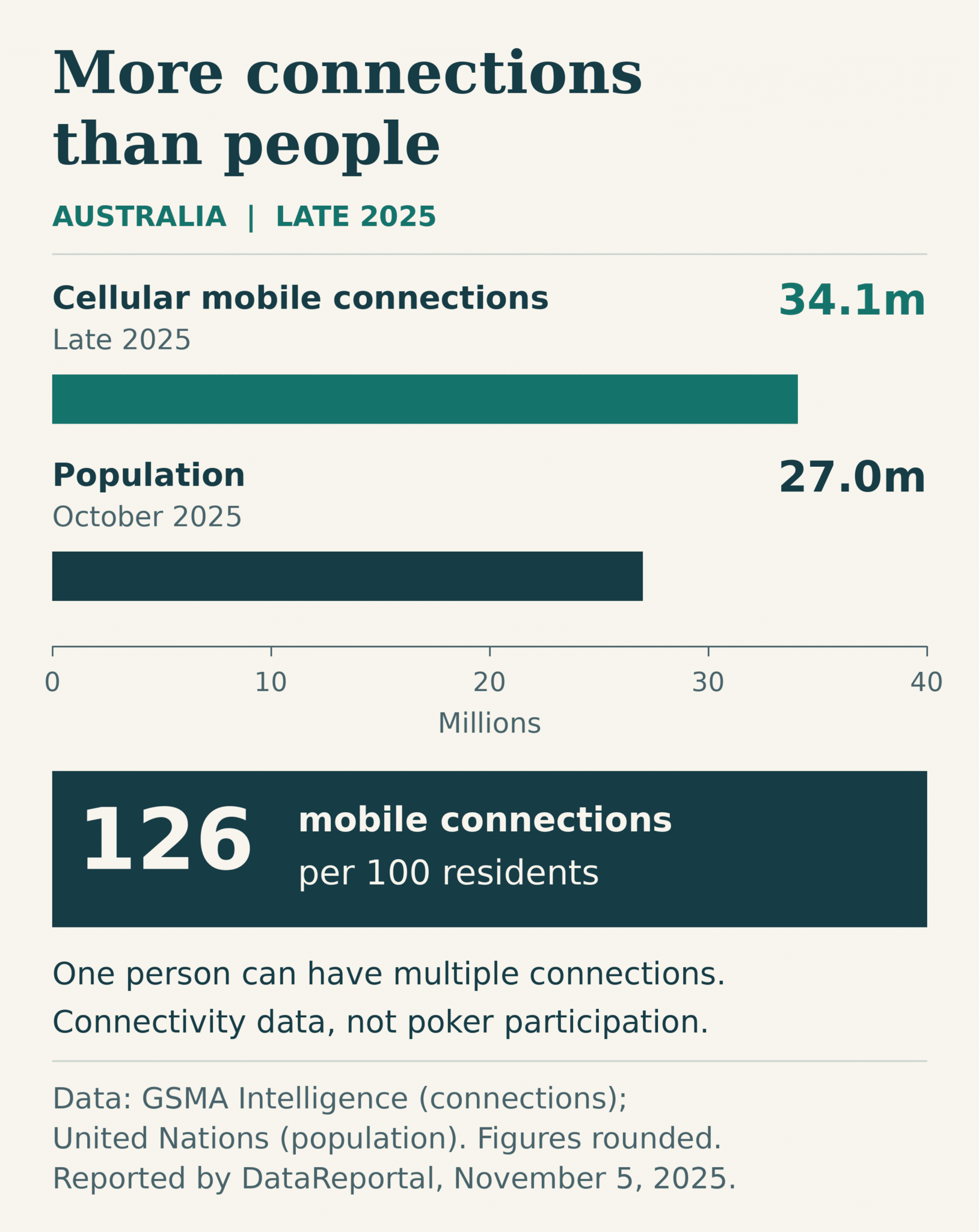
Of course, a lot of people are looking for ways to play online these days. DataReportal’s Digital 2026 report records 34.1 million cellular mobile connections in Australia, alongside a population of 27 million. Connections were equivalent to 126% of the population. Someone with separate work and personal connections still counts as one resident. These figures help demonstrate why the label beside a number deserves as much attention as its size.
The tournament behind the total
When understanding poker numbers, it can help to consider what happens when a player is eliminated. In the re-entry format described on the online poker Australia page, that person can return to the tournament. The new entry belongs in the event’s total. Counting the returning player as another person, however, would inflate the audience figure while recording the activity accurately.
Join The European Business Briefing
New subscribers this quarter are entered into a draw to win a Rolex Submariner. Join 40,000+ founders, investors and executives who read EBM every day.
SubscribeThat changes how a comparison reads. If a tournament records more entries after allowing re-entry, part of the increase could come from people returning within the event. An expanded schedule creates another possibility: familiar players now have more tournaments to enter.
Before treating either increase as evidence of a wider Australian poker audience, a business analyst needs to know how many different people were involved. The tournament may be busier because it attracts new participants, because existing participants appear more often, or because both things happen together. An entry total alone cannot separate those explanations.
The distinction also changes what counts as a useful result. Returning players are part of the activity an organiser is recording. Removing their extra entries would understate that activity. The problem begins when a figure suited to describing tournament attendance is used to describe the number of people behind it.
Who came back on Wednesday
Imagine two Australian online poker tournaments in the same week. Monday brings 80 people and 20 additional re-entries, creating 100 entries. Wednesday brings 60 people, each entering once. 40 of Wednesday’s players were also there on Monday. Assuming the organiser can recognise returning players, 160 entries came from 100 people: Monday’s 80, plus 20 new players who appeared only on Wednesday.
Only those 20 were absent from Monday’s list. They are additional participants across this pair of events, but nothing in these records establishes that they are new to poker. They might have played elsewhere for years. Calling them new poker players would turn a small, well-defined observation into a claim about a much larger market.
Both daily reports can be correct. The mistake arrives when their counts are added without checking who appears on both lists. That overlap is easy to lose when detailed event records become a short market summary.
Combining audiences from different poker services raises similar questions. Someone who uses two services belongs to both audiences. Adding their reported player totals may count that person twice. Neither report needs to be inaccurate for the combined estimate of Australia’s poker population to be overstated.
The account is still there
A registration can outlast someone’s interest in playing. A service might count everyone who has created an account since launch, including people who no longer take part or never entered a tournament. The total can keep rising as new registrations arrive, without revealing what happened to earlier participants.
This makes registrations useful for understanding the history of a service, but insufficient for describing its current poker audience. An old account and an account used yesterday may each contribute to the same cumulative figure.
Traffic captures something else again. Someone reading a poker guide has shown interest in the subject. Someone returning to check tournament details has made another visit. Neither action, by itself, establishes that the visitor will engage with the event.
A report describing those visits as participation would skip the action that matters. Interest in poker and taking part in poker are related, but the records needed to demonstrate each are different.
What a growth claim needs
UXCam distinguishes active users from registrations by engagement within a specified period. In a poker report, each figure needs a stated period and a clear definition of participation. A login and a tournament entry describe different involvement, even if both can be recorded against an account.
A regular who plays on four Fridays can appear in four daily participant reports while contributing one person to the monthly audience. A monthly count naturally gives people longer to appear. Comparing it with a daily count says little about whether the audience has grown.
Comparable periods and consistent participation rules make a growth claim more meaningful. Even then, the total leaves room for another story. Newcomers to the measured group may be replacing people who have stopped participating.
A stable total with newcomers replacing departures describes turnover. A stable total with the same people returning describes continuity. Those are different foundations for a business assessment, even when the headline number is identical.






