





























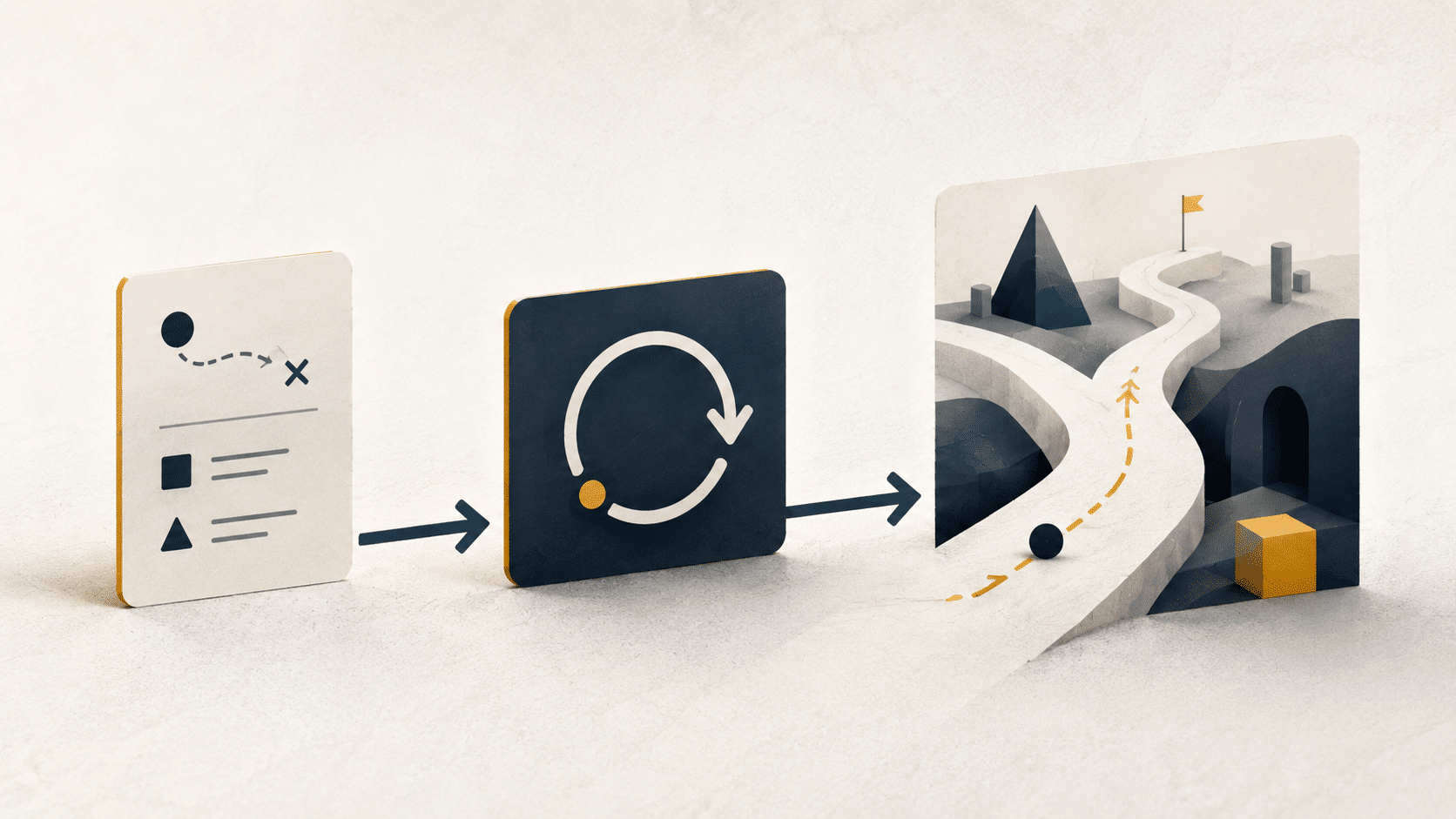
A new user can abandon a capable product without ever reaching the part that makes it useful. The problem is often described as poor onboarding, but that phrase hides several different failures. Someone may not understand the game’s rules, may understand them without being able to perform the core action, or may succeed in a guided setting but struggle when conditions change. Treating all three problems with another tutorial usually adds too much information at the point when the user needs a clearer task.
A systematic review of digital literacy games found varied learning outcomes across the field. The reviewed designs used mechanisms such as visualization, realistic contexts, and knowledge testing, yet transfer beyond the game was inconsistent. Understanding the causes behind those mixed results is useful for product teams. Interaction can support learning, but activity alone does not show that a user is ready to work independently. A sound learning curve must separate initial orientation, controlled repetition, and the later transfer of skill into less predictable situations.
From Rules to Real Decisions
Join The European Business Briefing
New subscribers this quarter are entered into a draw to win a Rolex Submariner. Join 40,000+ founders, investors and executives who read EBM every day.
SubscribeOrientation should give newcomers enough structure to begin. After that, controlled repetition then lets them perform the central action in an environment where unnecessary complexity is held back. The shift between those stages matters because reading an instruction and making a decision are different cognitive tasks.
Poker provides a clear example because its rules can be stated quickly while playing it requires making repeated choices. The page for Bovada Poker contains a basic tutorial that explains card rankings and the flow of a hand, alongside Practice mode and descriptions of formats including Texas Hold’em, Omaha, Omaha Hi-Lo, cash games, and tournaments. Those elements serve different learning needs. A ranking chart supports orientation, while practice mode gives a newcomer somewhere to recognize positions, follow the order of action, and connect terminology reliably with events at the table. Playing a format then introduces timing, incomplete information, and more complex decisions.
Bovada Poker therefore illustrates that presenting the rules, allowing rehearsal, and exposing the user to a fuller context should be three separate stages. Practice can reduce unfamiliarity, but its presence does not establish that skill will transfer automatically to every format or setting.
A guide to live $1/$2 cash games shows how the context can expand again. Once they start playing real games, a player must deal with the venue, table procedures, seating, physical position, and visible social cues, as well as the cards.
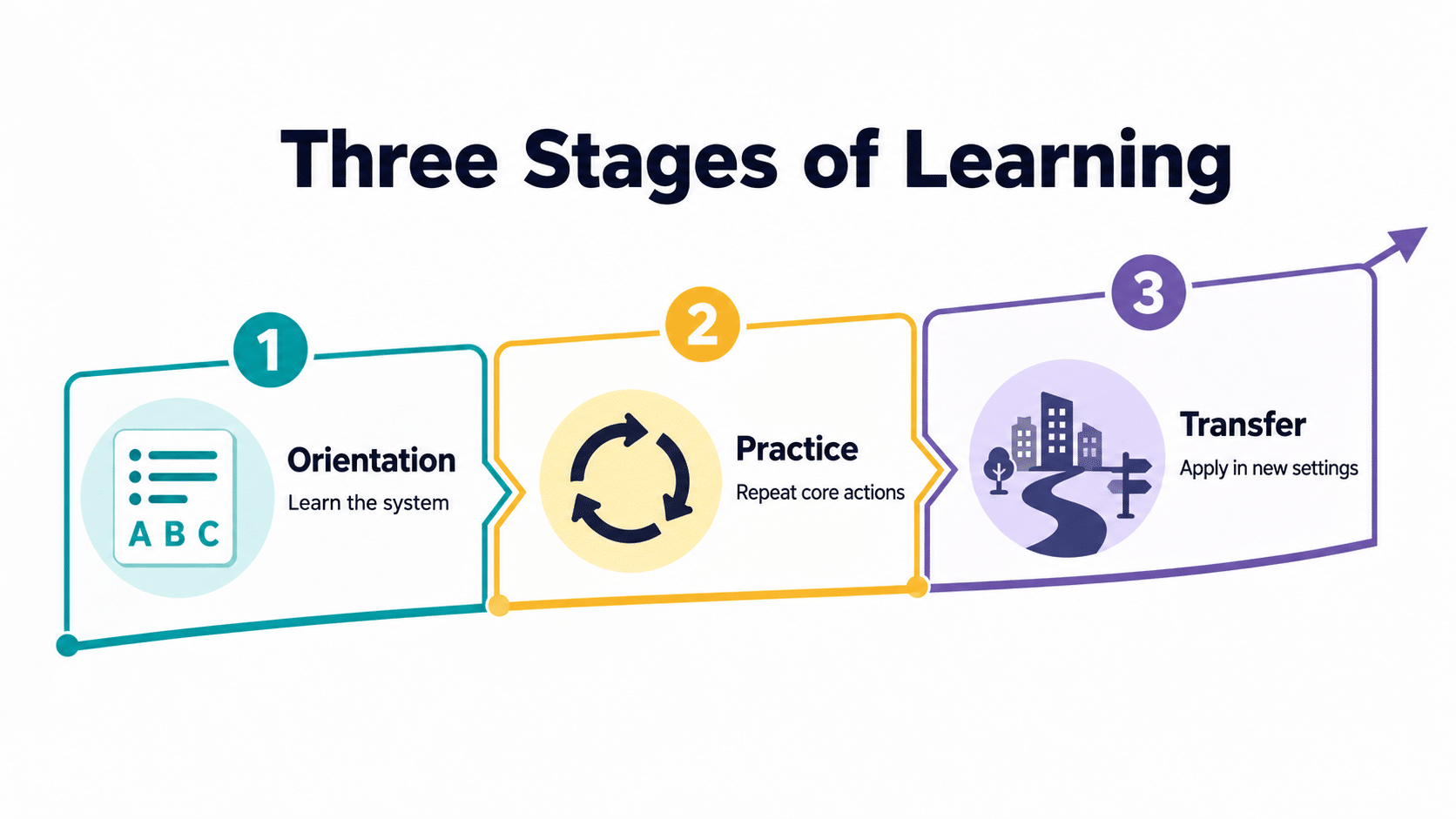
A Three-Stage Learning Loop
The first stage, orientation, should answer only the questions required to start: What is this environment, what do the main terms mean, and what action comes next? Long introductions often fail because they provide too much information too quickly. It’s better to space it out and let the user absorb it gradually.
The second stage is controlled repetition- at a poker table, this might take the form of demo mode. The user performs the real core action, but the product limits distractions, offers timely feedback, and makes recovery possible. This is where teams can observe whether confusion concerns the concept or the interface. Repeated errors at the same point may indicate unclear language, poor sequencing, or too many simultaneous choices, rather than a lack of effort.
The third stage is context transfer. The user needs to be able to apply the skill under conditions that differ from the lesson. This may involve a new device, a harder case, time pressure, or other details being changed. Success during practice is useful evidence of progress, but the transfer stage tests whether the user can recognize when and how to use what was learned. In our poker example, this is about joining and playing a real match, and seeing how the learning skills have been absorbed.
Reduce Support Without Removing It
Good onboarding does not disappear after the opening screens. It changes form. Early support may be explicit, with labeled controls and short demonstrations. Later support can become contextual: a concise hint, an example available on demand, or a chance to retry without restarting the entire process.
Research on game-based complex learning describes commercial game designs that reduce extraneous work, provide information when it is needed, and offer practice across varied contexts. The case studies also stress iteration, since small details, such as the timing or wording of a hint, affect whether support clarifies the task or interrupts thought. Product teams should therefore review onboarding as part of the working system, rather than treating it as a fixed sequence completed before the real experience begins.
Design for Transfer
A useful approach starts by identifying the areas the user is having trouble with. If the terminology is unclear, improve orientation. If the user understands the idea but cannot execute it, create a simpler rehearsal with direct feedback. If guided performance is strong but independent use collapses, add variation and test transfer rather than repeating the introductory lesson.
The learning curve is part of the product because it determines when capability becomes usable. The strongest designs do not remove every difficulty. They remove difficulty that obscures the central task, then restore complexity in deliberate steps, so users can recognize what they know when the setting changes.






