






























TL;DR
- Multi-agent orchestration coordinates specialized AI units to execute complex business workflows autonomously.
- Specialized agents reduce hallucinations and operational costs compared to single general-purpose models.
- Semrush provides the high-fidelity data necessary for agents to perform accurate technical site audits within a digital workforce.
- Effective governance requires human-in-the-loop oversight and strict data access protocols to ensure safety.
In this guide, you will learn how multi-agent orchestration transforms isolated AI tools into a cohesive digital workforce. Organizations now deploy specialized agents to execute complex, multi-step business processes through autonomous collaboration. This shift replaces static automation with dynamic reasoning and task delegation. You can effectively manage these systems by establishing clear communication protocols, strict governance, and human oversight to ensure operational accuracy across your enterprise.
What is Multi-Agent Orchestration?
Multi-agent orchestration refers to the systematic coordination of multiple, independent AI agents working together to achieve a specific outcome. This framework functions as a management layer that sits above individual Large Language Models (LLMs). It allows for the delegation of tasks to specialized units rather than relying on a single, generalized prompt.
Join The European Business Briefing
New subscribers this quarter are entered into a draw to win a Rolex Submariner. Join 40,000+ founders, investors and executives who read EBM every day.
SubscribeThe Mechanism of Coordination
The process begins with an “Orchestrator” or supervisor agent. This central component receives a high-level goal and decomposes it into smaller, manageable sub-tasks. Each sub-task is then assigned to a specific worker agent equipped with the necessary tools and data access for that unique job.
The orchestrator manages the sequence of operations. It ensures that the output from one agent correctly feeds into the next, maintaining the “state” of the project throughout the entire lifecycle. This prevents data silos and ensures the digital workforce remains aligned with the original user intent.
Managing Intent and Data Quality
Management of a digital workforce requires a focus on intent rather than just instructions. You define the desired end state, and the orchestration layer determines the most efficient path. This level of technical management demands access to high-quality, professional data sources to be effective.
In a marketing context, for example, a digital workforce relies on accurate environment data. Professionals often use tools like Semrush when running site audit tasks to feed specific technical metrics into the orchestration layer. This allows the agents to analyze crawl errors or site health issues with factual precision, ensuring the “Manager Agent” bases its strategy on verified data rather than assumptions.

Why is a Specialized Multi-Agent System Better Than One General AI?
Specialized agents outperform monolithic AI models by focusing on narrow domains of expertise. A single general-purpose model often struggles with complex logic or long-form tasks, leading to an increased rate of hallucinations. By contrast, a specialized agent operates within a restricted knowledge base, which significantly improves the reliability of its output.
Computational Efficiency and Cost
Large, high-reasoning models require significant computational resources and high API costs. Multi-agent orchestration allows you to use a sophisticated model for the “Supervisor” role while utilizing smaller, faster, and cheaper models for routine “Worker” tasks. This tiered approach reduces overall latency and operational expenses.
Modularity and Maintenance
A modular architecture simplifies the debugging process. If a specific business process fails, you can isolate the error to a single specialized agent. You can update or replace that specific component without retraining the entire system or rewriting the primary orchestration logic.
What are the Primary Orchestration Patterns for Business?
Digital workforces rely on specific communication architectures to function effectively. Choosing the right pattern depends on the complexity and predictability of the task at hand.
Sequential Workflows
This pattern follows a linear path where Agent A completes a task and passes the result directly to Agent B. Businesses use this for standardized, repetitive processes like content publishing or invoice processing. It ensures a strict chain of command and easy tracking.
The Supervisor/Hub Model
A central supervisor agent manages multiple workers. The supervisor evaluates the user’s request, selects the appropriate worker for each segment, and reviews the final output. This model provides the flexibility needed for dynamic problem-solving where the steps are not always the same.
Hierarchical Networking
Large organizations often organize agents into nested teams. For example, a “Finance Team” of agents might resolve a budget discrepancy before handing the final report to a “Leadership Team” agent. This structure mirrors traditional corporate hierarchies and allows for massive scalability across departments.
How Does Multi-Agent Orchestration Work in Practice?
Multi-agent orchestration provides a comprehensive solution for data-heavy tasks that require cross-referencing multiple sources. Consider the process of a comprehensive car history check as a practical example.
In this scenario, the orchestrator initiates a multi-step workflow. One agent scrapes current market listings to establish valuation, while a second agent retrieves historical accident data and service records. A third agent then analyzes these findings against carfax competitors to verify the report’s accuracy. The system compiles these specialized inputs into a single, verified document. This autonomous collaboration eliminates the need for a human to manually cross-reference different databases, saving hours of labor.
The Technical Pillars: Communication, State, and Memory
The success of a digital workforce depends on the underlying technical infrastructure that allows agents to interact seamlessly.
Shared Context and State Management
Agents must maintain a “single source of truth” throughout a workflow. State management ensures that if a task takes several minutes or involves dozens of steps, the agents remember previous inputs and decisions. Without shared context, the system would lose its way, leading to repetitive or contradictory actions.
Tool Use and API Integration
Agents interact with the physical world through APIs. Effective management involves connecting your digital workforce to your existing software stack, such as CRMs, ERPs, or specialized databases. You must define exactly which “tools” each agent can use to prevent unauthorized actions.
Managing Loops and Redundancy
A common technical risk is the “infinite loop,” where agents pass data back and forth without reaching a conclusion. Orchestration layers must include logic to detect these loops and set “maximum iteration” limits to protect system resources.
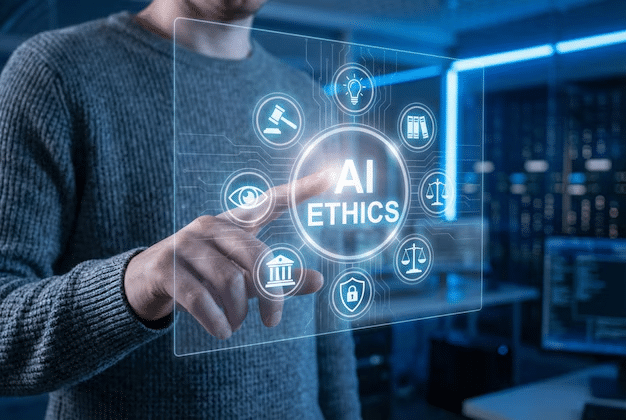
How to Establish Governance for Your Digital Workforce?
Governance ensures that autonomous agents remain safe, secure, and compliant with organizational standards.
Security Guardrails and Access Control
You must manage your digital workforce under strict permission sets. An agent designed for external customer service should never have access to sensitive internal data like payroll or trade secrets. Centralized governance tools monitor these permissions in real time.
The Human-in-the-Loop (HITL) Model
Total autonomy is rarely advisable for high-stakes business decisions. The HITL model introduces “control points” where a human must review and approve an agent’s work. This is essential for legal documents, financial transactions, or public-facing communications.
Regulatory Compliance
Your orchestration strategy must align with global regulations, such as the EU AI Act or GDPR. This includes maintaining detailed logs of agent decisions to ensure “explainability” if a process is ever audited.
What are the Key Challenges in Managing a Digital Workforce?
Managing multiple agents introduces specific hurdles that differ from traditional software management.
- Context Drift: Over long chains of communication, the original intent can become distorted. Regular “state resets” or supervisor checks help maintain focus.
- Orchestration Overhead: Every interaction between agents adds latency and cost. You must balance the number of agents with the need for speed.
- Interoperability: Agents built on different frameworks may struggle to communicate without a standardized middleware.
How to Measure the Success of Your Orchestration Strategy?
To validate the investment in a digital workforce, you must track performance through data-driven metrics.
Cost-per-Task Analysis
Calculate the total cost of API calls and infrastructure for a specific orchestrated workflow. Compare this figure against the cost of a human employee performing the same task. Effective orchestration typically shows a significant reduction in unit cost as volume increases.
Accuracy and Success Rates
Monitor how often the orchestrator completes a goal without human intervention or error. High success rates indicate well-defined agent roles and robust orchestration logic.
Scalability Index
Measure how much additional work volume your system handles without requiring a proportional increase in human staff. A successful digital workforce allows for exponential output growth with linear infrastructure costs.
The Future of Autonomous Collaboration
Multi-agent orchestration marks a fundamental change in how work is accomplished. We are moving away from simple automation toward agentic reasoning, where AI serves as a proactive teammate rather than a reactive tool.
The role of the modern manager is evolving into that of an AI Orchestrator. By defining clear specialized roles, implementing strong governance, and choosing the right communication patterns, you can build a scalable digital workforce. This transition allows your human staff to focus on high-level strategy while the orchestrated agents handle the complex execution of daily operations.
FAQ
What is the difference between AI automation and multi-agent orchestration?
AI automation follows fixed scripts for repetitive tasks. Multi-agent orchestration coordinates autonomous units that use reasoning to achieve complex goals dynamically.
How does an orchestration layer manage communication between agents?
The orchestration layer utilizes a shared memory state to pass context between specialized workers. This central hub ensures every agent accesses the same factual foundation throughout the workflow.
Why should businesses use multiple agents instead of one powerful model?
Multiple agents reduce factual errors by operating within restricted, specialized domains. This modular approach also optimizes costs by assigning simple tasks to less expensive models.
What is the role of a supervisor agent in a digital workforce?
The supervisor agent decomposes high-level requests into smaller sub-tasks for distribution. It also reviews the outputs of worker agents to ensure final results meet the user intent.
How do organizations maintain security in a multi-agent environment?
Organizations implement strict access controls and API permissions for each individual agent. Centralized governance frameworks monitor agent actions to prevent unauthorized data access or sensitive information leaks.






