





























London, 22 August 2026 — EBM WEEKEND READ — By Nick Staunton, Editor-in-Chief
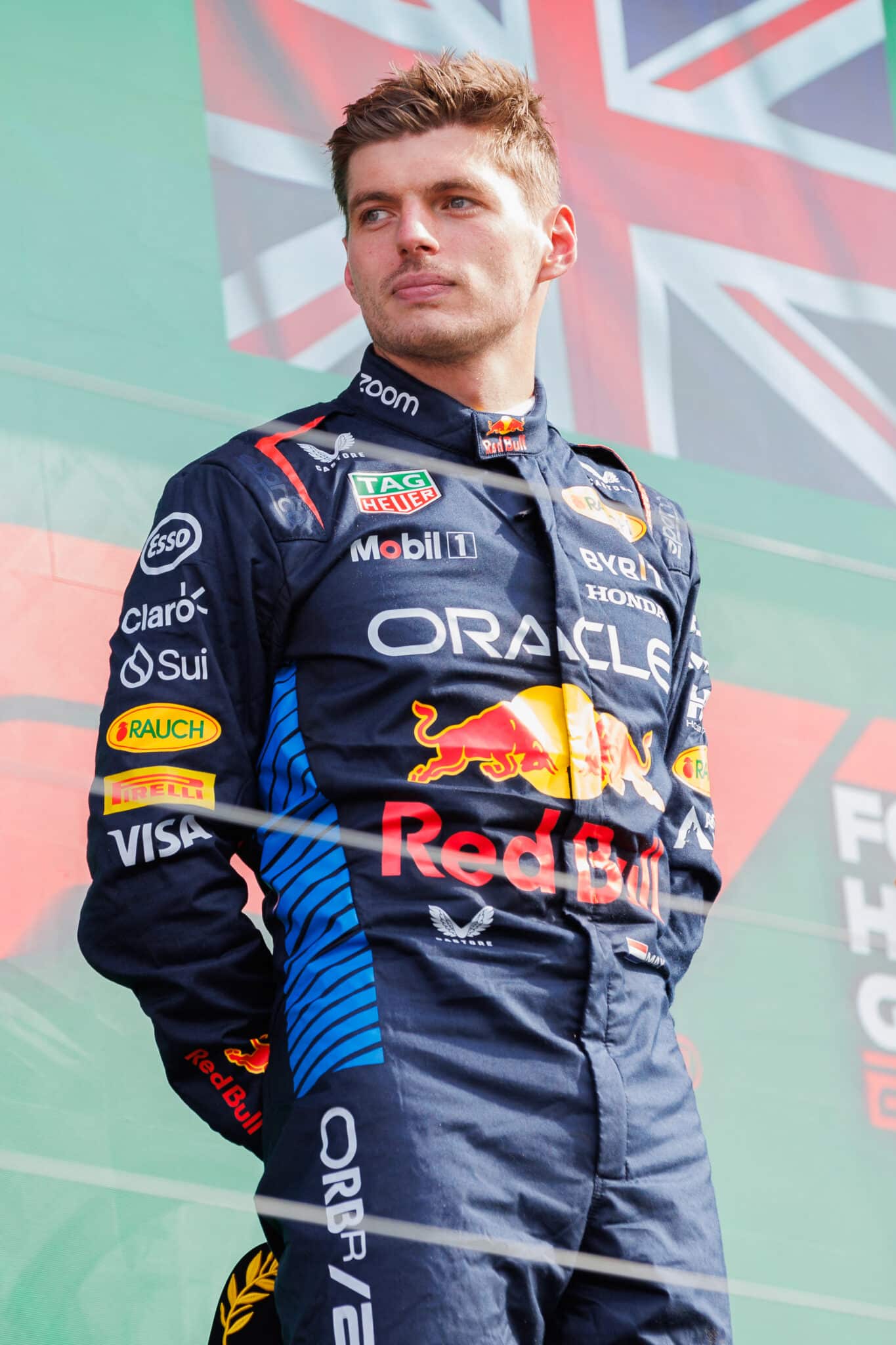
Max Verstappen has ended months of speculation over his Formula One future by extending his relationship with Red Bull until the end of 2030. The confirmation removes the possibility of an imminent move to Mercedes or McLaren and gives Red Bull something it has been conspicuously short of over the past two seasons: certainty.
The financial numbers are inevitably attracting as much attention as the sporting decision. Reports suggest Verstappen could receive a base salary of around €92mn a year from 2027, potentially rising to about €115mn with performance bonuses. If the maximum were earned across four seasons, the package could reach €460mn. Red Bull has not confirmed those figures, so they should be treated as estimates rather than contractual fact. What is beyond doubt is the scale of the commitment. Verstappen will remain with the team until 2030 after winning four world championships and 71 grands prix with Red Bull.
Join The European Business Briefing
New subscribers this quarter are entered into a draw to win a Rolex Submariner. Join 40,000+ founders, investors and executives who read EBM every day.
Subscribe
The €460mn headline hides the real economics
It is easy to look at €460mn and conclude that Formula One salaries have become absurd. The more interesting conclusion is that Red Bull may have made an entirely rational decision.
Verstappen is not being paid simply to drive 24 races a year. Red Bull is buying an asset that influences engineering, recruitment, sponsorship, merchandise, media attention and the confidence of an organisation attempting to rebuild around an entirely new generation of regulations. There are plenty of very good Formula One drivers. There is only one Max Verstappen available to Red Bull.
That scarcity matters. As EBM examined in Max Verstappen’s $250 Million Empire, he has already become far more than an employee of the racing team. His identity and Red Bull’s modern Formula One success have become intertwined. Four consecutive drivers’ championships between 2021 and 2024 turned him into the defining driver of his generation and made Red Bull the team rivals were trying to beat.
Red Bull needs him more now than when it was dominant
The paradox is that Verstappen may be worth more to Red Bull today than he was when the team had Formula One’s fastest car.
Red Bull is currently fourth in the constructors’ championship. Verstappen sits sixth in the drivers’ standings with 109 points and, as the Dutch Grand Prix weekend begins, has yet to win a race this season. Championship leader Kimi Antonelli has almost twice as many points.
When Red Bull dominated, the car itself provided insurance. If the machinery was comfortably superior, a very good driver could still win races. That protection has disappeared. When the car is no longer the class of the field, the driver capable of extracting more than the machinery should theoretically deliver becomes more valuable, not less.
This is also why the new agreement should be viewed alongside EBM’s analysis of how Red Bull turned a $1 Formula One acquisition into a $20bn marketing empire. Red Bull’s investment in Formula One has never been about collecting trophies alone. The team is a global marketing platform for the parent brand, and Verstappen has become its most recognisable sporting property.

Formula One’s cost cap makes the salary easier to justify
There is another important piece of the economics: Verstappen’s salary sits outside Formula One’s main cost cap.
The 2026 cap has risen to $215mn and restricts much of what teams can spend on activities directly related to car performance. Driver salaries and retainers remain excluded, along with the salaries of the three highest-paid members of staff.
That creates an unusual incentive. Red Bull cannot simply decide to spend another €100mn on aerodynamic development because the financial regulations prevent it. It can spend aggressively on a world-class driver without taking that money directly away from the regulated engineering budget.
In effect, Verstappen is one of the few competitive advantages on which a wealthy Formula One team can still spend almost without restriction. The €460mn figure therefore looks rather different when placed against the economics EBM explored in How Formula One Became a $3.65 Billion Machine. As the sport has grown in value, driver salaries have become one of the remaining areas where financial muscle can translate directly into competitive security.
Red Bull is paying for stability as much as speed
The timing of Verstappen’s decision matters because Red Bull is in the middle of perhaps the most complicated technical transition in its history.
The team is competing with its own power-unit programme in partnership with Ford for the first time, while several figures associated with Red Bull’s previous era of dominance have departed. Verstappen’s long-time race engineer Gianpiero Lambiase is also due to join McLaren in 2028.
Against that background, keeping Verstappen provides a fixed point around which the organisation can rebuild. Engineers know the driver they are designing for. Potential recruits know who will be in the cockpit. Sponsors know the personality around whom much of Red Bull’s international Formula One marketing will continue to operate.
That continuity has an economic value that is difficult to put on a balance sheet. Mercedes could probably find the money to employ Verstappen. McLaren could offer him a competitive car. What neither rival could immediately recreate is the decade of accumulated knowledge between Verstappen and Red Bull.
Verstappen is now part athlete, part global media asset
Formula One’s transformation under Liberty Media has also changed what a superstar driver is worth. The sport is no longer simply a European motor-racing championship with a television audience attached. It has become a global entertainment business spanning streaming, social media, hospitality, fashion, luxury sponsorship and major corporate partnerships.
The commercial evolution is visible across the grid. As EBM explored in Lewis Hamilton’s $500 Million Second Act, the leading drivers increasingly operate as global businesses in their own right. Their value is not limited to lap time.
Verstappen may be less overtly commercial than Hamilton, but that does not make him less valuable. His uncompromising personality, enormous Dutch following and extraordinary record have created a brand that travels independently of Red Bull. Every appearance, championship battle and controversy generates attention that a conventional advertising campaign would struggle to replicate.
That is particularly valuable to Red Bull because attention is the economic foundation of the company’s sporting strategy. It sells an energy drink, but for decades it has behaved like a media company that happens to manufacture beverages.
The contract also had to give Verstappen something money could not
There is evidence that money alone would not have been enough.
Verstappen said this week that he had been closer to leaving Formula One entirely than moving to another team. His frustrations centred partly on the direction of the sport’s regulations, particularly the increased electrical component of the current engines. He has also consistently expressed an ambition to race in endurance categories and other forms of motorsport.
Red Bull offers him something rival teams might find harder to provide: freedom. It has supported his outside racing interests and created an environment he describes as a second family. That matters when dealing with a driver who already has four world championships and enough money to make another salary increase relatively unimportant to his quality of life.
It reflects a broader shift covered in EBM’s Athlete-as-Hedge-Fund analysis. Elite sportspeople increasingly think beyond the next salary cheque. They want ownership, autonomy, investment opportunities and careers that extend far beyond the years in which they are physically capable of competing at the highest level.
Red Bull has removed one risk — but the biggest one remains
The contract gives Red Bull stability, but it does not solve the team’s central problem. Verstappen cannot redesign the car.
If Red Bull remains fourth in the constructors’ championship for several seasons, even the greatest driver of his generation will struggle to justify a €100mn-plus annual package in purely sporting terms. Formula One remains an engineering championship disguised as an individual sport.
That is the real gamble. Red Bull has committed to Verstappen until 2030 because it believes it can build another championship-winning operation around him. The driver has effectively made the same bet on Red Bull.
Sports businesses often make the mistake of confusing an expensive star with a successful organisation. Wimbledon, examined recently in EBM’s look at the economics of the world’s most profitable tennis tournament, demonstrates the opposite lesson: enduring value comes from the platform, not simply the personalities appearing on it. Red Bull now has to prove that its platform can regenerate.
The €460mn may be the cheaper option
That is why the argument over whether Verstappen is “worth” €460mn rather misses the point.
If Red Bull returns to title contention and Verstappen wins another championship, nobody inside the organisation will care whether his package ultimately costs €300mn, €400mn or €460mn. The commercial value of restoring Red Bull to the front of Formula One would dwarf the difference.
If the car remains uncompetitive, the salary will look enormous — but Red Bull would probably have been in an even worse position had Verstappen left for Mercedes or McLaren and started winning against them.
In my view, that is the most important calculation behind the contract. Red Bull has not spent hundreds of millions gambling on Max Verstappen. It has spent hundreds of millions removing the far greater risk of discovering what the business, the team and the brand look like without him.
The salary is the insurance premium.
The real gamble is whether Red Bull can give him a car worthy of it.






