




























London, 20 October 2026 — EBM Newsdesk Analysis — By Katie Winearls
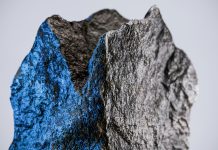
Japan could run short of yttrium, a heat-resistant rare earth used in jet engines, cars and chipmaking, as early as the end of this year, according to the Financial Times. One Japanese official put the timeline at “months, not years”. The most striking number is the price gap. Yttrium oxide costs about $9 a kilogram inside China and $1,150 outside it, according to Argus, a 179-fold rise in two years. China has shown again that it will use rare earths as leverage when it wants to.
For Europe, this is a warning, not a distant Asian story. The same metal coats the engines and chip-making equipment that European industry relies on, and much of the West’s supply runs through Japanese components. If Japan runs short, Europe’s factories will feel it next.
Why China Is Squeezing Japan
Beijing tightened rare earth exports to Japan after Prime Minister Sanae Takaichi said last year that a conflict over Taiwan could pose an existential threat to Japan. The effect has been dramatic. Japan’s imports of yttrium oxide fell 74% in the first half of 2026 compared with two years earlier, and Chinese customs data showed shipments of yttrium, dysprosium and terbium to Japan at zero in June.
Join The European Business Briefing
New subscribers this quarter are entered into a draw to win a Rolex Submariner. Join 40,000+ founders, investors and executives who read EBM every day.
SubscribeA senior US official said China is now letting Japan buy only “the bare minimum it needs”, while meeting about two-thirds of its rare earth commitments to America. Japan has been drawing down its stockpiles to keep factories running.
Why the Metal Matters
Yttrium is used in small amounts, but there is little substitute for it. It coats jet engine parts so they can survive extreme heat. It lines the plasma-etching chambers used to make semiconductors. It goes into turbines and cars.
A Japanese official warned that ignoring the problem would create “a systemic risk to the world economy”. The US is worried too. Its defence supply chains rely on Japanese components containing yttrium, and Washington has told Beijing it will not export jet engines for China’s Comac C919 airliner, partly because yttrium shortages have constrained production. China’s booming export machine is built on exactly this kind of control over inputs others cannot easily replace.
Japan’s Lesson for Europe
Japan is the country that was supposed to have learned this lesson. After China cut its rare earth supplies in 2010, Tokyo spent fifteen years reducing its dependence, cutting its reliance on China from about 90% to about 60%. It invested in Australia’s Lynas, built stockpiles and is exploring rare earth deposits in seabed mud off Minamitorishima.
It still was not enough. For the heaviest rare earths, Japan’s dependence on China remains close to 100%. If Japan, after fifteen years of effort, is months from a shortage, Europe should not assume it is safe. France, Germany and the UK already rank among the most China-exposed economies on earth, and China’s Five-Year Plan makes clear it intends to keep its grip on critical industries.
There is one European bright spot. Caremag’s plant at Lacq in south-west France is due to start operating at the end of this year, producing up to 600 tonnes a year of heavy rare earth oxides, about 15% of current global output. Japanese investors have already signed up for half of it.
My Read
This is economic coercion, and it is working. China does not need to cut supply completely. Rationing is enough to raise costs, slow production and force governments to the negotiating table.
Europe is caught between two pressures, Washington threatening retaliation over Starlink and Beijing rationing critical minerals. The answer is the one Japan chose too late: build refining capacity at home, stockpile seriously and fund it now. Lacq is a start. Europe needs ten more like it.
Related Analysis