
































Most people first search for how to improve heart health after a doctor finds that their blood pressure is high, or after a friend their own age has a heart attack. Until then, long days at a desk, meals eaten between meetings and too little sleep on business trips seem harmless, because they rarely cause symptoms at the time.
At that point, most people want to know which daily habits will lower their risk of heart disease. The good news is that, for most adults, the habits with the strongest evidence are ordinary ones: moving more, eating better, sleeping enough and not smoking.
The right place to start depends on numbers you cannot feel, such as blood pressure, cholesterol and blood sugar, so a heart check up that measures them shows you which habit to change first.
Join The European Business Briefing
New subscribers this quarter are entered into a draw to win a Rolex Submariner. Join 40,000+ founders, investors and executives who read EBM every day.
SubscribeIn this article, we will walk through what improves heart health, how exercise and food help, how quickly you can expect results, and whether it is ever too late to start.
What Improves Heart Health?
Heart health improves mainly through four daily habits, which work by changing four numbers that doctors check to judge your risk of heart disease. Those numbers are body weight, blood pressure, cholesterol and blood sugar.
Here is what each habit involves and how it helps:
- Eat better – eating more vegetables, fruit and whole grains, and less processed food and salt, helps lower blood pressure and cholesterol.
- Be more active – regular movement lowers blood pressure and helps control weight and blood sugar.
- Stop smoking – quitting stops chemicals in tobacco smoke from damaging your blood vessels further, and lowers your risk of heart disease.
- Sleep enough – seven to nine hours a night helps control blood pressure, because blood pressure normally falls while you sleep.
Because most of these habits change more than one of the four numbers, the same few changes can lower several risks at once.
How Does Exercise Improve Heart Health?
Exercise improves heart health by strengthening the heart muscle, lowering blood pressure and improving your cholesterol. Regular activity raises “good” HDL cholesterol and lowers “bad” non-HDL cholesterol, and it helps you control your weight and blood sugar.
For these effects, the World Health Organization (WHO) recommends that adults do 150 to 300 minutes of moderate activity a week, such as brisk walking, or 75 to 150 minutes of vigorous activity, plus muscle-strengthening exercise on at least two days.
You do not have to exercise for all those minutes in one session. The WHO guidelines say all physical activity counts, so two 15-minute brisk walks on a working day add to your weekly total. In practice, walking during phone calls or taking the stairs instead of the elevator also adds to that total, and some activity is better than none.
If you have not exercised for several years, or you already have a heart condition, ask your doctor before you start vigorous exercise.
Which Foods Improve Heart Health?
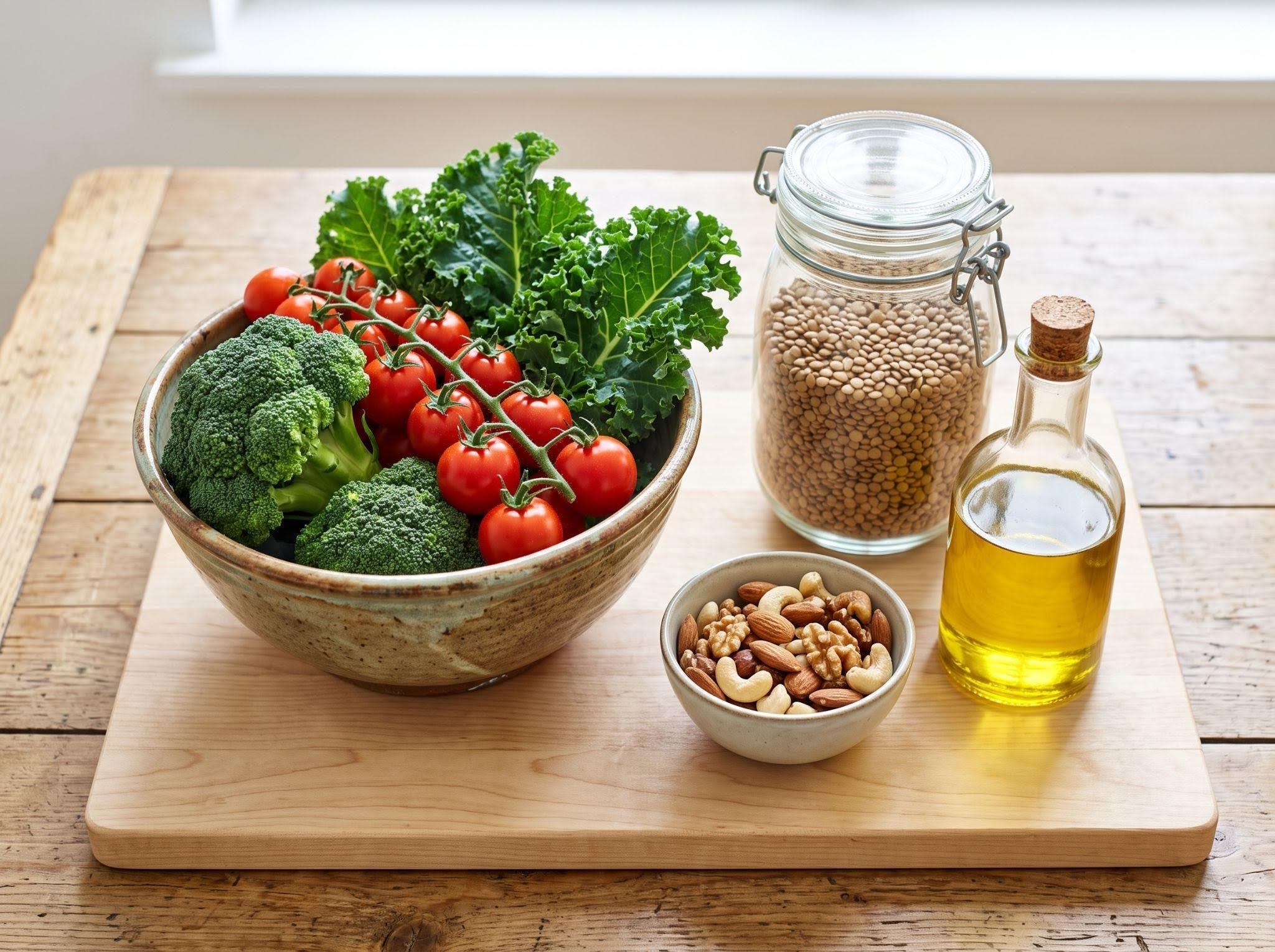
Foods that improve heart health include vegetables, fruit, whole grains, beans, nuts, fish and olive oil, especially when they replace processed and salty food. Here is how the main nutrients in these foods help:
- Soluble fiber – oats, beans and lentils contain a fiber that forms a gel in the gut and helps stop cholesterol from being absorbed.
- Unsaturated fats – olive oil, nuts and oily fish help lower cholesterol when they replace saturated fats such as butter and fatty meat.
- Potassium – fruit and vegetables supply potassium, which helps lower blood pressure.
Because these effects add up, the overall eating pattern matters more than any single food. The Mediterranean diet, one well-researched eating pattern, includes plenty of plant foods, fish and olive oil, and limits red and processed meat, sweets and sugary drinks.
Salt needs particular attention because it raises blood pressure, and much of the salt in a typical diet is already in packaged and processed food before you add any yourself. The WHO advises adults to eat less than 5 grams of salt a day, which is about one teaspoon.
How Quickly Can You Improve Heart Health?
You can improve heart health quickly in one way, because blood pressure can start to fall within a few weeks of changing your habits. Your risk of a heart attack takes longer to fall, often months to years. So how long it takes to improve heart health depends on whether you mean your blood pressure or your risk of a heart attack.
Eating less salt and exercising regularly both lower blood pressure, and for people with high blood pressure, regular exercise can lower it by about as much as some common blood pressure medicines.
Stopping smoking helps within minutes, because the WHO says your heart rate and blood pressure drop 20 minutes after your last cigarette. The bigger drop in risk takes longer: after a year, your risk of heart disease from narrowed arteries is about half that of a smoker, and after 15 years it is the same as a nonsmoker’s.
Is It Too Late to Improve Heart Health?

Your fifties and sixties are not too late to improve heart health. In a large study in Spain, people aged 55 to 80 who switched to a Mediterranean diet had about a third fewer heart attacks, strokes and deaths from heart disease over five years than people on a low-fat diet.
Nobody in the study had heart disease at the start, so changing how they ate later in life helped prevent a first heart attack or stroke.
If you already take medication for blood pressure or cholesterol, the same habits still help. Even so, discuss any major change with your doctor first, because your dose may need adjusting as your numbers improve.
Looking Ahead: Start With Your Numbers
The good news is that improving heart health does not require a complete change of lifestyle. Staying active, eating less salt and processed food, sleeping seven to nine hours and not smoking are everyday habits, and each one you add can lower your risk of heart disease.
Progress can also start sooner than many people expect. Blood pressure can begin to fall within weeks, and changes made in your fifties and sixties still lower the risk of a heart attack or stroke in the years ahead.
A heart check up gives you a clear starting point, because it shows your blood pressure, cholesterol and blood sugar today and lets you see how they change as your habits do. If a reading is high, or you have a family history of heart disease, your doctor can help you decide where to begin.






