





























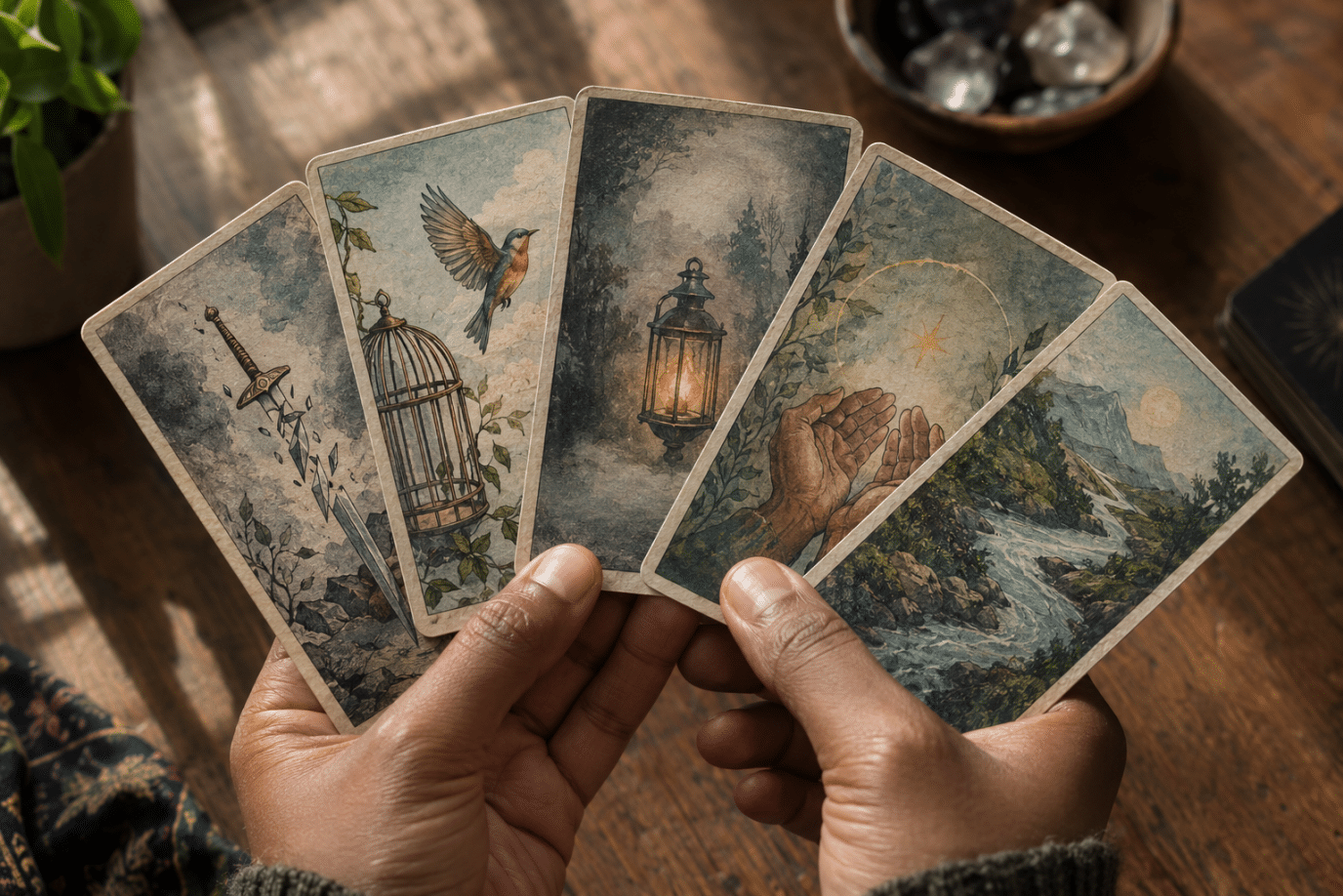
Pull any tarot card at random and you’ll notice something interesting: you can usually guess what it means without reading a word about it.
A card with storm clouds and falling figures doesn’t need words to feel unsettled. A card with warm light and an open, upward pose reads as hopeful before you’ve even registered why.
That’s the entire design philosophy behind tarot art at work. Telling a story through a tarot card is one of the more interesting challenges an illustrator can take on.
Join The European Business Briefing
New subscribers this quarter are entered into a draw to win a Rolex Submariner. Join 40,000+ founders, investors and executives who read EBM every day.
SubscribeSymbolism Does the Talking
Traditional tarot decks don’t have explanatory text on the cards themselves. Whatever meaning a card holds has to live in the imagery: the objects included, how figures are posed, what’s happening in the background versus the foreground.
That’s a different design problem than “make it look nice.” A card that’s just pretty and a card that actually works aren’t the same thing, and a lot of new deck illustrators find that out the hard way. It’s easy to add a detail because it looks cool. It’s harder to ask whether that detail is doing anything.
One broken sword or one caged bird, placed with intent, will out-communicate a busy scene stuffed with six unrelated objects fighting for the viewer’s eye. Pick up a well-made deck or a Vograce tarot cards set is a good example, and you can feel the difference immediately between a card that reads at a glance and one that needs a paragraph of explanation taped to the back.
Build a Visual Vocabulary Across the Whole Deck
No single card carries the whole story. The deck does, as a set, by repeating itself.
Water keeps showing up as emotion. Swords keep showing up as conflict or intellect. A particular animal keeps showing up wherever a particular kind of energy needs to appear. Once a reader has absorbed that pattern, a brand-new card in the deck already makes sense to them, the vocabulary was built somewhere else, and it just gets reused.
This is why a well-planned deck rewards a second and third look. A raven might sit quietly in a corner on one card, then take over the whole frame two cards later. That’s not decoration. That’s a thread, and a careful reader will notice they’re following it.
Focus on Composition for Emotional Impact
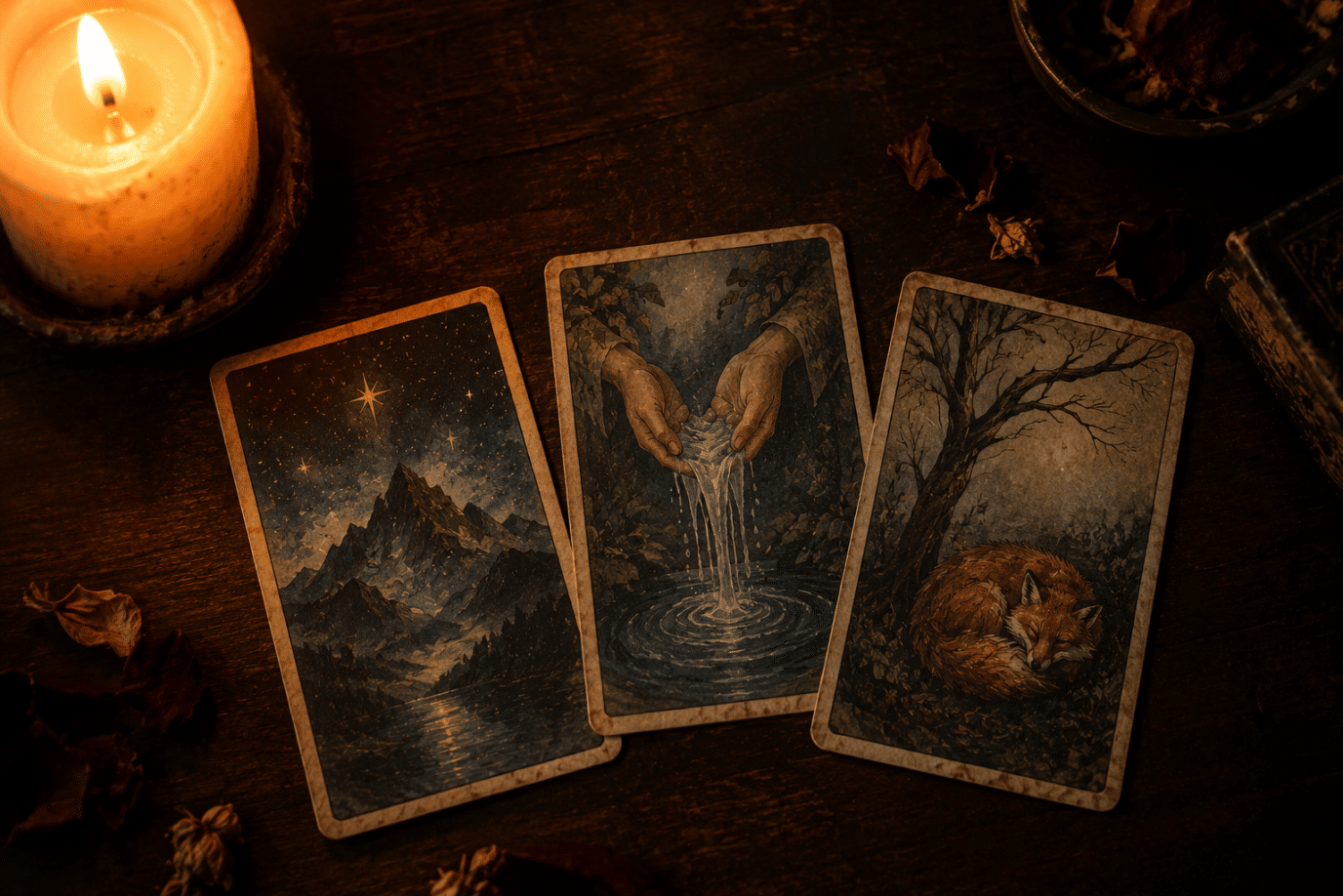
By the time a viewer clocks a specific symbol, the composition has already told them how to feel about the card.
Crisis and upheaval get diagonal lines, falling figures, jagged edges, everything tilted, nothing settled. Calm and clarity get the opposite: centered figures, open space, lines that hold still. None of that requires the viewer to know anything about tarot. It’s closer to instinct than literacy.
Color plays the same game. Push the palette warm and saturated and you get urgency, passion, heat. Pull it cool and muted and you land on introspection, sadness, something quieter. A skilled illustrator picks a palette to match a card’s emotional register, not whatever combination happens to look good on the page.
Use Archetypes as a Shared Starting Point
Most of tarot’s staying power comes from archetypes that feel familiar even to someone who’s never studied the deck. The wise elder. The tower coming down. The fool walking toward a cliff edge without looking. You don’t need a guidebook to recognize any of those, you’ve absorbed them from somewhere already.
Artists reinterpreting tarot for their own deck tend to keep that core intact and swap out the surface. The Tower can be a literal collapsing building, or it can be a gathering storm, or a mirror splitting down the middle. Change the image, keep the meaning, and the card still lands.
That’s also where the real creative room is. The archetype is the anchor. Everything else is up for grabs.
Every Small Detail Matters
One of the best parts of using a tarot deck is returning to a card and noticing details that weren’t obvious the first time around.
On a later shuffle, a reader might spot a hidden symbol in the background, or a recurring object that suddenly clicks into place.
That kind of detail rewards attentive readers and gives a deck staying power beyond its first impression, which is part of why people collect multiple decks even when they only read regularly with one or two.
Storytelling With Tarot Cards
Tarot art works because it operates on more than one level at once: composition and color for an immediate emotional read, recurring imagery for a symbolic read, and an archetypal core that any reader can recognize.
Artists who work all three layers together end up with a deck that doesn’t just look good. It’s one readers keep coming back to.






