






























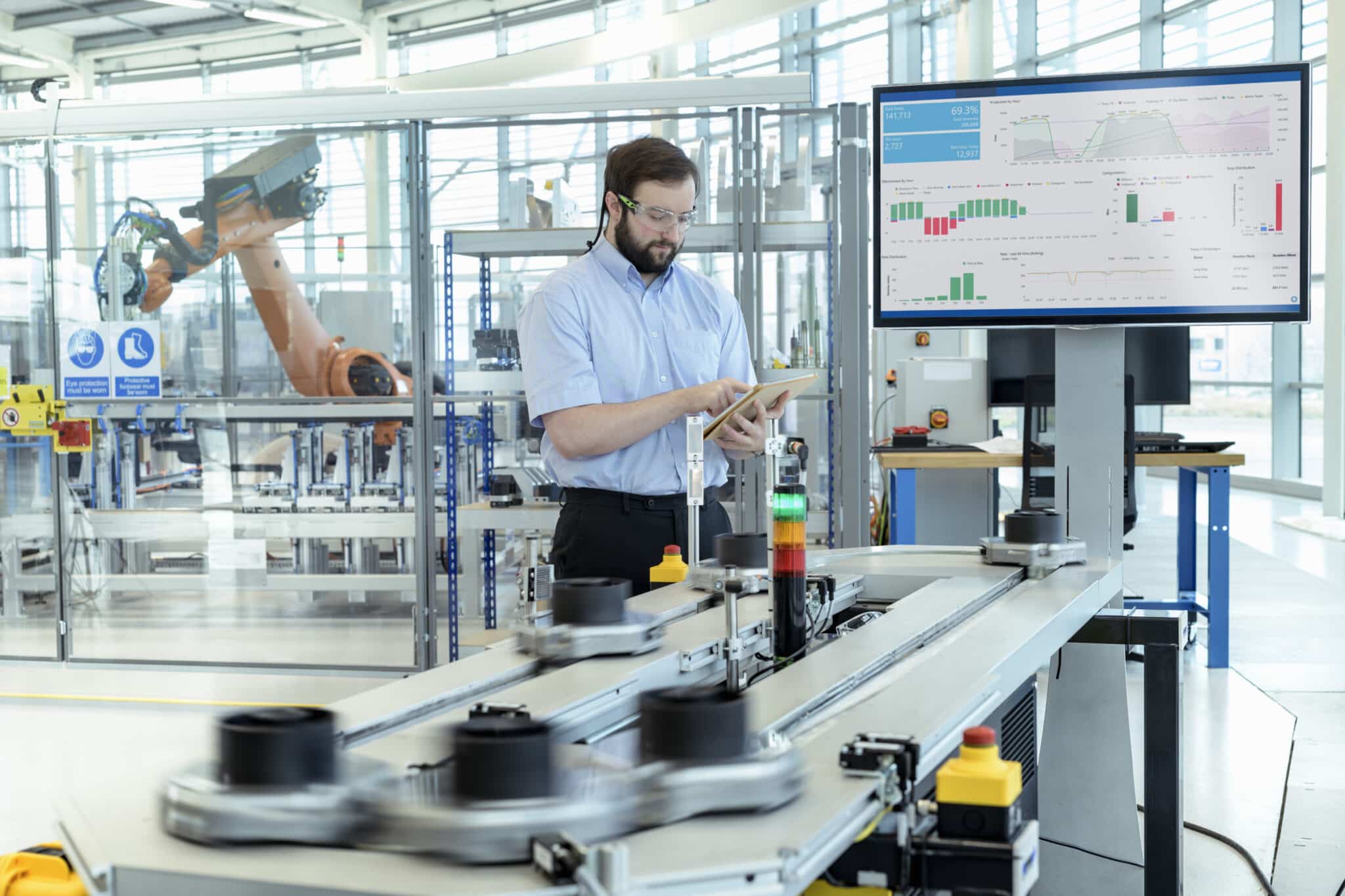
They have to deliver increasingly consistent quality, reduce scrap, and prove compliance in their inherently high-speed, high-risk production environments. That’s why industrial quality control is now more than just a process at the end of the line. It is a tool for manufacturers that want to incorporate quality with production through a single digital thread that continuously helps them move from manual reaction to automatic control.
Why Industrial Quality Control Is Becoming More Integrated
Traditional quality assessments can be difficult to maintain on high-speed production lines. One missing fastening can lead to downstream costs, rework, or unnecessary audit inquiries. That is why industrial quality control and quality assurance in manufacturing are increasingly treated as strategic functions rather than isolated checkpoints. Connected tools, controllers, traceability systems, and reporting platforms allow quality to move closer to the process itself, giving manufacturers earlier visibility into deviations, faster response to process drift, and stronger control over production outcomes across the entire line.
Why Torque Traceability Systems are Now a Major Contributor to Manufacturing Profitability
This is where the torque traceability system becomes commercially significant, not just technically useful. Manufacturers are increasingly required to ensure that critical work processes are performed with validated results in real-time. Traceability data that hones in on key production attributes also ensures quality issues do not get lost in the shuffle of reporting. When problems happen, manufacturers can quickly pinpoint which upstream steps are causing them and correct them. That shortens response times, reduces unnecessary scrap and rework, and helps protect throughput, compliance records, overall production efficiency, and confidence in final assembly quality. It also strengthens documentation for audits and supports more stable long-term process control.
Join The European Business Briefing
New subscribers this quarter are entered into a draw to win a Rolex Submariner. Join 40,000+ founders, investors and executives who read EBM every day.
SubscribeThe Role of Traceability in Modern Manufacturing
Tightening quality control goes well beyond the assembly station. Better control for fastening applications could help with improved reliability, reduced warranty exposure, strengthened audit readiness, and make it easier to assign ownership for quality between engineering, quality, and production. In any sort of commercial sense, that means quality control in manufacturing is not just about eliminating defects. It is also about protecting output, cutting waste, and ensuring the execution of the final product produces its expected return.
How Connected Ecosystems Transform Quality Assurance in Manufacturing.
More holistically, industries are moving towards environments where provisioning, verification, traceability, and production monitoring are all rolled into one. That’s the potential payoff with connected quality assurance in manufacturing, eliminating silos, speeding up the feedback loop, improving documentation, and driving consistency in getting things right the first time. The idea is presented by vendors like Atlas Copco as a unified ecosystem where production and quality function on overlapping planes, rather than one being shoehorned on top of the other.
Conclusion
The future of quality assurance in manufacturing is less about standalone checks and more about integrated, real-time quality intelligence. Manufacturers investing in connected industrial quality control solutions are not just improving compliance. They are reducing waste, strengthening process control, and improving competitiveness in production environments where consistency increasingly defines performance.