






























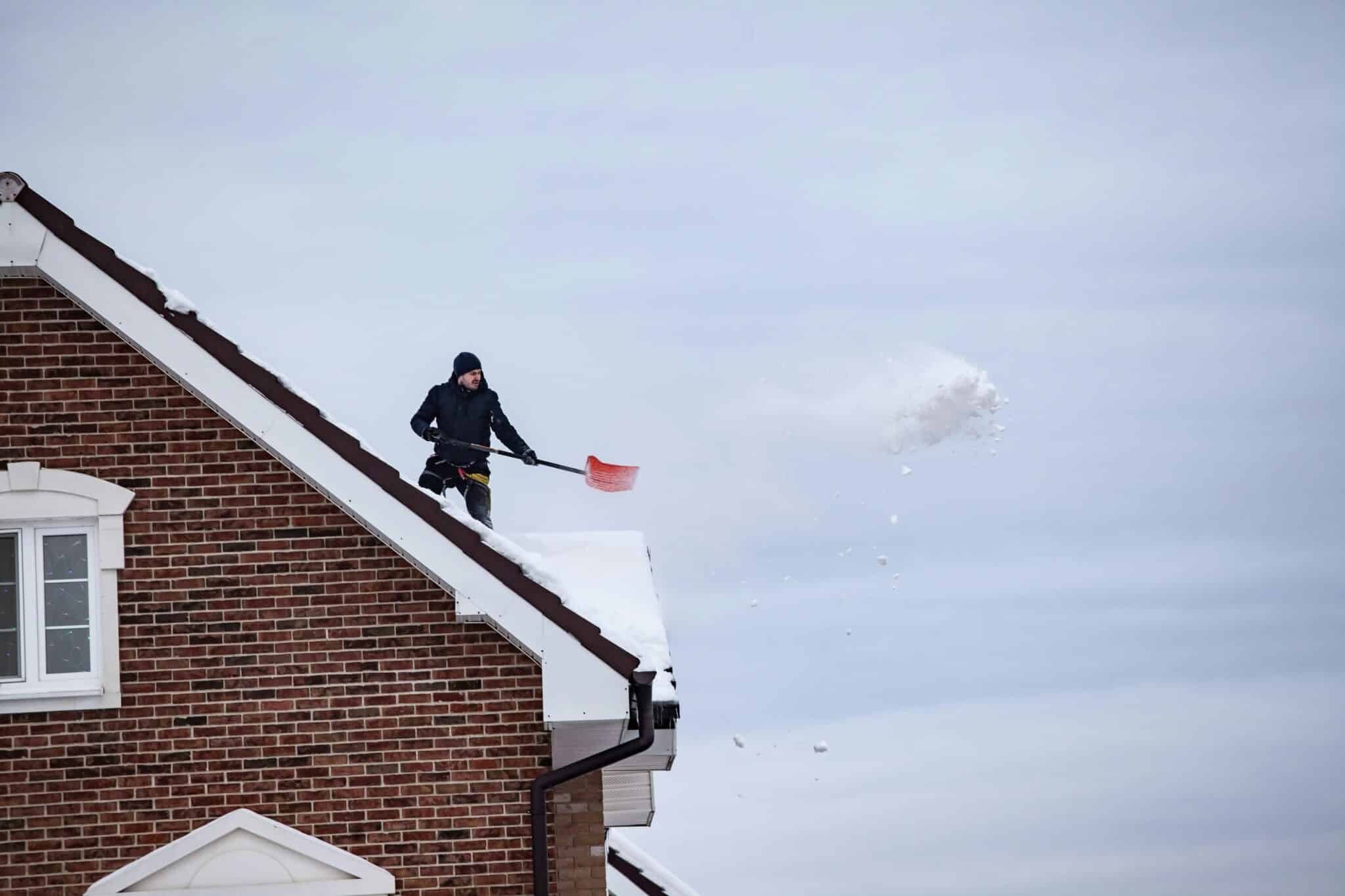
Extreme weather home maintenance costs have climbed 26 percent since 2020, and in 2026, they show no sign of leveling off. The average annual cost of owning and maintaining a typical single-family home has risen sharply, driven by a combination of climate-related repair frequency and the material and labor pressures that follow every major storm season. According to Bankrate’s analysis of homeownership costs, homeowners will spend $466 billion on remodeling and repairs through the 12 months ending mid-2026, with weather-related damage cited as a primary accelerant of that spending. For most households, the shift is not abstract. It shows up as a roof repair call placed the week after a hailstorm, a gutter system that did not survive the winter, and an insurance renewal that arrived with a rate the previous year’s budget did not anticipate.
The Scale of Weather-Driven Home Repair Spending in 2026
The data behind rising home maintenance costs is no longer ambiguous. Hippo Insurance’s 2025 Housepower Report, based on a survey of more than 2,000 U.S. homeowners, found that 83 percent of homeowners faced unexpected home repairs in 2024, with 46 percent spending more than $5,000 on unplanned repair work alone. Water damage, roof problems, and door and window failures topped the list of costly fixes. The same report noted that the share of homeowners spending more than $5,000 on unplanned repairs rose from 36 percent in 2023 to 46 percent in 2024, a jump that tracks closely with the rising frequency of severe weather events nationally.
Join The European Business Briefing
New subscribers this quarter are entered into a draw to win a Rolex Submariner. Join 40,000+ founders, investors and executives who read EBM every day.
SubscribeThe Kin Homeownership Trends Report, published in January 2026 based on a survey of 1,000 homeowners, found that 80 percent of American homeowners expect home repair and maintenance costs to increase further in 2026, with 93 percent expressing concern about weather-related damage to their home over the next two to three years. These are not projections from analysts. They are the stated expectations of the people who own and maintain the homes, and they reflect a lived experience of a maintenance cost environment that has shifted substantially from the one most homeowners budgeted for when they purchased their properties.
Why the Roof Absorbs the Largest Share of Weather-Driven Repair Costs
Among all home systems, the roof carries the heaviest exposure to extreme weather and generates the largest share of weather-related repair spending. Wind, hail, ice, and thermal cycling all act on the roof simultaneously, and each event leaves cumulative damage that may not produce a visible interior symptom until the next storm finds the compromised section and drives water through it. The average cost of a professional roof repair in 2026 ranges from $400 to $2,500 for localized work, while a full roof replacement on a mid-size home typically runs between $9,000 and $25,000, depending on material, pitch, and regional labor costs.
The gap between repair and replacement cost is precisely where deferred weather maintenance becomes expensive. A storm damage inspection conducted within 30 days of a major weather event can identify impact damage, lifted flashing, and compromised sealant before water infiltration begins. The same damage, left unaddressed for six to twelve months, can produce secondary failures involving the roof deck, attic insulation, and interior ceiling assemblies that convert a $1,500 repair into a $12,000 remediation project. Roof inspection frequency has become one of the most cost-effective variables a homeowner can control in an era of escalating storm damage repair costs.
What Storm Damage Contractors See After Major Weather Events
Roofing contractors who specialize in storm damage repair and insurance restoration work develop a ground-level view of the gap between what extreme weather does to a home and what homeowners understand about the damage they have sustained. The pattern is consistent: the most expensive outcomes are not the ones where the damage is obviously catastrophic. They are the ones where the damage is real but subtle, missed in the initial walk-around, and compounding quietly between storms.
“After a major storm, most homeowners look at their roof from the ground and see nothing obviously wrong,” said Miguel Rivera, owner of Rainforcing Roofing. “What they cannot see from the ground is the granule loss on the shingles, the lifted flashing at the chimney, or the impact fractures that have broken the waterproof bond without displacing any material. Six months later, a smaller storm finds all of those spots at once, and what would have been a routine insurance restoration job is now a full replacement conversation.” The sequence Rivera describes is one of the most consistently documented failure patterns in post-storm roofing assessments: impact damage creates hidden vulnerabilities that weather events in subsequent seasons exploit before any interior symptom appears.
Siding and gutter systems face the same dynamic. Storm-driven debris and wind pressure can compromise siding fasteners and gutter hangers without producing visible separation, leaving systems that appear intact but are no longer performing at the designed specification. A gutter system that lost two hangers in a windstorm continues to collect water and route it through the downspout under light rain. Under a heavy rain event, the hanger-deficient section separates from the fascia and redirects that volume of water against the foundation, creating a water intrusion pathway that had nothing to do with the roof but originates from the same storm.
The Insurance Restoration Gap Homeowners Discover at Claim Time
When Weather Damage and Coverage Don’t Align
The insurance dimension of extreme weather home maintenance costs has shifted substantially since 2020. The average cost of homeowners’ insurance in the U.S. reached approximately $2,400 annually in 2026, up from roughly $1,300 in 2020. That 85 percent premium increase over six years reflects the actuarial reality of escalating storm damage claims, and it has not resolved the coverage gap that many homeowners discover at the time of a claim rather than at renewal.
Only 30 percent of surveyed homeowners have reviewed their policy to understand what is and is not covered for severe weather or storm damage, according to Hippo’s research. The consequences of that gap are most visible in the insurance restoration process. Actual cash value policies, which pay the depreciated value of a damaged roof rather than its replacement cost, can leave a homeowner with a $4,000 claim check for a roof that costs $14,000 to replace. Cosmetic damage exclusions, increasingly written into policies in hail-prone states, exclude coverage for damage that affects appearance without compromising function, a distinction that becomes contentious when the granule loss from a hailstorm has materially shortened the roof’s remaining lifespan without yet producing a leak.
The 14 percent of owner-occupied homes that are currently uninsured, cited by LendingTree in its 2026 analysis, represent the most exposed end of the extreme weather cost spectrum. When a storm damages an uninsured home, the full repair cost, for roof repair, siding replacement, emergency roofing work, and structural assessment, lands entirely on the homeowner with no carrier support and no timeline flexibility. That exposure is growing as insurance costs push more households out of coverage.
The Compounding Effect: When Multiple Systems Fail After One Storm
One of the least discussed dimensions of extreme weather home maintenance costs is the compounding effect that occurs when a single weather event damages multiple interconnected systems simultaneously. A severe hailstorm does not damage only the roof. It damages the roof, the gutters, the downspouts, the window screens, the siding, and in some cases the HVAC equipment sitting on a rooftop platform or outdoor pad. Each of these repair items carries its own cost, its own contractor, and in many cases its own insurance claim process.
The total out-of-pocket cost for a homeowner navigating multiple simultaneous storm-related repairs frequently exceeds what any single estimate suggested, because deductibles apply per claim or per policy period, emergency service premiums apply to contractors mobilized quickly after a named storm event, and material price surges in the days immediately following a regional weather disaster push repair costs above the estimates generated from pre-storm pricing.
The Select Home Warranty and ConsumerAffairs data cited for 2026 consistently notes that homes in extreme climate zones spend up to 5 percent of their home’s value annually on maintenance, compared to the 1 to 4 percent range for homes in moderate climates. For a home valued at $350,000 in a hail-prone or hurricane-adjacent market, that represents $17,500 per year in maintenance spending, a figure that includes routine upkeep but is increasingly weighted toward weather-related repair and hardening work.
What Homeowners Can Do Before the Next Storm Season
The practical response to rising extreme weather home maintenance costs begins with inspection, not repair. A roof inspection conducted before storm season identifies the existing vulnerabilities that will determine how well a home performs during the next major weather event. Flashing condition, shingle granule coverage, gutter attachment integrity, and soffit and fascia condition are all assessable by a qualified contractor before storm damage repair becomes an emergency service call.
Insurance policy review is the second step that most homeowners consistently defer. Understanding whether a policy covers replacement cost or actual cash value, whether it includes cosmetic damage exclusions, and what the wind and hail deductible is in a storm-prone area takes less than an hour and can determine whether a $15,000 storm event becomes a $3,000 out-of-pocket expense or a $13,000 one. Only 30 percent of homeowners have done this review, according to Hippo’s research, which means 70 percent will discover the terms of their coverage at the worst possible moment.
Climate Central’s disaster data shows that extreme weather events in the U.S. now arrive at a pace of roughly one major event every 16 days, down from every 82 days in the 1980s. The homes that weather that frequency without catastrophic repair bills are not necessarily the most recently built or the most expensively insured. They are the ones whose owners treated the roof, the gutters, the siding, and the drainage system as systems requiring attention before a storm, not after one.