































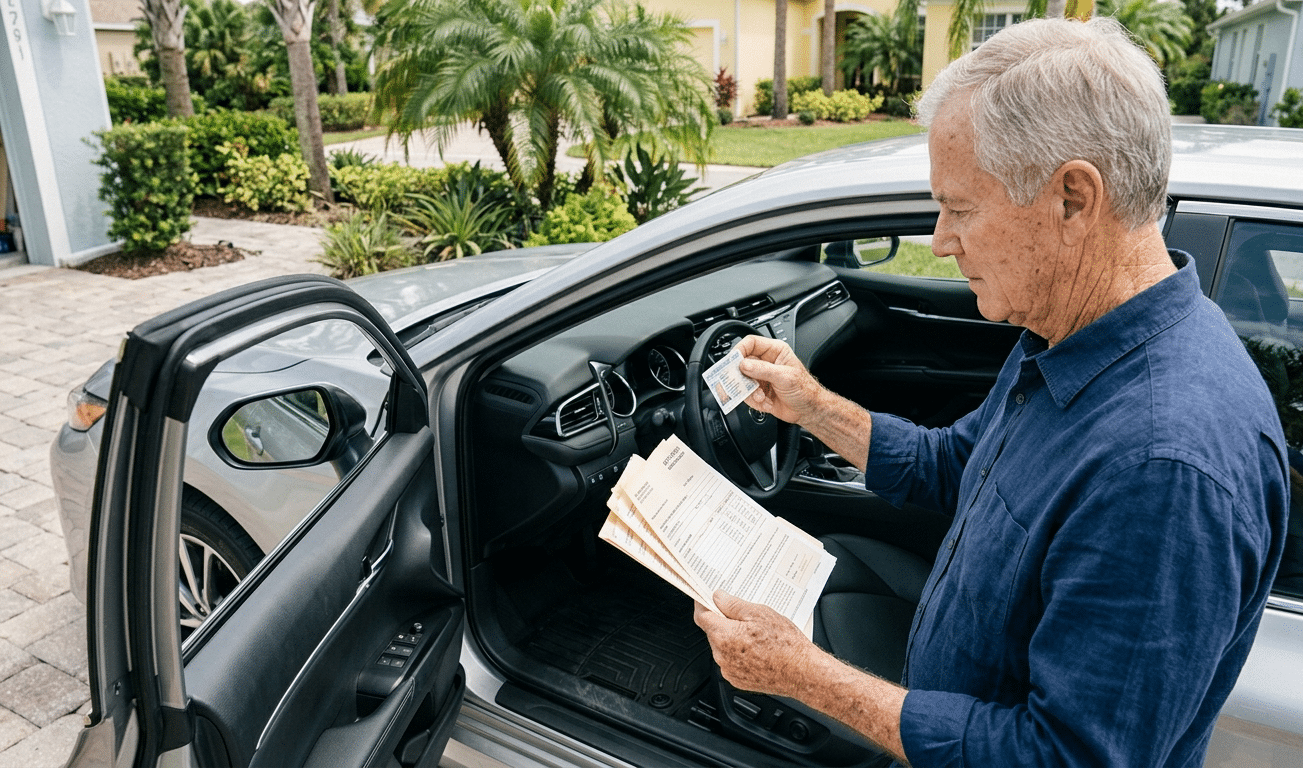
Florida has one of the largest senior populations in the country. Over one-fifth of the state’s residents are 65 or older according to U.S. Census Bureau data. That demographic concentration makes Florida a state where senior driving and insurance are particularly relevant topics, and where the pricing dynamics play out differently from most other states.
Most drivers see their insurance rates fall through their 40s and 50s and stay relatively flat into the mid-60s. Around age 70, the curve changes direction. Understanding why it changes, how much it changes, and what Florida-specific factors shape the outcome helps senior drivers make better decisions about coverage, carriers, and discounts.
When the Rate Increase Starts and How Much It Is
Insurance rates begin rising around age 70 for most Florida drivers. By that age, claim data shows higher injury costs for that age group relative to drivers in their 50s and 60s. The increase is not a penalty for individual behavior. It reflects what insurers observe across the full population of drivers in that age bracket.
Join The European Business Briefing
New subscribers this quarter are entered into a draw to win a Rolex Submariner. Join 40,000+ founders, investors and executives who read EBM every day.
SubscribeThe numbers from CarInsurance.com’s June 2026 research are specific: a 70-year-old Florida driver pays an average of $3,591 per year for full coverage, which is 4% more than a 65-year-old driver in the state. By age 75, full coverage climbs to $3,970 per year, a 15% increase from the 65-year-old baseline.
Nationally, a full-coverage policy for a senior driver averages $162 per month. In Florida, the monthly average is $212 according to Insurify’s June 2026 data. Florida seniors pay meaningfully above the national average for their age group, which reflects the broader Florida market dynamics around litigation, uninsured drivers, and weather risk that affect all drivers in the state regardless of age.
Why Rates Rise for Older Drivers
The statistical rationale is consistent across the insurance industry. Per-mile crash rates begin rising noticeably for drivers aged 70 to 74 and continue increasing after that. The primary driver is not increased accident frequency but increased injury severity: older bodies sustain more serious injuries in accidents that younger drivers might walk away from with minor damage. More serious injuries mean higher medical claim costs, and higher costs feed directly into what insurers charge.
At the same time, the long-term trend for senior driver safety is actually positive. The rate of fatalities per capita among drivers 70 and older dropped 47% since 1975 according to the Insurance Institute for Highway Safety, largely because older drivers have become better at limiting mileage, avoiding night driving, and voluntarily adjusting their habits to match their capabilities. The rate increase that comes with age is not as sharp as it was in previous decades.
After age 80, the increases become steeper. Rates at age 85 and older average $2,180 annually just for full coverage nationally, and Florida figures run higher than that national benchmark.
Florida’s Biggest Insurance Change in 50 Years
This is worth reading carefully if you are a Florida driver of any age, but it is particularly relevant for seniors who may be locked into existing policies without recent review.
Florida law changes effective July 1, 2026 are eliminating the no-fault PIP system that has been in place for over 50 years. As of that date, Florida moves to an at-fault system with mandatory bodily injury liability coverage of $25,000 per person and $50,000 per accident, along with $5,000 in medical payments coverage. The $10,000 PIP requirement is gone.
What this means practically for senior drivers: the coverage you had on June 30, 2026 may not reflect what the law now requires. If your policy was written under the old PIP framework and has not been updated, there is a real question about whether it is still compliant. Verifying your current policy against the new requirements is not optional. It is necessary.
The at-fault shift also changes how accident liability works. Under the old no-fault system, your own PIP paid your medical bills regardless of who caused the crash. Under the new at-fault system, the driver who caused the accident is responsible for the other party’s damages. For senior drivers who are more likely to be in accidents where injury claims are significant, having adequate liability limits above the new minimums matters more than it did under PIP.
The Mature Driver Discount: Florida’s Most Underused Senior Benefit
Florida law mandates that drivers 55 and older who complete an approved mature driver safety course receive a discount on their car insurance premium. The discount is at least 10% and must remain in effect for three years.
The courses are available online through DHSMV-approved providers and typically cost under $30. They can be repeated every three years to maintain the discount. The AARP Smart Driver course, IDriveSafely, and Safe2Drive are all DHSMV-approved options.
Many Florida seniors do not know this discount exists or assume it is minor enough to skip. On a full coverage policy running $3,591 to $3,970 per year, 10% represents $359 to $397 in annual savings. Over three years, that is $1,000 to $1,200 from a single course completion.
Low Mileage Discounts Matter More After Retirement
Retired drivers typically put significantly fewer miles on their vehicles than working-age commuters. Florida carriers offer low mileage discounts for drivers under approximately 7,500 to 10,000 miles annually, and the threshold varies by insurer.
If your driving pattern has shifted significantly since you last updated your policy, specifically if you no longer commute and drive primarily for local errands and appointments, updating your annual mileage estimate with your insurer is worth doing at your next renewal. Some carriers also offer usage-based insurance programs that track actual mileage and calculate premiums accordingly, which can produce meaningful savings for low-mileage retirees.
The Florida DMV Requirement That Catches Some Seniors Off Guard
At age 80, Florida requires in-person license renewal rather than the online or mail options available for younger drivers. At 80 and above, an in-person vision test at a Florida DMV location is required. There is no state-mandated road test requirement triggered by age alone, but physicians can report driving ability concerns to the DHSMV, which can initiate a review.
What Senior Drivers Should Do at Their Next Renewal
Comparison shopping produces the most consistent results for senior drivers facing age-related premium increases. Drivers who switched insurers in 2024 saved a median of $461 per year according to Budget Seniors’ 2026 analysis. Florida’s market is competitive, and carriers price senior drivers differently enough that loyalty to a single insurer beyond several years rarely produces optimal pricing.
Comparing car insurance Florida options specifically as a senior driver, with the mature driver discount applied and your current mileage reflected, gives a more accurate picture of what you should actually be paying than the unadjusted quote most people start with.