
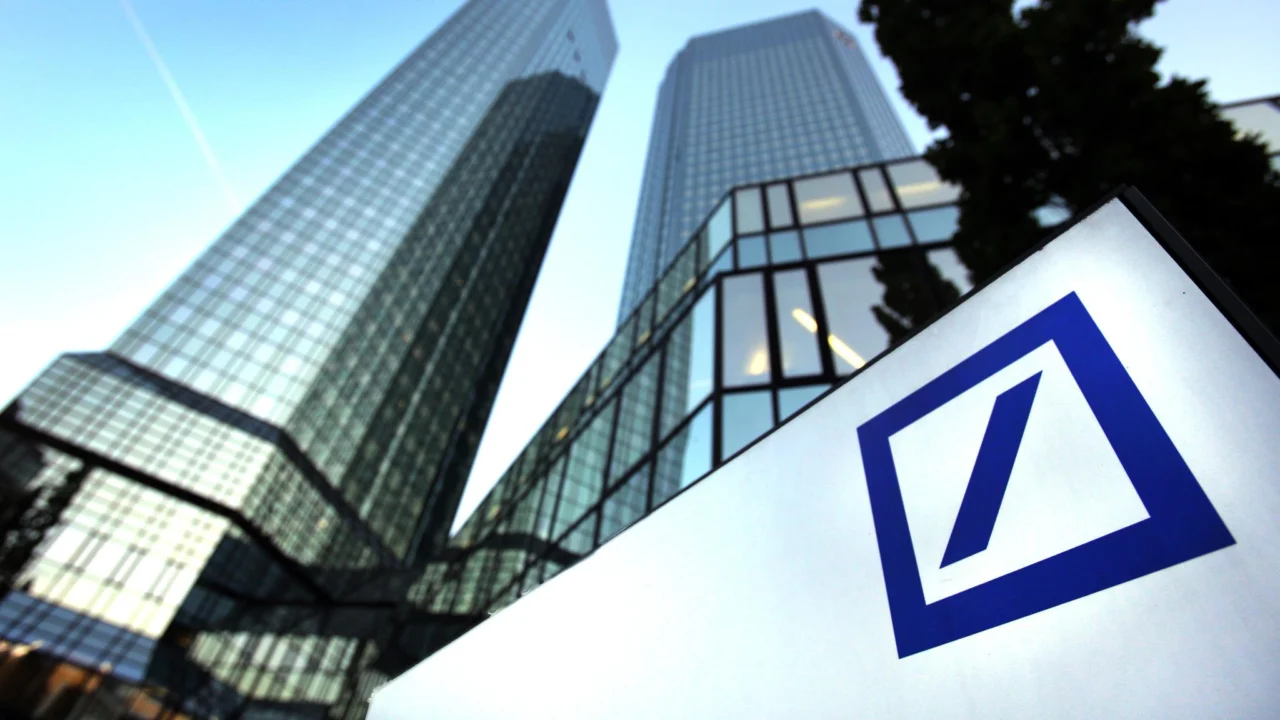
Shares of Deutsche Bank hit record lows this week on mounting concerns about the survival of the struggling German lender. In the past two weeks, it has been hit with billions in fines from the U.S. Justice Department.
IT has become increasingly hard to ignore the sinking ship that is Deutsche Bank, or to avoid the conclusion that something very nasty is developing at what was once seen as Europe’s strongest financial institution. Its shares have been in free-fall for a year, touching a new low of 10.7 euros on Monday, down from 27 euros a year ago. Over the weekend, the German Chancellor Angela Merkel said that there could be no government bail-out of the bank.
Since a peak in July 2015, shares have fallen more than 65 percent and the stock has erased more than half of its market value, from nearly $50 billion to about $16 billion this week. Meanwhile, net revenue fell almost 21 percent in the first half of this year from last year, according to the company’s interim report.
Join The European Business Briefing
New subscribers this quarter are entered into a draw to win a Rolex Submariner. Join 40,000+ founders, investors and executives who read EBM every day.
SubscribeA major concern for global markets about Deutsche Bank is its deep connections to global financial institutions, which has some investors fearing a larger bank crisis, though analysts continue to indicate that the situation is nowhere near so dire.
If indeed the German government does not bail the bank out, do we have another dire situation like Lehmans ?does all its counter-parties – the other banks and institutions it deals with going to start feeling anxious about trading with it. As we know from 2008, once confidence starts to evaporate, a bank is in big, big trouble. In fact, if Deutsche does go down, it is could take down the euro as well.
In The States if Deutsche Bank can negotiate its $14 billion settlement with the Justice Department down to the estimated sub-$5 billion figure, it may buy time for its attempt to restructure.
Fitch said last week that it expects the final settlement with the department to be far lower and “much more in line with provisions the bank has already set aside.”
“There are no rating implications at this stage, but if the size of the final settlement turns out to be materially more than the provisions made, this could result in negative rating action,” Fitch analysts said.
While European Banks have already established Litigation Reserves Deutsche Bank is also trying to sell assets in an effort to raise capital. On Wednesday, the bank announced that it will sell its British insurance business Abbey Life to Phoenix Group for 935 million pounds ($1.2 billion).
“This isn’t Lehman, this isn’t 2011 with Greece and some of the other euro issues. We’ve had a lot of cleanup since then,” Rebecca Patterson, managing director and chief investment officer at Bessemer Trust, said at a Bloomberg conference Wednesday.
IMF Managing Director Christine Lagarde told CNBC on Wednesday that she doesn’t see Deutsche Bank “at a stage where state intervention is absolutely called for at the moment”
The issue is for Germany is one of double standards. After letting Greece go to the wall and then for them to say say, actually we are bailing out our own bank Germany as the guardian of financial security in Europe may be seen to have one rule for one and another one for the rest. In truth, it would become impossible to maintain a hard-line in Italy, and probably in Greece as well.
The politics of a rescue are tricky and but the economics of a collapse disastrous . By ruling out a rescue, she may well have solved the immediate political problem but if the crisis gets worse I dont think she will stick to the hard line being taken at the moment. A bailout will no doubt be arranged – too big not or the darky murky waters of Lehman may be reached
One thing is for sure is she refuses to a bail-out and responsible for a Deutsche collapse along with the unpopularity of her immigration policies – it will be the end and reputation in tatters , however is she rescues it calmness will be brought to the markets and the Euros however daily traders in European banks will be keeping a close eye on its decline with beating hearts


