































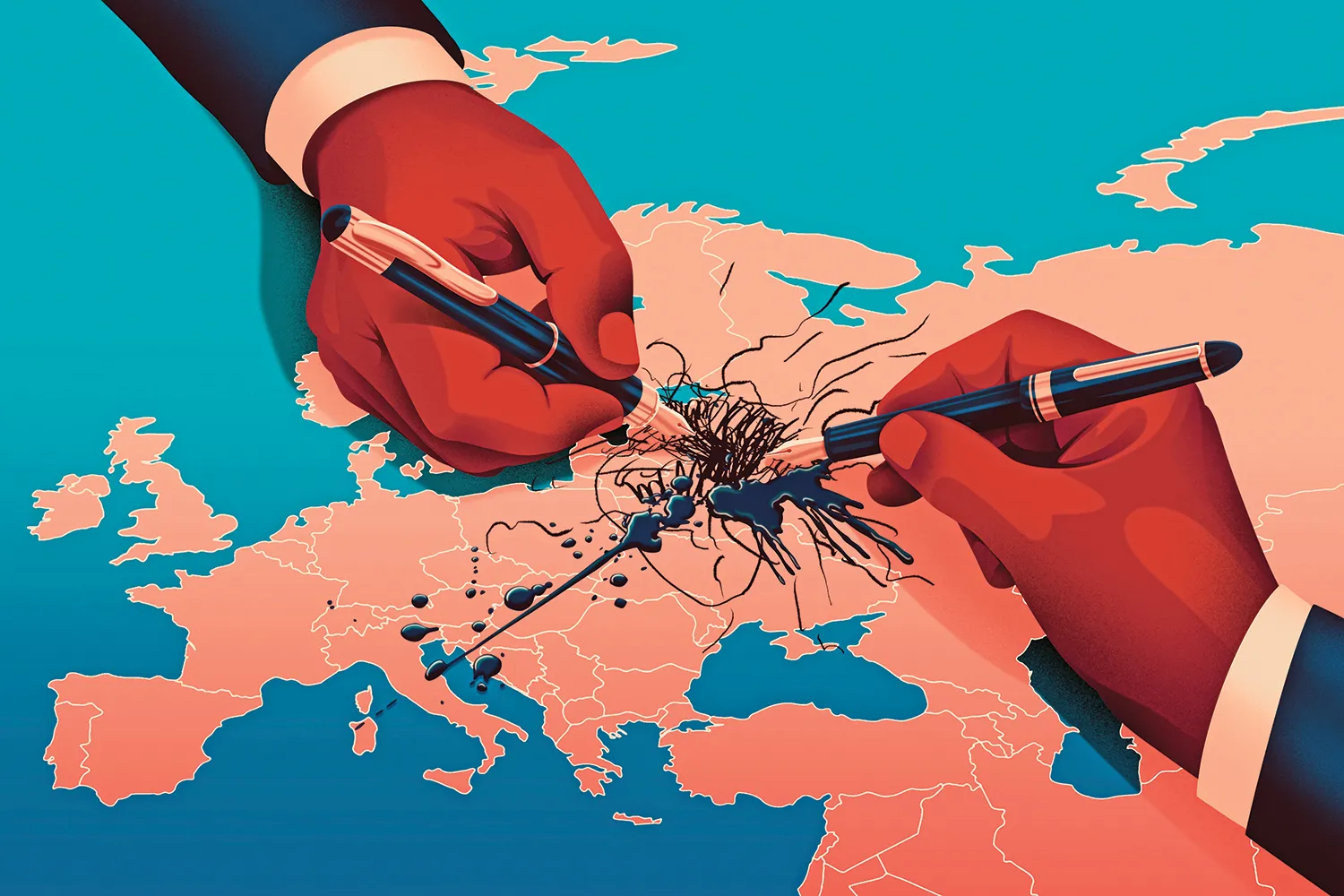
For more than a decade, Europe has struggled to reignite productivity growth. While the United States has experienced periodic surges driven by technology investment, scale effects and capital deepening, much of Europe has been stuck in a low-growth equilibrium. The consequences are no longer abstract: slower productivity feeds directly into weaker wage growth, lower innovation capacity and diminished geopolitical influence. For a region that once defined industrial leadership, the productivity debate has become a defining strategic challenge.
Today, policymakers, investors and business leaders increasingly recognise that Europe’s global competitiveness will depend on whether it can solve this long-running issue. The factors behind the malaise are well-documented — fragmented markets, uneven digital adoption, chronic underinvestment, and sluggish venture scale-up. What matters now is whether Europe can break the cycle.
A Decade of Underperformance
Europe’s productivity problem predates the pandemic, the energy crisis and the recent macroeconomic headwinds. Labour productivity across the EU has risen only modestly since 2010, with wide divergences between northern economies, where incremental gains have been steady, and southern states, where structural weaknesses persist.
Join The European Business Briefing
New subscribers this quarter are entered into a draw to win a Rolex Submariner. Join 40,000+ founders, investors and executives who read EBM every day.
SubscribeOne major drag has been the slow diffusion of advanced technologies. While Europe boasts world-class research institutions and strong engineering talent, the commercialisation engine has been weaker. A study on the continent’s innovation cycle published in European Business Magazine underscored how the fragmented regulatory landscape makes it harder for companies to scale efficiently — a theme explored recently in EBM’s coverage of why Europe’s innovation ecosystems lag global peers (via natural anchor text linking to:
https://europeanbusinessmagazine.com/innovation/the-three-pillars-of-europes-innovation-ecosystem/).
This underperformance has compounded the structural decline in major industrial sectors. Manufacturing — once Europe’s productivity powerhouse — has faced rising competition from Asia and persistent cost pressures. Meanwhile, many service industries remain shielded from cross-border competition, lowering incentives for firms to modernise.
Why the Gap With Global Competitors Is Widening
Europe’s challenge becomes clearer in comparative perspective. The US, despite political dysfunction, continues to benefit from scale, capital availability and a unified market. American firms capture more value from innovation because they reach size faster, attract deeper investment pools and exploit network effects.
By contrast, many European firms stall before they hit scale. Venture-backed companies, even promising ones, frequently sell prematurely or struggle to secure late-stage financing. EBM’s reporting on investor sentiment in European capital markets highlights how risk aversion has become an entrenched feature of the continent’s financial system (linking naturally to:
https://europeanbusinessmagazine.com/finance/why-investors-are-returning-to-european-capital-markets/).
At the same time, Europe’s energy costs remain structurally higher than those of competitors. While the continent has made exceptional progress on sustainability, the transition is uneven and costly. As noted in EBM’s sustainability analysis, firms face rising regulatory complexity even as they attempt to remain competitive globally (link to:
https://europeanbusinessmagazine.com/sustainability/the-european-green-deal-is-it-working/).
The result: a widening performance gap. Europe remains wealthy, stable and highly skilled — but the pace of productivity enhancement has not matched the speed of global transformation.
Digitalisation: Progress, But Not Fast Enough
Digital transformation is arguably the biggest lever to close the productivity gap. Yet Europe’s track record remains mixed. Large corporates have embraced automation, AI and cloud adoption, but SMEs — which form the backbone of the European economy — lag significantly.
Less than half of European SMEs have integrated advanced digital tools into everyday operations. Even fewer use AI, machine learning or predictive analytics at scale. Part of the issue is cost. Another is cultural: many mid-sized European firms adopt technology cautiously, upgrading incrementally rather than re-engineering entire business models.
Yet the gains are undeniable. Case studies published on EBM showing AI-powered supply-chain improvements demonstrate how digital adoption can deliver double-digit efficiency gains in logistics, manufacturing and procurement (link to:
https://europeanbusinessmagazine.com/technology/how-ai-is-transforming-global-supply-chains/).
The barriers, however, remain substantial. Fragmented data regulation, slow procurement cycles and a shortage of digital talent hinder transformation across sectors. Europe is producing excellent engineers — but not enough of them, and many are being lost to US and Asian tech hubs that pay more and scale faster.
The Missing Piece: A Truly Single Market for Services
Perhaps the most under-discussed driver of weak productivity is Europe’s failure to build a genuinely integrated market for services. While goods flow relatively freely across the EU, services are still governed by national rules, licensing requirements and protectionist barriers.
This fragmentation raises costs, reduces competition and prevents firms from operating at full European scale. For example, professional services firms often need different licences in multiple jurisdictions, making expansion slower and more expensive. Digital services face data-sovereignty restrictions that complicate cross-border operations.
EBM’s analysis of Europe’s stalled single-market ambitions captures how decades of partial integration have created structural inefficiencies that depress output (link using natural anchor text:
https://europeanbusinessmagazine.com/business/why-europe-is-losing/).
Fixing the single market for services would instantly increase competitive pressure, drive consolidation and accelerate digital adoption — all of which strengthen productivity over time.
Can Europe Break the Cycle?
There are reasons for cautious optimism. First, the EU has recognised the urgency of the challenge. New frameworks for capital markets union, digital competitiveness and AI regulation are being advanced — albeit slowly. Efforts to streamline cross-border investment should improve financing for high-growth companies, helping them scale rather than sell early.
Second, companies across Europe are increasingly investing in productivity-enhancing initiatives. Automation, robotics and advanced analytics are being deployed in manufacturing hubs from Bavaria to Emilia-Romagna. Nordic economies continue to demonstrate how combining flexible labour markets with high public investment can produce world-leading productivity outcomes.
Third, geopolitical shifts may encourage Europe to invest more aggressively. The push for strategic autonomy — in energy, technology and defence — is prompting governments to support domestic capability building. This, in turn, boosts private-sector investment in innovation and supply-chain resilience.
Still, transformation will require more than policy tweaks. Europe must adopt a mindset that rewards risk-taking, embraces competition and reduces fragmentation. The most dynamic economies — from the US to parts of Asia — succeed because they allow firms to scale quickly, fail quickly, and reinvest quickly. Europe’s slower, more cautious approach limits the compounding benefits of innovation.
The Path Forward
To regain global competitiveness, Europe needs a coherent productivity agenda. That agenda must include:
1. Capital deepening: More investment in AI, automation and high-tech infrastructure.
2. Integrated markets: Completing the long-promised single market for services.
3. Talent strategy: Fixing shortages in digital skills, STEM education and high-skilled immigration.
4. Scale-up support: Building deeper capital markets, improving IPO pipelines and reducing regulatory friction.
5. Regulatory simplicity: Ensuring the green and digital transitions don’t impose excessive compliance loads on businesses.
As EBM recently explored in its coverage of Europe’s need for better scale-up financing, solving the capital-allocation problem could unlock a new wave of innovation across the continent (via natural anchor text linking to:
https://europeanbusinessmagazine.com/finance/europes-new-fund-for-scale-ups/).
The stakes are significant. Productivity is not merely a statistic; it determines living standards, competitiveness and geopolitical resilience. If Europe can reverse the decline, it can remain a global economic force. If not, it risks falling further behind competitors who are willing to move faster, invest more and take bigger risks.