






























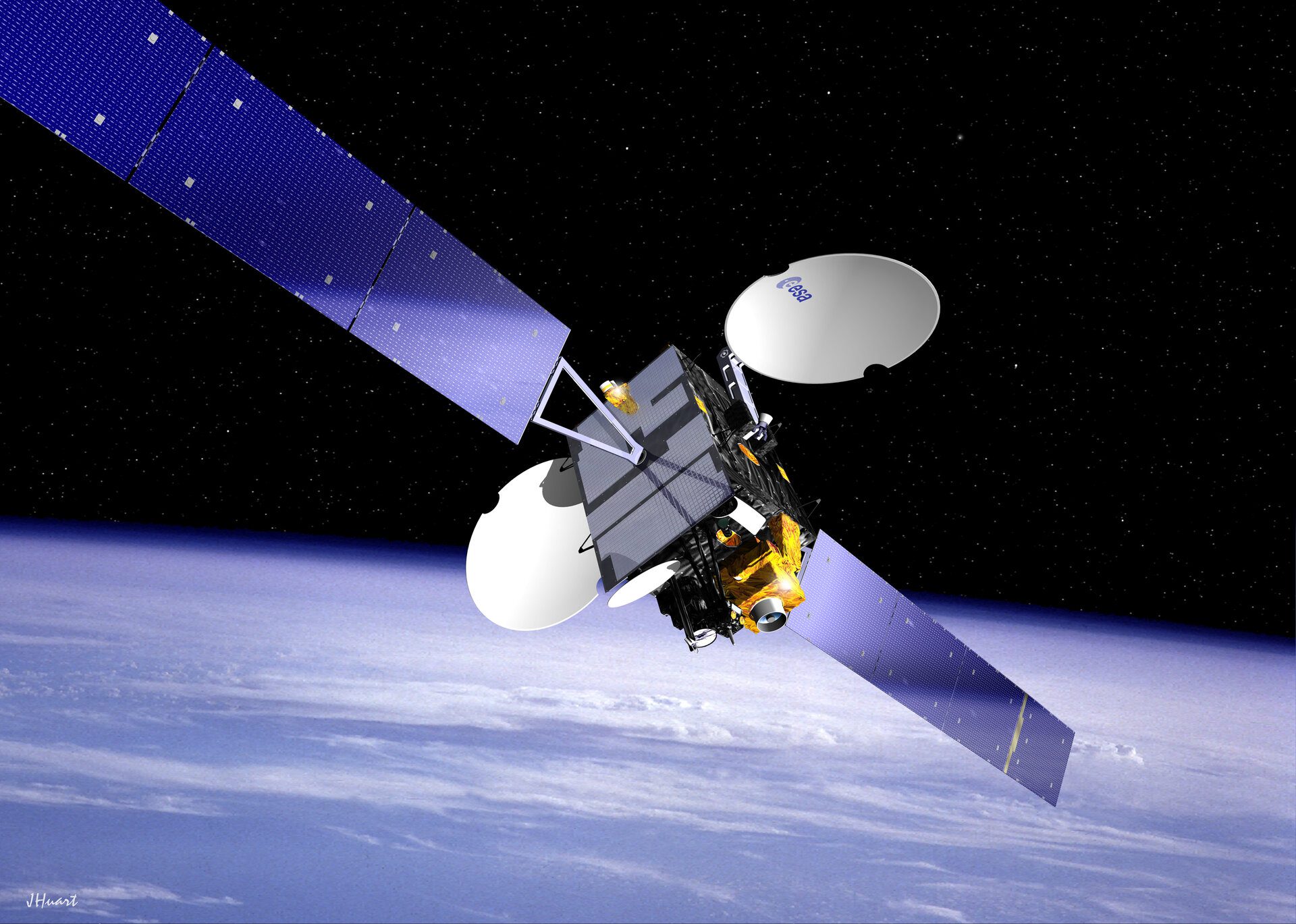
The race to dominate low-earth-orbit satellite connectivity has just escalated dramatically. Amazon is in advanced talks to acquire Globalstar, the satellite telecommunications group with a market capitalisation of approximately $8.8 billion, in a move that would turbocharge its efforts to build a space-based internet business capable of rivalling SpaceX’s Starlink.
Amazon is in talks to buy satellite telecom group Globalstar as it ramps up efforts to build its own low-earth-orbit satellite business to rival SpaceX’s Starlink, according to the Financial Times. Yahoo Finance Globalstar’s shares surged 24% to $85 in extended trading on the news. MarketScreener
What Is Globalstar?
Join The European Business Briefing
New subscribers this quarter are entered into a draw to win a Rolex Submariner. Join 40,000+ founders, investors and executives who read EBM every day.
SubscribeGlobalstar is not a household name — but it is far more strategically valuable than its profile suggests. The Louisiana-headquartered company operates a constellation of low-earth-orbit satellites providing voice, data and messaging services, and holds licensed spectrum across L-band, S-band and C-band frequencies that took decades to accumulate and cannot simply be replicated. Spectrum is the scarce resource that makes satellite telecoms work, and Globalstar’s holdings are among the most valuable assets in the sector.
The company’s profile was transformed in 2022 when it became the invisible backbone of one of Apple’s most celebrated product features. Globalstar operates the advanced satellite network and ground stations that power Apple’s Emergency SOS via satellite service, enabling iPhone users to contact emergency services when outside cellular and Wi-Fi coverage. Apple The partnership has since deepened considerably. Apple committed approximately $1.5 billion to Globalstar to fund the expansion of iPhone services, including a 20% equity stake, allowing Globalstar to purchase new satellites and expand its ground infrastructure. CNBC
That 20% Apple stake is now the central complicating factor in Amazon’s pursuit.
The Apple Problem
One complicating factor in the Amazon-Globalstar talks has been Apple’s ownership of a 20% stake, necessitating negotiations between Amazon and Apple. WKZO The dynamic is as strategically awkward as it sounds. Apple has poured well over a billion dollars into Globalstar precisely because it needs the company’s satellites and spectrum to power iPhone features that are increasingly central to its hardware proposition. Apple’s services use 85% of Globalstar’s network capacity, with the company’s own services running on the remaining 15%. Light Reading
The idea of Amazon — Apple’s rival in consumer devices, cloud computing and digital services — owning the infrastructure that powers iPhone satellite connectivity is not one Apple will welcome. Whether Apple exercises any rights over a change of control, seeks to negotiate protective terms, or simply sells its stake as part of a broader transaction remains the key unknown. Either way, Amazon will need Apple’s cooperation to get this deal done cleanly.
Why Amazon Wants This
Amazon’s Project Kuiper — its own satellite internet constellation — has been in development for years and is designed as a direct challenge to SpaceX’s Starlink. But building a satellite network from scratch is extraordinarily capital intensive and slow. Acquiring Globalstar would give Amazon something Kuiper cannot yet offer: an existing, operational constellation with licensed spectrum, established ground infrastructure, and a proven track record in consumer satellite connectivity.
Starlink has moved faster than almost anyone anticipated, accumulating millions of subscribers globally and establishing itself as the dominant player in low-earth-orbit broadband. Elon Musk’s operation is not just a satellite internet business — it is increasingly a geopolitical asset, having demonstrated its strategic value in conflict zones. Amazon’s urgency to close the gap is understandable.
The deal also fits the broader pattern of big tech’s push into physical infrastructure. Amazon has already committed $50 billion to OpenAI, is expanding AWS data centres globally, and is investing heavily in the compute infrastructure underpinning the AI economy. Adding satellite connectivity infrastructure to that stack is a logical extension of a company that increasingly views itself as the backbone of the global digital economy.
What Comes Next
Both sides were still negotiating some of the complexities of a deal after lengthy talks. WKZO The regulatory dimension will also be significant — a deal of this size involving spectrum assets, AI and cloud infrastructure, and the intersection of two of the world’s largest technology companies will attract close scrutiny from competition regulators on both sides of the Atlantic.
If it completes, the acquisition would mark a major inflection point in the satellite connectivity wars — and would signal that Amazon is done playing catch-up with Starlink.