






























EBM Weekend Read | London, 3 May 2026
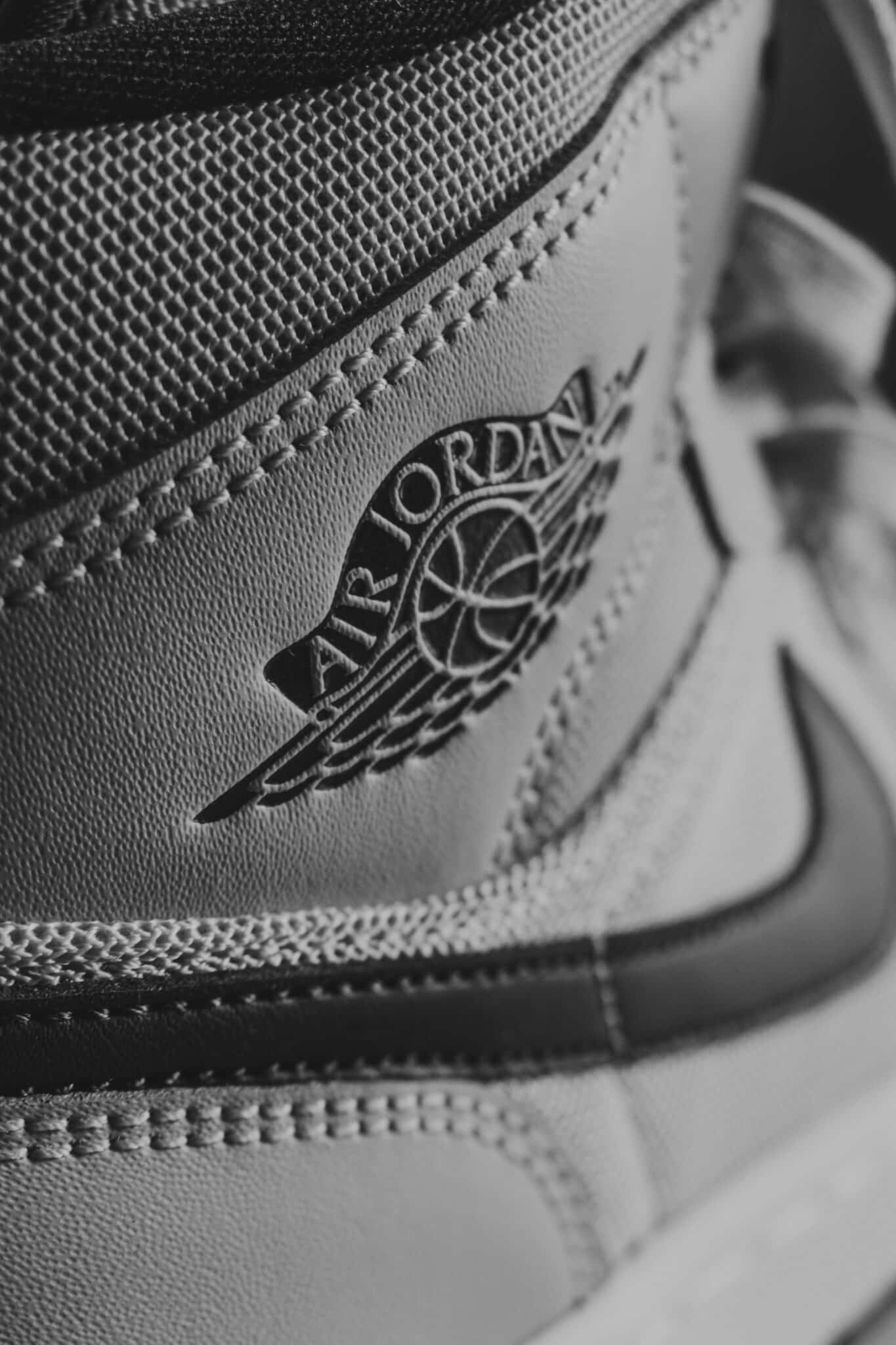
In the summer of 1984, Michael Jordan wanted to sign with Adidas. The single most consequential athlete-brand decision of the late twentieth century was, at the moment of choice, a foregone conclusion in Adidas’s favour — and the company managed to lose it.
Jordan has confirmed the position himself, repeatedly, across four decades of interviews. “All throughout college we wore Converse, and up to that point my favourite shoe was Adidas,” he told USA Today. “I was pro-Adidas the whole time.” His agent David Falk wanted him on Nike. His mother Deloris Jordan, eventually, wanted him on Nike too. But Jordan’s preference was for the German brand, and after Nike presented him their final offer he made a last private phone call to Adidas. The terms were simple. Match the Nike contract — or come anywhere close — and he would sign with Adidas. Adidas declined. The reason it declined is the entire story.
What followed is now corporate history. Nike paid Jordan a five-year $2.5 million contract with — at Falk’s insistence — a 25 per cent royalty on every shoe sold bearing his likeness. The first Air Jordan was projected by Nike to generate $3 million in its first three years. It generated approximately $126 million in its first twelve months. By 2022, Jordan Brand was a standalone $5.1 billion subsidiary inside Nike Inc., with Jordan personally drawing royalties estimated at between $150 million and $256 million in a single year. Across forty years, the brand has generated tens of billions of dollars in cumulative revenue. None of it accrued to Adidas.
Join The European Business Briefing
New subscribers this quarter are entered into a draw to win a Rolex Submariner. Join 40,000+ founders, investors and executives who read EBM every day.
SubscribeThe business question worth taking seriously is not why Nike won. It is why Adidas — the more prestigious brand, the brand Jordan actually preferred, the one that should have closed the deal on a sentence — failed to close it. The answer sits inside the company’s governance structure in 1984, and the lesson it produced has carried implications for every family-controlled European business through the four decades since.

The Adidas of 1984 was a company eating itself
Adi Dassler, who founded Adidas in 1949 and built it into the dominant global athletic brand of the 1960s and 1970s, died in 1978. His widow Kathe took over the chairmanship. By the time Jordan was negotiating with Nike in 1984, Kathe was in poor health and the company was being run as a constellation of fiefdoms — her son Horst running international expansion from France through ARENA and Le Coq Sportif acquisitions, four daughters running separate operational divisions, and the daughters’ husbands closely involved in management. Succession planning was the dominant boardroom conversation.
In that environment, a five-year contract for a US basketball rookie ranked third in the NBA draft was a decision no one was empowered to authorise quickly. Adidas’s basketball strategy was anchored to Kareem Abdul-Jabbar, the existing Lakers superstar, and there was no internal appetite to disrupt that endorsement architecture for a player whose American value the European leadership did not fully comprehend. ESPN’s coverage of the negotiation period quoted David Falk plainly: “Adidas was really dysfunctional by that time.”
The result was procedural paralysis at the precise moment when speed mattered. Jordan offered Adidas the right of last refusal on his Nike deal. The company did not respond with terms. By the time Adidas executives in Germany understood what had been on the table, Nike had signed Jordan, and within twelve months had a $126 million product line that the Adidas board could not have authorised even if it had wanted to.
The structural failure was governance, not strategy
It is a common misreading of the Jordan story to frame it as Adidas missing the strategic significance of basketball, or underestimating Jordan personally, or being insufficiently American in its outlook. None of these explanations is satisfactory. Adidas had been signing US athletes successfully for decades. Adidas understood basketball as an emerging commercial frontier. Adidas had product capability — its leather construction was widely considered superior to Nike’s at the time.
What Adidas lacked, in 1984, was the governance discipline to take a multi-year unbudgeted endorsement decision quickly. The family succession crisis had created a structure in which no single executive had the authority to commit the company to a $2.5 million-plus contract on Falk’s timeline. The decision required collective family agreement at a moment when family members were positioning for control of the firm. The negotiation collapsed not because anyone said no — but because no one was empowered to say yes.
This is a recurring failure mode in family-controlled European businesses, and the Jordan story stands as the most expensive example. The same governance pattern has cost European companies decisions across luxury goods, sport-sector investment, automotive partnerships, and technology acquisitions, in every era since. When succession is contested and operational authority is fragmented, time-sensitive commercial decisions get lost between principals. Competitors exploit the gap.
What Nike got that wasn’t a shoe
The deal Nike signed was, on paper, a footwear endorsement. What it actually delivered was the architecture for the modern athlete-brand business. Three structural features set Air Jordan apart from any prior endorsement in athletic apparel:
First, the product was bespoke. Most prior NBA endorsements involved athletes wearing existing shoe lines for cash. The Air Jordan was a new product line designed around Jordan’s preferences, marketed under his name, with his input on design. The athlete became the brand, not the wearer of the brand.
Second, the royalty was equity. Falk’s 25 per cent royalty on Jordan-branded sales — a structure pushed initially by Jordan’s mother Deloris in negotiation — meant Jordan was no longer being paid a wage to advertise products. He was being paid a percentage of the value he created. This is the same structural insight Floyd Mayweather later applied to boxing promotion, and that contemporary athletes apply to private equity stakes in their own brand vehicles.
Third, the deal had no external promoter taking a cut. Nike worked with Falk, Jordan, and Jordan’s family directly. There was no intermediary agent layer extracting margin. The economic surplus of every Air Jordan sold flowed cleanly between Jordan and Nike, with no third-party promotional fee diluting the structure.
Adidas’s 1984 deal architecture, by contrast, was traditional cash-for-endorsement. It was the same model the company offered Abdul-Jabbar, the same model Converse offered Magic Johnson and Larry Bird. It was the model the entire athletic apparel industry used. Nike, forced into innovation by its underdog position, accidentally built the prototype for every major athlete-brand deal of the next forty years. Adidas, defending the existing model, did not.
The damage compounds
Adidas spent the 1990s and 2000s attempting to recover the basketball franchise it had dropped. It signed Kobe Bryant in 1996, lost him to Nike in 2003. It signed Tracy McGrady, Derrick Rose, James Harden, Damian Lillard. None replaced Jordan as a cultural force, and none built a sub-brand within Adidas comparable to Jordan Brand inside Nike. Adidas’s basketball division has remained, decade after decade, the secondary basketball brand in a market it once led.
The compounding effect across forty years is difficult to overstate. Nike’s 1983 annual revenue was $867 million. Adidas’s was substantially larger. Today, Nike’s annual revenue exceeds Adidas’s by roughly 50 per cent, with Jordan Brand alone now representing roughly 10 per cent of the Nike Inc. consolidated total. The single decision to let Jordan walk in 1984 did not cost Adidas one deal. It cost the company a forty-year category leadership position that has never been recovered.
The lesson European business has not yet absorbed
The Adidas-Jordan story is now widely taught at INSEAD, IMD, London Business School, and Harvard. It is referenced in succession planning consulting, family-business governance frameworks, and any case study on speed-of-decision in commercial negotiation. The narrow lesson — sign Michael Jordan when offered — is trivially obvious in hindsight. The structural lesson is the one that still applies.
Family-controlled businesses with contested governance systematically underperform on time-sensitive strategic decisions. The cost is rarely visible at the moment of failure, because the cost is a counterfactual — the deal not signed, the partnership not formed, the acquisition not completed. Forty years later, the counterfactual is visible. Adidas in 2026 is a serious, profitable global business. It is also a permanent number-two in the category it once led, in significant part because of a single succession-distracted summer in 1984 when no one was empowered to say yes.
Every European family business currently navigating succession should read the Jordan story not as sports history, but as a warning. The sentence that governs the outcome is the one Falk delivered to Adidas: “Match the Nike contract — or come anywhere close.” The deals that look that simple in hindsight are the ones companies lose when no one is empowered to close them at the time.
Related Analysis
Real Madrid Hit €1 Billion — Europe’s Richest Football Clubs Ranked by Revenue
Why Burberry Burned £28 Million of Its Own Stock — On Purpose
Why Saudi Arabia Just Walked Away From a $6 Billion Golf Bet