




























As artificial intelligence moves from experimentation to deployment, the systems designed to secure digital infrastructure are coming under strain. The rapid growth of AI agents and non-human identities is challenging assumptions that have underpinned cybersecurity for decades, raising questions about how access, control, and risk should be managed in environments that operate at machine speed.
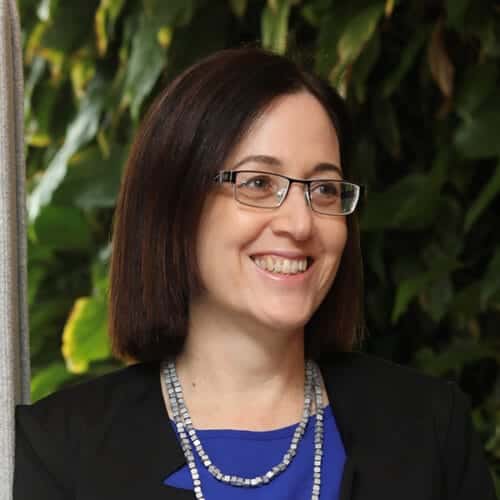
Yael Fainaro has spent much of her career at the intersection of strategy and cybersecurity, with senior roles at CyberArk, Cisco, and Synamedia. She now joins Akeyless as Chief Strategy Officer at a time when the concept of identity itself is shifting.
For European companies navigating regulatory pressure, digital sovereignty concerns, and accelerating AI adoption, these changes are not abstract. They are beginning to shape operational risk in real time. The question is no longer simply how to protect systems, but how to maintain control in environments where decision-making is increasingly delegated to autonomous processes.
Join The European Business Briefing
New subscribers this quarter are entered into a draw to win a Rolex Submariner. Join 40,000+ founders, investors and executives who read EBM every day.
SubscribeAgainst this backdrop, the challenge is as much strategic as it is technical. Security models built around predictability and human behavior are being stretched by systems defined by scale, speed, and uncertainty.
In the following conversation, Fainaro reflects on how organizations can adapt to this shift, where current approaches are falling short, and what it will take to build trust in an AI-driven infrastructure.
1. You’ve held senior roles across companies like CyberArk, Cisco, and most recently Synamedia. What has most shaped your approach to strategy over the course of that journey?
My experience has taught me that technology alone doesn’t determine a winner; a strategic plan with good alignment does. In times of rapid market shifts, like those seen with AI, a company’s success depends on a crystal-clear vision, a mission, and a strategic plan that everyone – from Product and Engineering to Sales and Marketing – is aligned behind. Strategy is the ‘connective tissue’ that turns innovation into market leadership. My focus is ensuring every business unit pulls in the same direction, allowing us to navigate change with speed rather than being paralyzed by it.
2. What drew you personally to this role at Akeyless at this point in your career?
It was the perfect combination of market dynamics, product and talent. The industry is facing a massive architectural gap. We are trying to secure an AI-driven, autonomous future using tools built for a static, human-centric past. Akeyless already has a working platform engineered from the ground up to solve for the sub-second, massive scale of machine identities. I wanted to be at the place where the next generation of identity security is actually being defined. But beyond the market need and the tech, it was the people—a team that is incredibly professional, visionary, and possesses a rare determination to win. I saw an opportunity to join a high-energy environment where the architecture is built for the future and the culture is built for the long haul.
3. You’ve spent much of your career building ecosystems. How do you think about the role of partnerships in defining winners today?
Historically, security has operated in silos: network, endpoint, identity, and application were all separate buckets. But for AI security to actually work, it must be multimodal. An AI agent interacts with all those layers simultaneously, so the security must operate together. No one organization can solve this alone, as the industry noted with the ‘Project Glasswing’ initiative. The winners will be those who provide a foundational layer of runtime authority that allows all these different security silos to speak the same language and protect the enterprise as one unified system.
4. If you had to explain the shift happening in identity security to a non-technical audience in one or two sentences, what would you say has fundamentally changed?
We’ve moved from a world of 1000s of people and services accessing applications and resources to perform specific predictable tasks to millions of digital workers making thousands of unpredictable decisions every single second.
5. Many organizations are still relying on models built for human users. Where are they most exposed today?
The biggest blind spot is unpredictability. Human behavior is relatively easy to map, but AI agents act autonomously—you can’t pre-determine exactly what data or resource they will need to touch to complete a task. If you use an old model that gives ‘broad permissions’ just to keep the agent working, you’ve created a massive security hole. The exposure isn’t just about who gets in, but what they are allowed to do at the very moment they are doing it. We have to apply the classic principle of ‘Least Privilege’ at a sub-second, machine speed.
6. Looking ahead, what will differentiate companies that successfully secure AI-driven environments from those that fall behind?
The differentiators will be the ones who successfully apply ‘old’ principles to ‘new’ speeds. The principles of Zero Trust and Just-in-Time access are still the gold standard, but the companies that fall behind will be those trying to implement these manually or through solutions not designed for AI scale. The successful ones will adopt an architecture that automates these principles at scale, turning security into a competitive advantage for their AI initiatives.
7. When you think about your first year in this role, what is the one thing you would want to have clearly moved forward?
I want to have moved the conversation from ‘How do we lock down AI?’ to ‘How do we enable AI?’ If I can help the world’s leading enterprises bridge that trust gap—shifting them from experimentation to full-scale production because they finally have a secure, aligned strategy in place—then I’ll consider that a successful first year.