




























15 September 2026 | By Katie Winearls — EBM Newsdesk Analysis
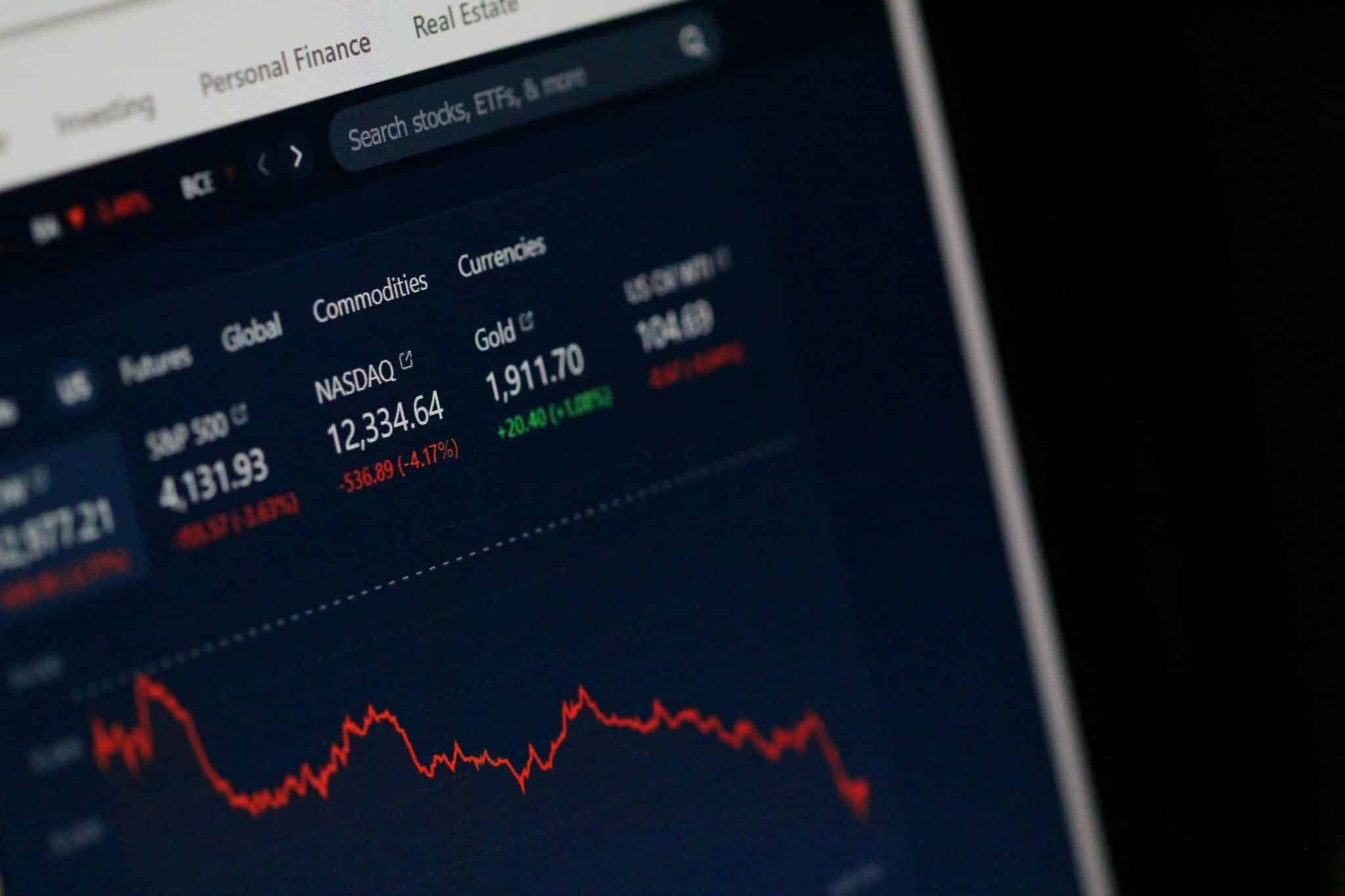
Wall Street has been reminded that the artificial intelligence boom is not operating in a vacuum. US technology stocks fell on Monday as warnings from some of the industry’s most influential executives about the speed of AI development collided with a less forgiving economic backdrop of higher oil prices, rising Treasury yields and expectations of further Federal Reserve tightening. Nvidia fell 3.4%, while the Philadelphia Semiconductor Index dropped 5.9%, as investors began questioning whether the extraordinary spending cycle behind the AI trade can continue at its current pace.
The immediate trigger was unusual. Dario Amodei, chief executive of Anthropic, has called for the AI industry to slow the development of increasingly powerful systems, arguing that the pace of progress is becoming reckless. OpenAI chief Sam Altman and other technology leaders subsequently backed elements of the argument, while Elon Musk also supported the broader call for greater caution. Markets, however, heard something slightly different: if the people building the technology are talking about slowing down, what happens to the hundreds of billions of dollars being committed to the chips, data centres and power infrastructure needed to keep the AI race running?
Join The European Business Briefing
New subscribers this quarter are entered into a draw to win a Rolex Submariner. Join 40,000+ founders, investors and executives who read EBM every day.
SubscribeThat is why the memory-chip companies were hit particularly hard. Micron fell 5.3%, while other major semiconductor and memory names also suffered heavy losses. These companies have been among the biggest beneficiaries of the AI investment boom because advanced models require enormous quantities of high-performance memory. The market has effectively been pricing in years of accelerating demand. A suggestion that the development cycle could be slowed therefore strikes directly at one of the assumptions underpinning some of the industry’s richest valuations.
Nvidia remains at the centre of this debate. The company is not simply another technology stock: it has become one of the clearest public-market expressions of the AI infrastructure boom. Its chips sit at the heart of the computing systems being assembled by the world’s largest technology companies, which means investors have increasingly treated Nvidia’s growth as a proxy for the wider AI spending cycle. EBM has previously examined why European defence stocks are increasingly being treated like technology stocks, and a similar principle has been at work in AI: investors have been willing to pay for the infrastructure required for a technological transformation before the full economic returns are visible.
What has changed is the cost of financing that transformation. The US 10-year Treasury yield briefly moved above 5% on Monday for the first time since 2023, while markets were pricing in a strong probability of another Federal Reserve rate increase this week. Higher bond yields matter enormously for technology companies because much of the AI boom depends on investment today for profits that may arrive years from now. The higher the cost of capital, the harder it becomes to justify valuations based on distant future earnings.
Then there is oil. Brent crude settled around $105.68 a barrel on Monday after briefly moving towards $110 as disruption to Saudi energy infrastructure and wider tensions in the Middle East raised fresh concerns about global supply. Higher energy prices add another layer of pressure because they increase inflation and make it more difficult for central banks to cut rates. That creates an awkward combination for growth stocks: the technology sector is facing questions over its own spending cycle at exactly the moment that the macroeconomic environment is becoming less supportive.
The wider market reaction was comparatively contained. The Nasdaq fell 0.6%, the S&P 500 lost 0.5% and the Dow Jones slipped 0.3%. That distinction matters. Investors were not abandoning technology altogether. Rather, the selling was concentrated in the parts of the market most exposed to the assumption that AI spending will continue rising at extraordinary rates. Some software companies actually recovered as investors reconsidered whether AI competition could eventually benefit businesses that use the technology rather than manufacture the infrastructure behind it.
There is also a geopolitical complication. The AI race is no longer simply a competition between technology companies. It has become part of the strategic rivalry between the US and China. That makes a voluntary slowdown difficult to imagine. As Deutsche Bank strategist Jim Reid noted, companies have little incentive to step back if competitors continue developing their systems, while governments increasingly view AI capability as a strategic asset. EBM has already looked at Europe’s growing dependence on US technology and the question of AI sovereignty, and this latest market reaction highlights why that issue matters beyond regulation.
For European investors, the lesson is becoming clearer. The AI story is still enormous, but it is no longer a one-way bet on ever-increasing chip demand and ever-higher valuations. EBM’s coverage of Europe’s answer to Palantir and the wider US-UK technology relationship has highlighted how deeply AI is becoming embedded in industrial and geopolitical strategy. The question now is whether markets have moved too quickly in pricing the winners.
The EBM View
The irony of Monday’s sell-off is that a call for safer and more controlled AI development does not necessarily mean less AI investment. It could mean different investment. More money may go towards safety, monitoring, cybersecurity and governance, while the infrastructure build-out continues. But markets have become accustomed to spectacular growth, and spectacular growth requires spectacular expectations.
The real test for Nvidia and the wider AI trade is therefore not whether AI slows down. It is whether the industry’s extraordinary capital spending can continue to generate returns quickly enough to justify the valuations attached to it. With oil above $100, Treasury yields around 5% and central banks once again worried about inflation, investors are discovering that even the biggest technology revolution in a generation still has to operate inside the real economy.






