





























The launch programme includes a one-day trade exhibition, Master of Wine masterclass and Michelin-starred pairing dinner, highlighting Xinjiang terroir.
SINGAPORE – Media OutReach Newswire – 14 November 2026 – Eleven boutique wineries from China’s Xinjiang Uygur Autonomous Region will make their collective Singapore debut on Nov. 19 & 20. This campaign, titled “Xinjiang Wine: A World of Chinese Terroir”, will introduce Southeast Asian sommeliers, importers and fine wine collectors to 68 labels spanning four distinct Xinjiang viticultural subregions.
Organized by the Forestry and Grassland Administration of Xinjiang Uygur Autonomous Region alongside campaign lead Up-Chinese Wine (UCW) and strategic partners Vinexpo Asia and Jin Ting Wan Chinese Restaurant, the tripartite initiative aims to establish an international trade platform bridging production with distribution, expand on-trade dining channels and elevate the regional identity of Xinjiang wine across Southeast Asia.
Join The European Business Briefing
New subscribers this quarter are entered into a draw to win a Rolex Submariner. Join 40,000+ founders, investors and executives who read EBM every day.
SubscribeThe showcase features 68 core labels—including 60 domestic and international award winners—presented across three invitation-only trade and gastronomic sessions:
- Nov. 19 — Gala Pairing Dinner: Hosted at Singapore’s Michelin-starred Jin Ting Wan Chinese Restaurant overlooking Marina Bay, the opening dinner pairs one flagship vintage from each of the 11 participating wineries with bespoke Cantonese fine dining. Jin Ting Wan head sommelier Joe Yang, recipient of the 2026 Michelin Guide Singapore Sommelier Award, will spearhead an ongoing initiative to integrate Xinjiang vintages into the restaurant’s wine program.
- Nov. 20 — Regional Masterclass: Master of Wine Xing Wei, who curated the lineup for both the gala dinner and educational programming, will lead an analytical masterclass examining the viticultural evolution, macroclimates, soil compositions and varietal profiles of Xinjiang’s four primary wine-producing subregions.
- Nov. 20 — Trade Exhibition and Walk-Around Tasting: Open by invitation to certified sommeliers, wine importers, distributors, high-end restaurateurs, trade media and collectors, the exhibition enables side-by-side comparative tastings across all 68 labels and 60 award winning wines.
Government Backing and Market Expansion The Singapore debut follows seven policy measures issued by the General Office of the People’s Government of Xinjiang Uygur Autonomous Region to modernize the regional wine sector. The directives focus on upgrading vineyard grape bases, expanding corporate vinification and processing infrastructure, strengthening regional brand equity, advancing wine tourism and industry integration, reinforcing viticultural research and expanding financial guarantees for overseas market entry.
Concurrently, an official delegation from the Forestry and Grassland Administration of Xinjiang Uygur Autonomous Region will conduct market research in Singapore—evaluating local consumption patterns, import regulations and distribution networks—while meeting with major importers, restaurant groups and trade associations to build long-term commercial partnerships.
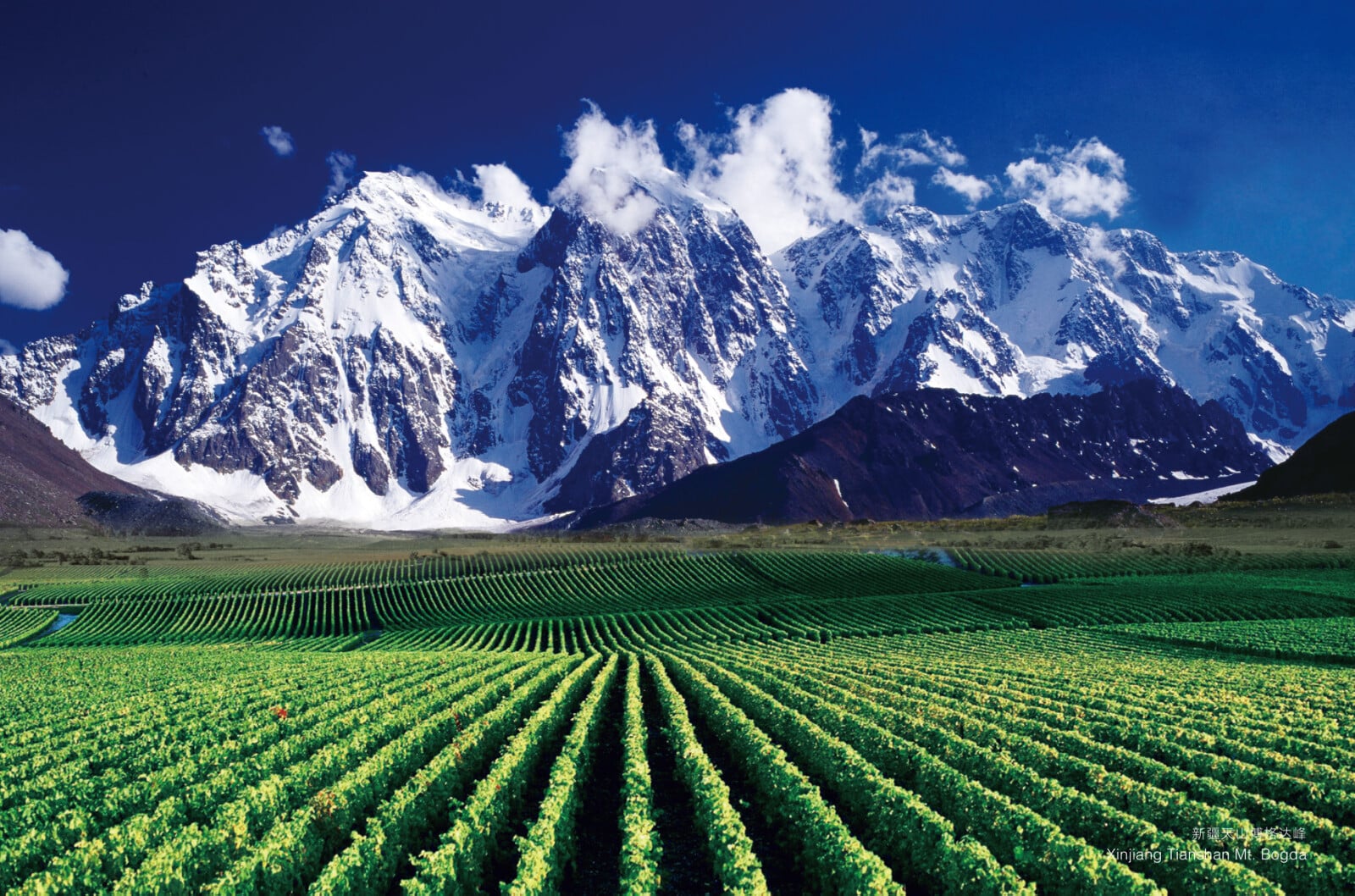
Four Distinct Terroirs of the Tianshan Mountains Fed by glacial snowmelt from the Tianshan Mountains, Xinjiang’s vineyards span vast geographic distances north and south of the range, producing contrasting mesoclimates and varietal expressions:
- Turpan-Hami (Tu-Ha) Basin: Characterized by an arid, high-heat continental climate suited to ripe, concentrated styles.
- Yanqi Basin: Naturally moderated by surrounding mountains and nearby lake systems that temper seasonal extremes.
- Northern Slopes of the Tianshan Mountains: Home to Xinjiang’s largest wine-producing cluster and a center for modern, large-scale experimental viticulture.
- Ili Valley: Uniquely tempered by warm, humid Atlantic airflows that create a markedly distinct growing environment.
Participating Wineries The 11 exhibiting producers representing all four subregions are:
Turpan-Hami Basin
- Puchang Vineyard
Yanqi Basin
- Château Aroma
- Tiansai Vineyards
- Bainian Manor
- Château Zhong Fei
Northern Foothills of Tianshan Mountains
- Château Xianghai
- Château Lixuan
- Yaochixiye Winery
- Tangting Xialu Winery
Ili River Valley
- Silk Road Vineyards
- Château Crescent
Notes to Editors: Two Millennia of Silk Road Viticulture
Modern Xinjiang producers combine contemporary vineyard management, clonal selection, terroir mapping and international winemaking technology with a viticultural history spanning more than 2,000 years. Historically known as the Western Regions (Xiyu), Xinjiang served as a primary conduit for the east-west exchange of Vitis vinifera and winemaking craft along the overland Silk Road.
Between the third and second centuries B.C., winemaking techniques crossed the Pamir Plateau into oasis kingdoms north and south of the Tianshan Mountains, including Niya, Kucha (Qiuci), Karasahr (Yanqi) and Gaochang. Archaeological discoveries—such as a 2,300-year-old grapevine unearthed at the Yanghai Tombs in Shanshan County, Turpan, and painted pottery bearing grape motifs in Hejing County—date local viticulture prior to imperial envoy Zhang Qian’s 138 B.C. diplomatic expedition, which introduced Vitis vinifera varieties from Dayuan to the Han court. Subsequent artifacts, including Loulan and Astana tomb murals depicting vineyard cultivation and wine pressing, Gaochang tax ledgers recording vineyard acreage and wine levies, and Tang dynasty records of Gaochang tribute wines sent to Chang’an, document an unbroken regional winemaking lineage.
Hashtag: #XinjiangWine
The issuer is solely responsible for the content of this announcement.