































Finance teams still compare a render desk with a credit pool, and the pool only helps after someone reads what a year of credits buys. A desk signs a still, sends it back, and bills the revision. A pool prints a stock of credits and a set of estimated video counts. On Seedance 2.0 API the yearly column is concrete: Starter is 199 dollars billed for the year and 24,000 credits, Pro is 799 dollars and 150,000 credits, Studio is 1,199 dollars and 320,000 credits. Free is 10 credits a month. Credits are described as never expiring, including after a subscription ends, and yearly credits are delivered upfront. None of those sentences is a finished file.
The comparison that matters is which job each side does. Seedance API is the pool: a stock, a commercial-use line on the paid plans, and estimated counts at a stated setting. The render desk is the signature on the still. Buying the larger stock does not retire the desk if the still is still wrong. This piece reads the yearly numbers, then says what they do not decide.
Join The European Business Briefing
New subscribers this quarter are entered into a draw to win a Rolex Submariner. Join 40,000+ founders, investors and executives who read EBM every day.
Subscribe
A Credit Pool Is Not A Render Desk
A render desk fails in public when the wrong still ships. The cost is a reshoot or a same-day cycle of notes, not a missing login. A credit pool fails more quietly: the stock looks large, the estimated video count looks large, and the still was never approved. Those are different failures. A buyer who collapses them will either overpay a desk for volume or treat an estimate as a delivery.
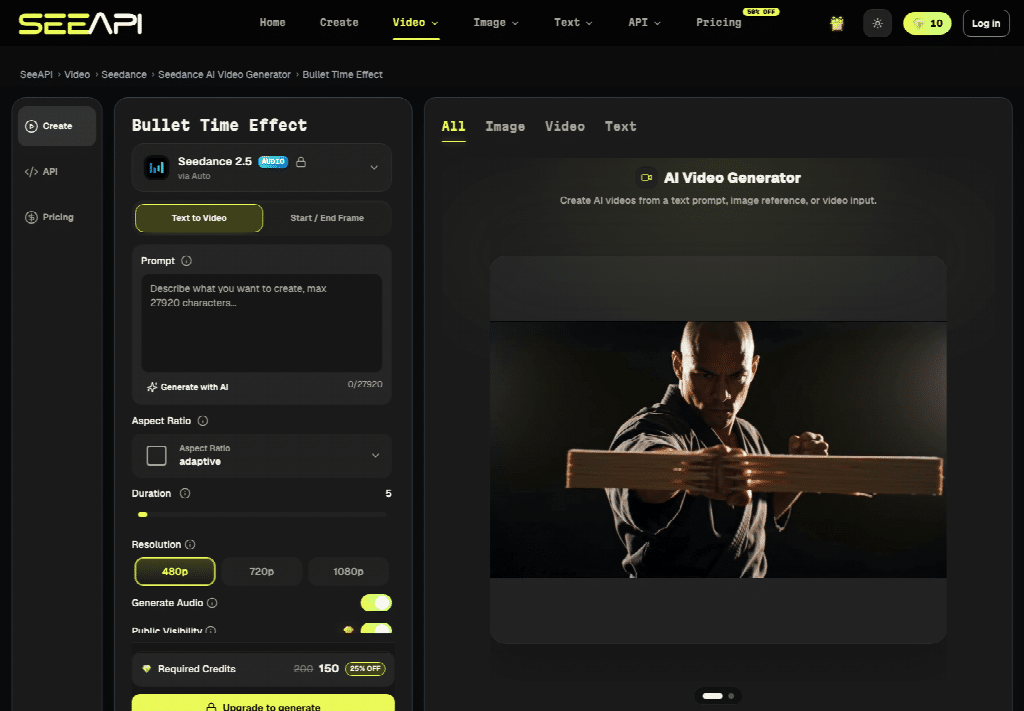
The test for this comparison is narrow. Hold the still fixed. Ask what the yearly page says you can attempt at one setting, text to video at 480p for 5 seconds. Then ask who is still allowed to reject the result. If the answer is “nobody, the count is the delivery,” the pool is being misread.
Yearly Plans Buy A Credit Stock
The yearly view is the one to quote in a budget note, because the page also shows a monthly equivalent that is easy to mix with the billed total. Starter displays about 16.6 dollars a month against 199 dollars billed yearly. Pro displays about 66.6 dollars a month against 799 dollars billed yearly, with a save-33-percent mark. Studio displays about 99.9 dollars a month against 1,199 dollars billed yearly, with a save-50-percent mark. The credit stocks beside those yearly totals are 24,000, 150,000, and 320,000. Cancel anytime is printed with the note that yearly credits arrive upfront. The stock is the number a finance sheet can hold. The monthly equivalent is a display.
| Plan | Billed yearly | Credits | Commercial use | Exports |
| Free | 0 | 10 a month | Not listed as included | Watermarked |
| Starter | 199 dollars | 24,000 a year | Included | HD, watermark-free |
| Pro | 799 dollars | 150,000 a year | Included | HD, watermark-free |
| Studio | 1,199 dollars | 320,000 a year | Included | HD, watermark-free |
Read the table as a stock sheet. 150,000 divided by 24,000 is 6.25, so the Pro stock is six and a quarter times the Starter stock. 320,000 divided by 150,000 is about 2.13, so Studio is a bit more than double Pro. Those ratios are credit ratios. They are not ratios of approved films.
Paid Plans List Commercial Use On The Sheet
Commercial usage is marked included on Starter, Pro, and Studio. That line is why a paid pool can sit next to a client job at all. It does not say the output is on-brand, and it does not say a lawyer has seen it. It says the plan, not the free row, is the one that lists commercial use. A desk that already has a release process keeps that process. The plan line removes one objection, the “free and watermarked” objection, and leaves the rest.
Free Stays Watermarked And Too Small To Stock
Free is a different product from the paid stocks. Ten credits a month, watermarked exports, and the provider limited to SeeAPI. It is a look, not a campaign stock. A buyer who puts Free in the same column as 24,000 credits will mis-state the year. The watermark is the other half of that mistake: a client file that still carries a watermark has not cleared the paid export line, whatever the motion looked like in preview.
Five Second Video Counts At 480p
Under the video costs, the page estimates how many text-to-video clips the yearly stocks cover at 480p for 5 seconds. The free column for those rows was blank when read, so this comparison does not invent a free video count. On the paid tiers the printed estimates for Seedance 2.5 were about 160, 1,000, and 2,133. For Seedance 2.0 they were about 320, 2,000, and 4,266. On each tier the 2.0 figure is double the 2.5 figure. Double is a count of estimated clips at that one setting. It is not a claim that 2.0 is twice as good.
| Model at 480p, 5 seconds | Starter | Pro | Studio |
| Seedance 2.5 | about 160 | about 1,000 | about 2,133 |
| Seedance 2.0 | about 320 | about 2,000 | about 4,266 |
Seedance API prints those counts as estimates. Resolution and duration can change the cost, which is why this table names 480p and 5 seconds and stops. A 1080p master is a different sum, and it should be read off the composer for that setting rather than scaled from this table in a spreadsheet.
Starter Is The Small Paid Count
About 160 clips on Seedance 2.5 at that setting is the Starter year if every credit went to that one configuration, which no team will do. The number is a ceiling illustration, not a production schedule. A desk that needs a handful of signed spots may never touch the ceiling. A desk that needs hundreds of variants is looking at Pro or Studio, and still needs a person to throw away the variants that break the still. The ceiling does not hire that person.
Double The Count Is Not Double The Fit
Choosing Seedance 2.0 because the estimate doubles is a stock decision. It fits when the job is more attempts at the same five-second setting and the still is already approved. It does not fit when the job is a single hero film that failed the brand check. More attempts of a wrong still are a larger pile of rejects. The render desk’s old question remains: does this frame match the approved pose? The doubled count does not answer it.
How A Buyer Reads The Two Tables
Put the stock table and the count table in the same note, then write one sentence the tables cannot write. The sentence is who rejects a clip. If that person sits on the render desk, the pool is an input budget. If nobody sits there, the pool will be treated as the approval, and the estimates will be quoted in a deck as if they were deliveries.
- Quote the billed yearly total, not only the monthly equivalent.
- Keep Free off the commercial row.
- Name the estimate setting: 480p, 5 seconds, text to video.
- Leave the free video cell blank rather than writing zero.
- Ask who can still reject the file after the credits are spent.
Step five is the desk. A same-day cycle of notes is still cheaper than a year of credits spent on a still nobody signed. The pool changes how many attempts the year can hold. It does not change the signature.
Limits Of Reading A Credit Pool As Footage
These counts are estimates at one setting, and the free cells were blank. Credits that never expire are still not a delivered file. Commercial use on a paid plan does not mean the clip passed a brand check. A later visit can show different estimates. Read the page again before the number enters a contract.
Keep The Desk If The Still Is Unsigned
Use the pool when the still is signed and the question is how many five-second attempts the year can hold at 480p. Starter, Pro, and Studio are three stocks, not three qualities of judgment. Seedance 2.0’s doubled estimate against Seedance 2.5 is a reason to look at attempt volume, not a reason to skip the desk.
Keep the separate render desk when the still is unsigned, when the export must be watermark-free and Free is the only row in the note, or when someone is about to paste an estimate into a client promise. The pool is a budget. The desk is the reject. A year of credits does not merge them.






