






























Beloit, Wisconsin, 12 September 2026 — EBM Weekend Read — By Nick Staunton, Editor-in-Chief
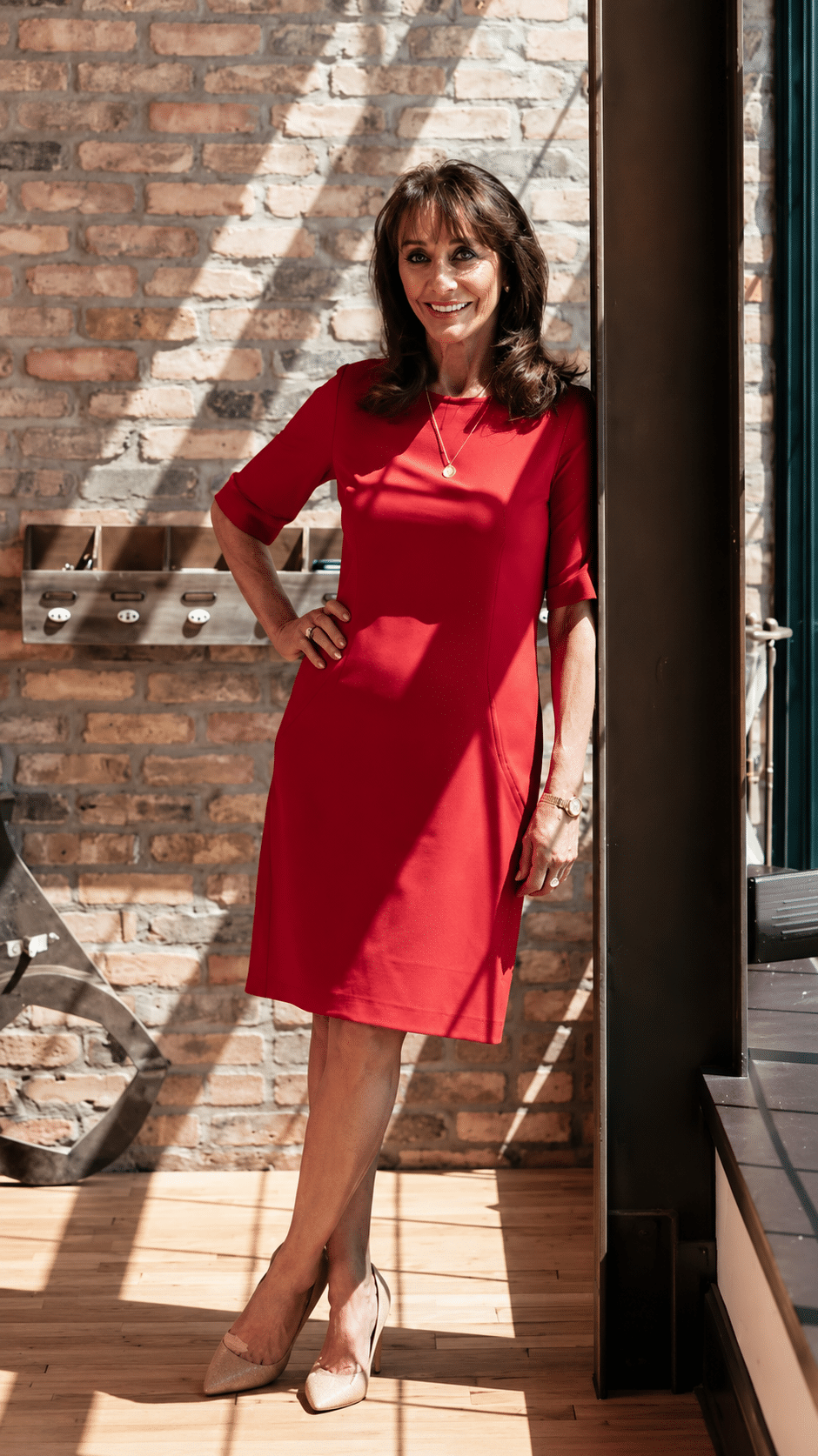
Diane Hendricks has topped Forbes’ list of America’s richest self-made women for eight consecutive years, with a net worth Forbes puts at $22.3 billion. She didn’t build it in software, biotech, or finance. She built it selling shingles, siding, windows and gutters — the unglamorous physical materials that go into every roof in America — through a company most people outside the construction trade have never heard of.
That company is ABC Supply, the largest wholesale distributor of roofing materials in the United States, with more than 970 locations, roughly 20,000 employees, and $20.2 billion in 2025 revenue. Hendricks co-founded it with her husband Ken in 1982. She has been its sole owner since 2013, when she bought out the remaining minority stakes held by Advent International, Apollo Global Management and Bradco Supply for approximately $1.4 billion. There is no venture capital in this story, no IPO, no app. There is a woman who grew up on a Wisconsin dairy farm, became a mother at 17, sold custom-built homes for a living, and married a roofer.
Join The European Business Briefing
New subscribers this quarter are entered into a draw to win a Rolex Submariner. Join 40,000+ founders, investors and executives who read EBM every day.
SubscribeFrom Farmhouse to Fortune
Hendricks was born Diane Marie Smith in 1947 and grew up with eight sisters on a small dairy farm near Mondovi, Wisconsin. She met Ken Hendricks, a high school dropout working as a roofing contractor, in 1975. They married, bought and renovated dozens of homes around Beloit, and used what they learned in the roofing trade to identify a gap in the market: contractors needed a faster, more reliable way to source roofing materials than the fragmented supply chains that existed at the time. They opened the first ABC Supply store in Beloit in 1982. Three more Midwest locations followed almost immediately.
The business model was never complicated. ABC Supply doesn’t manufacture anything — it distributes what other companies make, faster and more reliably than competitors, to the contractors who actually install roofs, siding and windows. That’s a deliberately unglamorous position in the supply chain, and it’s exactly why it worked: distribution is a scale business, and scale compounds. ABC’s two largest acquisitions — buying rival Bradco Supply in 2010 and building materials distributor L&W Supply in 2016 — were both about consolidating share in a business where being the biggest supplier is close to the entire competitive advantage.
Widowed and Handed the Wheel
Ken Hendricks died in December 2007 after falling from a construction site at their home in Afton, Wisconsin. He was 66. Diane assumed the chairmanship and has run ABC Supply and the broader Hendricks business empire ever since — steering the company through the 2008 financial crisis, a housing-market collapse that should have devastated a business selling roofing materials, and two decades of consolidation that left ABC Supply larger, not smaller, than when he died.
The empire extends well beyond roofing. In 2001, Diane and Ken founded Hendricks Holding Company to manage a growing portfolio of private investments spanning trucking and logistics, insurance, manufacturing, recycling, pharmaceuticals, and even film production — Hendricks has producer credits on “The Stoning of Soraya M.” and “An American Carol,” both released in 2008. Subsidiaries under the Hendricks umbrella include American Aluminum Extrusion Company, Federal Heath Sign Company, GEM Pharmaceuticals, and Universal Recycling Technologies, among dozens of others. In 2025, that holding structure was formally reorganised: Hendricks Holding Company was merged into Diane M. Hendricks Enterprises, the parent entity she’d created back in 2008, which then took back the Hendricks Holding name — a piece of corporate housekeeping that consolidated four decades of accumulated acquisitions under one clean structure ahead of an eventual succession.
The Quiet Compounding Machine
What makes Hendricks genuinely unusual among the ultra-wealthy isn’t the size of the fortune — it’s the shape of it. Amancio Ortega, the Zara founder, built a similarly quiet $25bn property empire by taking retail cash flow and converting it into unglamorous, irreplaceable physical assets rather than chasing financial engineering or speculative diversification. Hendricks followed a parallel instinct decades earlier: rather than selling ABC Supply at any of several points where a sale would have made her fabulously liquid, she bought out her partners entirely in 2013 and kept compounding a distribution business that isn’t going anywhere as long as American houses need roofs. Nine of the world’s ten richest people are now American tech founders, riding an AI boom that has added hundreds of billions to a handful of fortunes in a matter of months. Hendricks’s fortune moved in the opposite direction — one branch, one contractor relationship, one acquisition at a time, over more than four decades.
She has also become one of the most significant Republican political donors in the country, contributing at least $15 million to pro-Trump political action committees ahead of the 2024 election and serving on his 2016 campaign’s economic advisory council. That’s a deliberate, public use of the fortune the business built — distinct from the business itself, but impossible to separate from the platform that scale gave her.
The Bottom Line: Hendricks’s story is a useful corrective to how wealth creation gets talked about in 2026. Every other name near the top of the rich list right now got there through a technology re-rating — AI infrastructure, chip demand, platform economics that can add ten billion dollars to a net worth in a single trading session. Hendricks got to $22 billion the way industrial fortunes used to get built: by owning the boring, essential link in a supply chain that never stops being necessary, and refusing to sell it when the easy money said she should. There’s no algorithm in that story. There’s just forty-four years of shingles.






