





























EBM WEEKEND READ✍️ By Brad Adams
In June 2024, a Danish company that makes insulin was worth more than any other business in Europe. Novo Nordisk had a market value of around $640 billion, more than LVMH, more than ASML, more than any bank or carmaker on the continent. A firm from a country of six million people had become Europe’s answer to the American tech giants, on the back of two drugs almost everyone had suddenly heard of: Ozempic and Wegovy. For a continent used to watching its champions bought, outgrown or outspent, it was a rare and satisfying reversal.
Twenty months later, that company is worth under $160 billion. It has lost roughly three quarters of its value, close to half a trillion dollars, and it now ranks behind ASML, LVMH, Hermès, L’Oréal, SAP, Siemens, Inditex and several others. For the first time in its modern history, it has told investors that revenue will fall.
This is the fastest destruction of value by a European champion in living memory. It is worth understanding exactly how it happened, because the lesson is not really about obesity drugs. It is about what Europe mistakes for a moat.
Join The European Business Briefing
New subscribers this quarter are entered into a draw to win a Rolex Submariner. Join 40,000+ founders, investors and executives who read EBM every day.
SubscribeThe drug that changed everything
Novo Nordisk’s rise was extraordinary and, for a time, entirely deserved. The company had spent a century making insulin, a worthy but unglamorous business. Then its researchers developed semaglutide, a compound that mimics a gut hormone called GLP-1, which tells the brain the body is full.
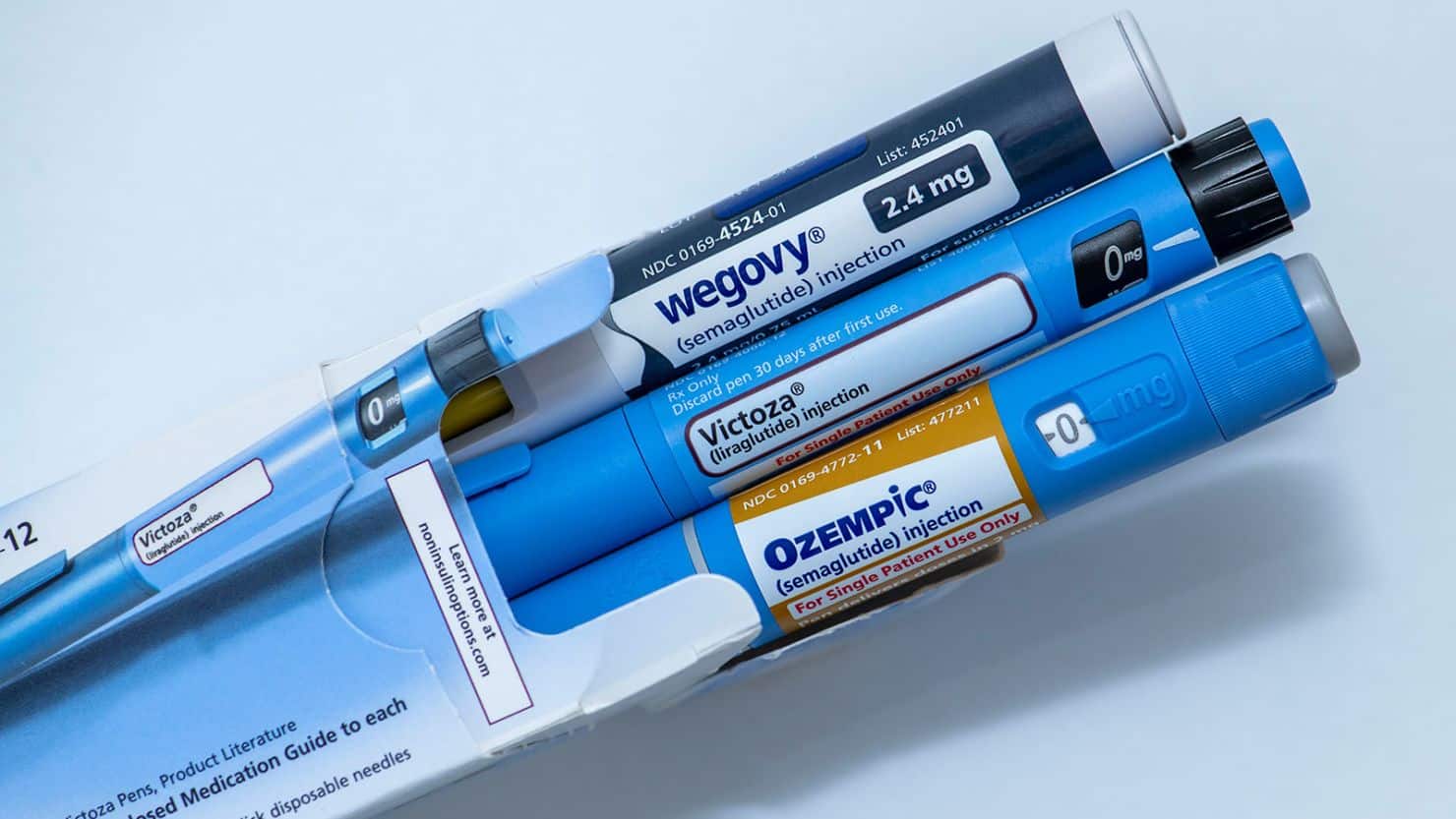
It was designed for diabetes and sold as Ozempic. Patients taking it lost significant weight. Novo repackaged the same molecule at a higher dose as Wegovy and launched it for obesity, and the world went slightly mad. Here, apparently, was a pill for one of the largest health problems on earth. Demand outstripped anything the company had planned for. Novo could not make it fast enough.
That was the first crack, and it mattered more than anyone realised at the time. Because Novo could not meet demand, American compounding pharmacies stepped in and sold copycat versions. And because Novo could not meet demand, it left a gap in the market wide enough for a competitor to walk through.
Eli Lilly walked through it
The competitor was Eli Lilly, an American pharmaceutical company with a rival compound called tirzepatide, sold as Mounjaro for diabetes and Zepbound for obesity.
Lilly’s drug turned out to be better. In a head-to-head trial, patients on Zepbound lost an average of 50 pounds over 72 weeks; patients on Wegovy lost 33. Doctors noticed. Patients noticed. Lilly also did the unglamorous thing that Novo had failed to do: it spent more than $50 billion building manufacturing capacity, so that when demand came, it could actually supply it.
The market share numbers tell the story bluntly. Novo Nordisk invented this category. It now holds roughly 40% of it. Eli Lilly holds about 60%.
For a while, Novo’s answer was a next-generation drug called CagriSema, which combined semaglutide with a second compound. It was pitched as the product that would restore Danish superiority. In February 2026, the trial results arrived. CagriSema failed to prove it was even non-inferior to Lilly’s drug. Patients lost 23% of their body weight on CagriSema against 25.5% on tirzepatide. Novo’s shares fell 15% in a morning, to their lowest level since 2021.
That was the moment the story ended. The rescue drug had lost to the thing it was meant to beat.
The three squeezes
Competition is only part of it. Novo has been hit from three directions at once, and each one erodes a different pillar of the business.
The first is price. In late 2025 Novo agreed a deal with the Trump administration that cut Wegovy’s government price to around $349 a month, with Medicare and Medicaid rates near $245 — reductions of 60 to 80% from earlier list prices. It is the same asymmetry now running through every European industry that sells into America: Washington sets the terms, and European firms take them. Lilly signed a similar deal, so neither gained an edge. Both simply lost pricing power, permanently. Commercial insurers who had been paying $800 to $1,000 a month are now pointing at the government rate and demanding the same.
The second is patents. Semaglutide’s protection is unravelling market by market. It has lapsed or is lapsing in Canada, Brazil, China and India. In Canada, reporting suggests the compound patent was lost because a maintenance fee went unpaid. Generic filings are appearing in multiple countries. India alone is a vast market where Novo will soon be competing against cheap copies of its own molecule.
The third is the pipeline. Novo is, as analysts put it, a pure play: diabetes and obesity, and very little else. It had six drugs with sales above $1 billion in 2025, fewer than its major rivals. When your two blockbusters come under pressure simultaneously, there is nothing underneath to catch you. That is the difference between Novo and a Roche or a Novartis, and it is the single most important structural fact about the company.
What Novo is trying now
The company is not dead, and it would be wrong to write it off. Its answer is the Wegovy pill.
Novo became the first company to win FDA approval for a GLP-1 pill for obesity, beating Lilly to market. It is a genuinely significant product, because injections put many patients off entirely, and a tablet widens the market rather than just splitting the existing one. The launch has been strong: roughly two million prescriptions in the first quarter of 2026.
But Lilly’s own oral drug arrived in April, ending Novo’s brief monopoly on the pill. The window was months, not years.
Novo’s new chief executive, Mike Doustdar, has been unusually blunt with investors, warning that things would get worse before they got better. The company has guided for full-year sales and profit to fall by between 4% and 12%. In the first quarter it beat expectations, and the shares have recovered somewhat from their lows. The business is still highly profitable. It is simply no longer a growth story, and it trades accordingly, at around 11 times forward earnings against the premium multiple it once commanded.
What it means for Denmark
There is a national dimension that makes this more than a corporate story. Novo Nordisk is so large relative to Denmark that its rise and fall move the entire country’s numbers. At its peak the company was worth considerably more than Denmark’s annual economic output. Its growth flattered Danish GDP figures, its taxes filled the exchequer, and the Novo Nordisk Foundation, which controls the company, is one of the largest charitable foundations in the world.
A 75% fall in the value of a company that size is a national event. Danish pension funds hold it. The Danish index is shaped by it. Economists had already begun stripping Novo out of national statistics to see what the rest of the economy was doing underneath. Few countries in Europe are so exposed to the fortunes of a single firm, and none has just watched that firm lose half a trillion dollars.
The lesson Europe should take
The temptation is to read this as a company-specific failure: bad manufacturing decisions, a disappointing trial, an unlucky patent. All of that is true. But the deeper lesson is about the nature of the advantage Novo thought it had.
Europe has very few global champions left, and it tends to celebrate them the moment they appear. Brussels has spent years and billions trying to manufacture new ones by decree, with limited success. Novo was held up as proof that the continent could still produce a world-beater. But a single molecule is not a moat. Patents expire. Rivals develop better versions. Governments cut prices. What protects a company over decades is not one brilliant product but the capacity to keep making the next one, and the manufacturing scale to meet demand when it comes.
Eli Lilly understood that. It spent tens of billions on factories before it had the customers. Novo, sitting on the most in-demand drug in the world, could not supply it, and handed its rival both a market and a reputation.
There is a wider pattern here that EBM has tracked across sectors. European companies increasingly find that the capital, the manufacturing scale and the pricing power sit in America, even when the science, the brand and the headquarters remain European. Roche now spends most of its money in the United States. Novartis, Sanofi and AstraZeneca are all expanding American capacity. The continent keeps the boards and the tax base; the strategic depth migrates west. It is the same structural displacement EBM has traced through autos, chemicals and industry, arriving now in the one sector Europe assumed was safe.
Novo Nordisk did not lose because European science failed. Its science was first, and it was good. It lost because an American competitor was better at the industrial part — at building, supplying, and defending a position — and because the drug it bet everything on was, in the end, merely a very good drug rather than an unassailable one.
That is the uncomfortable question hanging over Europe’s remaining champions. When the next great European product arrives, will the company behind it be able to hold it?
Related Analysis