



























EBM WEEKEND READ✍️ By Brad Adams
This spring, as European airlines were warned they had six weeks of jet fuel left, the fuel began arriving from an unexpected place. Not the Gulf, which the Iran war had shut off. Not the United States, whose refiners were already stretched. It came from Lagos, from a single refinery on the Nigerian coast that did not exist in usable form three years ago.
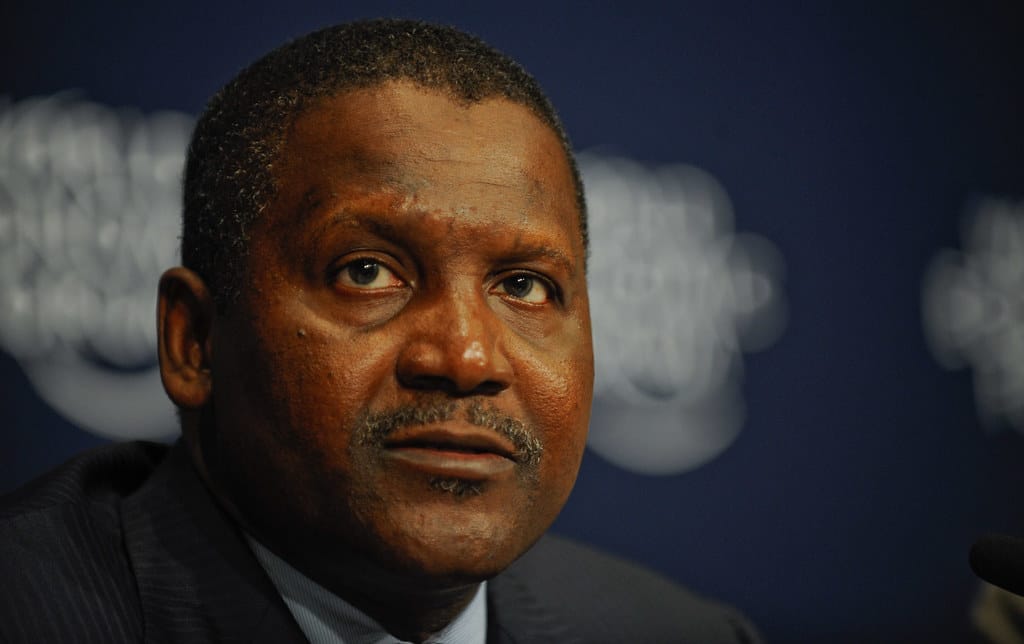
The man who built it is Aliko Dangote, and he is Africa’s richest person by a wide margin. His fortune has swung between roughly $34 billion and $38 billion through 2026, depending on the tracker, and almost all of the recent growth comes from one asset: a $20 billion refinery that has quietly rewired global fuel flows. To understand why a Nigerian industrialist now matters to a European reader, you have to understand what that refinery has done, and how improbable it was that it got built at all.
The paradox he set out to fix
For decades Nigeria lived with an absurdity. It is one of Africa’s largest crude oil producers, yet it imported almost all of its own petrol and diesel. The country pumped crude, shipped it abroad to be refined, and then bought the finished fuel back at a premium. It was a drain on the nation’s dollars and a permanent political sore. Every fuel-price crisis, every queue at a Nigerian pump, traced back to the same failure: the country could not refine its own oil.
Join The European Business Briefing
New subscribers this quarter are entered into a draw to win a Rolex Submariner. Join 40,000+ founders, investors and executives who read EBM every day.
SubscribeSuccessive governments tried and failed to fix this for sixty years. State refineries were built, then left to rot through mismanagement and neglect. By the 2010s they barely functioned at all.
Dangote decided to solve it privately. He had made his first fortune in cement, sugar and flour, building the largest industrial group on the continent from a small trading business his grandfather had started in Kano. By the time he turned to oil, Dangote Cement alone operated across ten African countries. In 2013 he announced he would build a refinery big enough to meet all of Nigeria’s fuel needs and still have product left to export. Almost no one believed the scale was achievable.
Eleven years and $20 billion
It took eleven years and roughly $20 billion. The refinery, built on reclaimed land near Lagos, is the largest single-train refinery in the world, designed to process 650,000 barrels of crude a day. It began operations in early 2024, and the ramp-up since has been faster than the sceptics predicted.
By February 2026 it had reached its full nameplate capacity of 650,000 barrels a day. By June, engineers had certified test runs above 700,000 — more than the plant was designed for. Dangote has already announced plans to expand it toward 1.4 million barrels a day, which would make it one of the largest refineries on Earth, rivalling India’s giant Jamnagar complex.
The effect on Nigeria was immediate and historic. In March 2026, the country exported more petrol than it imported for the first time in decades. A nation that had spent sixty years importing fuel became a net exporter, almost entirely because of one privately owned plant.
How Lagos ended up fuelling Europe
Here is where the story reaches Europe, and where the timing became extraordinary.
The refinery hit full stride at exactly the moment the Iran war closed the Strait of Hormuz. Roughly a fifth of the world’s oil normally passes through that narrow waterway, and its closure cut off a large share of the diesel and jet fuel that Europe imports from the Gulf. African policymakers warned the shock would ripple across the continent’s economies. The IEA warned that Europe had only weeks of jet fuel left, calling it the largest energy crisis it had ever tracked. European refineries were already running flat out and could not make up the gap.
Dangote’s refinery could. In April 2026, S&P Global data confirmed it had become the single largest exporter of jet fuel in the world, shipping aviation fuel to Europe, the United States and even Saudi Arabia — capturing the same blown-out refining margins that handed the oil majors an exceptional quarter. Its jet fuel exports jumped roughly 770% between 2024 and 2026. A Nigerian plant was now supplying the aviation fuel that kept European airlines flying through the summer season.
This was not planned. It was luck of timing meeting years of preparation. But it placed Dangote at the centre of the same energy crisis EBM has tracked from every other angle. When Britain’s last pre-war fuel tankers arrived and the real shortage began, West African refining was part of what filled the gap. When the world’s second-largest diesel exporter, Russia, banned exports entirely, the pool of alternative suppliers shrank again, and refineries like Dangote’s became more valuable still.
The strategic shift underneath
The deeper significance is not about one plant. It is about where the power to refine fuel now sits.
For years the story of global energy has been about crude — who pumps it, who controls the pipelines, who guards the chokepoints, and who profits when those chokepoints close. The Iran war exposed a different vulnerability. Even Saudi Arabia’s clever bypass of the Strait of Hormuz could move crude but not refined product, because refining capacity is the real bottleneck. The world does not run on crude. It runs on the diesel, petrol and jet fuel that crude is turned into — the same refined products whose shortage pushed Europe’s chemicals industry into crisis this year. And refining capacity, unlike crude, cannot be conjured in a crisis. It takes a decade and tens of billions to build.
That is why a refinery on the Nigerian coast suddenly carries strategic weight. Europe spent years closing refineries as unprofitable and leaning on imports. Britain now has four refineries, down from seventeen in the 1970s. When the Gulf supply was cut, that thin domestic capacity left Europe exposed, and dependent on whoever else could make the fuel. Increasingly, that includes Lagos.
The controversy and the risk
Dangote is not a straightforward hero in this story, and it is worth being clear about the criticisms.
The most persistent is monopoly. A single private company now dominates Nigerian fuel refining, which gives one man enormous power over prices in Africa’s largest economy. Critics warn that swapping dependence on imports for dependence on one domestic monopolist is not obviously an improvement. Nigerian airlines have complained that fuel middlemen are inflating prices. Dangote has at times feuded publicly with regulators and with the state oil company, and once offered to sell the refinery to the government amid accusations that he was building a monopoly.
There is also the question of concentration. Dangote’s empire spans cement, sugar, fertiliser and now fuel, much of it privately held and hard for outsiders to value. That opacity is one reason his net worth is so hard to pin down: Forbes and Bloomberg differ by billions because so little of his business trades on public markets. Dangote himself argues the refinery alone is worth more than $40 billion, well above the construction-cost figure the trackers use.
He is now trying to prove that. A pan-African IPO of the refinery is planned, targeting a valuation of $40 billion to $50 billion, with a subscription window expected to open around August 2026. It would be by far the largest share sale in African history, dwarfing anything the Nigerian exchange has hosted. To attract foreign investors wary of Nigeria’s currency, Dangote has proposed a rare structure: shares bought in naira, but dividends paid in US dollars, backed by the refinery’s export earnings. If regulators approve it, it would be unlike anything African capital markets have offered before.
Why Europe should watch
It would be easy to file Dangote as an African success story with no bearing on Europe. That would miss the point.
The Iran war taught European business a lesson it had been avoiding: that the continent’s decision to offshore its refining left it exposed to shocks it could not control. The fuel that filled the gap this year came partly from a plant that a private African industrialist willed into existence against sixty years of failure. That is a striking reversal of the usual direction of dependence. Europe, which has spent a century as the supplier of industrial capacity to Africa, found itself this year buying jet fuel from Lagos to keep its own planes in the air.
Dangote says he wants to be remembered as the man who industrialised Africa. Whether one refinery and a giant IPO can carry that ambition is an open question. But he has already done something more concrete than most billionaires ever manage. He built a piece of critical infrastructure that the market said could not be built, at a scale the continent had never seen, and it arrived at the exact moment the world needed it. Europe should pay attention, because the age in which refining capacity is a source of power has quietly returned, and the map of who holds it is being redrawn in places Europe long stopped watching.
Related Analysis