





























Washington DC, July 2 (EBM Newsdesk Analysis) —By Katie Winearls
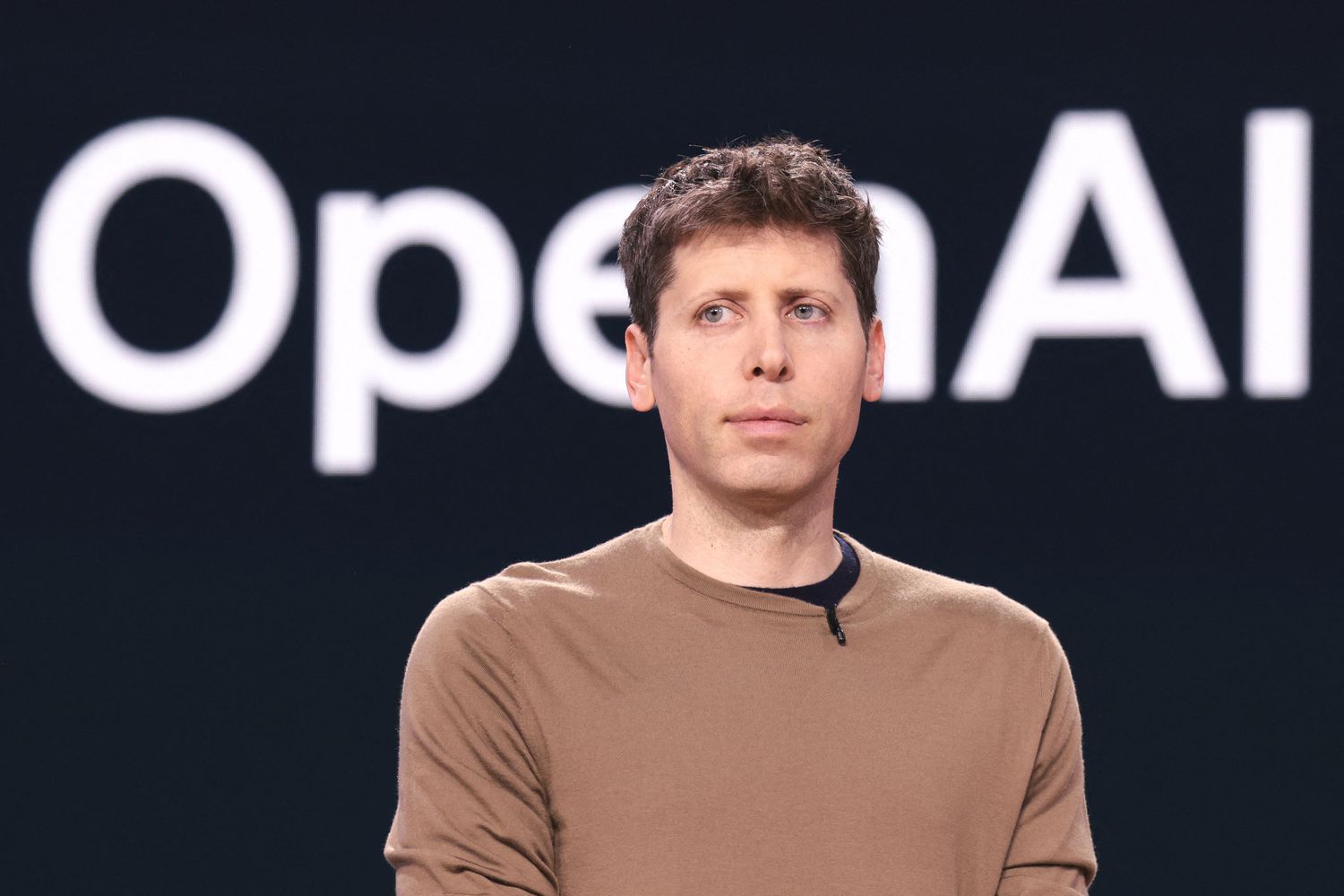
Sam Altman has been in Washington long enough to understand what the Trump administration wants from its relationship with Silicon Valley. What he is now proposing goes considerably further than anyone in the AI industry has attempted before: a 5% equity stake in OpenAI, worth roughly $42.6 billion at the company’s current $852 billion valuation, handed directly to the US government through a sovereign wealth fund vehicle. The Financial Times reported the proposal on Thursday, citing two people familiar with the talks.
I think this is one of the most consequential structural moves in the AI industry’s short history — and I think most of the coverage is missing what it actually means.
Join The European Business Briefing
New subscribers this quarter are entered into a draw to win a Rolex Submariner. Join 40,000+ founders, investors and executives who read EBM every day.
SubscribeWhat OpenAI Is Actually Proposing
The mechanics matter. OpenAI has suggested that leading US AI firms allot 5% of their equity to a vehicle similar to the Alaska Permanent Fund — a state-owned corporation seeded with oil revenues that pays annual dividends to residents and helps support Alaska’s budget. Altman has discussed the stake with Trump, Commerce Secretary Howard Lutnick and Treasury Secretary Scott Bessent, according to the FT. He has also, notably, spoken to Democratic Senator Bernie Sanders — a signal that this is designed as a politically cross-cutting proposal, not purely a transaction with the current administration. Carnegie Endowment for International Peace
A 5% holding would be worth roughly $42.6 billion, after OpenAI closed a record-breaking funding round in March at a post-money valuation of $852 billion. The proposal envisions Anthropic, Google and Meta potentially ceding similar stakes, though none of those companies has confirmed any intention to do so. The White House, OpenAI, Anthropic, Google and Meta did not immediately respond to requests for comments. CNBCCNBC
Why Altman Is Doing This
The political arithmetic is not complicated. OpenAI is preparing for what could be the largest IPO in history — we covered its confidential filing and the arithmetic behind its $1 trillion target — and it needs Washington onside for that process to run smoothly. The Trump administration has been loudly asking who benefits from AI’s expected profits, and Altman is providing an answer that gives the government a direct financial incentive to want OpenAI to succeed rather than regulate it into constraint.
This comes after OpenAI delayed a full public launch of GPT-5.6 last week at the US government’s request. The pattern is becoming clear: OpenAI and the White House are building something that looks less like a regulatory relationship and more like a strategic partnership, with equity as the glue. Trump has already described the US taking ownership stakes in AI companies as “a beautiful thing” that would make Americans “partners in this revolution.” Altman is making that concrete. Carnegie Endowment for International Peace
My read: this is not philanthropy and it is not naive political management. It is a calculated restructuring of the relationship between the world’s most valuable AI company and the world’s most powerful government — with the explicit goal of making Washington a financial stakeholder in OpenAI’s commercial success before the IPO locks in the ownership structure permanently.
The Business Model Question This Creates
OpenAI’s financial position is already strained — projecting $14 billion in losses this year on $25 billion in annualised revenue, with profitability not expected until 2029 at the earliest. Gifting 5% of equity to the government — even through a mechanism that doesn’t immediately dilute existing shareholders — adds complexity to an already complicated capital structure. SoftBank’s $64 billion concentration in OpenAI is already drawing credit agency scrutiny. A sovereign wealth fund co-owner with different objectives to commercial investors sitting inside the same capital structure is a governance arrangement that institutional investors will examine very carefully before the IPO roadshow.
The proposal also raises an obvious question: if the US government holds 5% of OpenAI, what is its position when OpenAI’s commercial interests conflict with public interest regulation? The answer, politically, is that the government’s financial stake gives it every incentive to side with OpenAI’s commercial interests. That is precisely the point — and it is a feature, not a bug, from Altman’s perspective.
Why Europe Should Pay Close Attention
This is where I think the story’s real significance lies, and it is almost entirely absent from today’s coverage. If the US government takes equity stakes in OpenAI, Anthropic and potentially Google and Meta through a sovereign wealth fund vehicle, the United States becomes a direct financial beneficiary of the global commercial success of American AI companies. That transforms the geopolitical dynamic entirely.
Europe is already fighting to build sovereign AI infrastructure with genuinely European capital, acutely aware that dependence on American AI providers is a strategic vulnerability. Mistral’s $830 million debt financing from seven European banks was celebrated precisely because it demonstrated European AI could be financed without American capital. But if the US government now holds equity in the frontier AI companies European enterprises depend on, the kill-switch risk that Brussels has been trying to address through the Technological Sovereignty Package becomes structurally more acute, not less.
A government that is a financial co-owner of the AI companies it regulates — and from which foreign users purchase access — has a direct financial incentive to use that access as leverage in trade or geopolitical disputes. Washington deploying export restrictions on Anthropic’s models earlier this year gave European policymakers a visceral demonstration of that risk. OpenAI’s proposal, if it proceeds, would give the US government an even more entangled interest in the commercial outcomes of its frontier AI sector.
The Bottom Line
Altman’s proposal is elegant in the way that only genuinely clever political moves are. It frames equity-sharing as democratic wealth distribution — “the public as partners in the AI revolution” — while simultaneously making the US government a financial stakeholder in OpenAI’s IPO success, neutralising the most dangerous regulatory and political threats to that process, and setting a template that would entrench American AI companies’ relationship with Washington just as European competitors are trying to build credible alternatives.
My view is that this deal, if it proceeds, will be studied for decades as the moment AI stopped being a technology story and became an instrument of industrial statecraft. For European policymakers still debating regulatory frameworks, it should function as a wake-up call: the US is not waiting for the regulatory debate to conclude before locking in its structural advantage.
Related reads:
OpenAI filed for the biggest IPO in history. The revenue is extraordinary. So are the losses
SoftBank has bet $64 billion on OpenAI — and the credit agencies are circling
Europe wants sovereign AI — most of the chips are still American