






























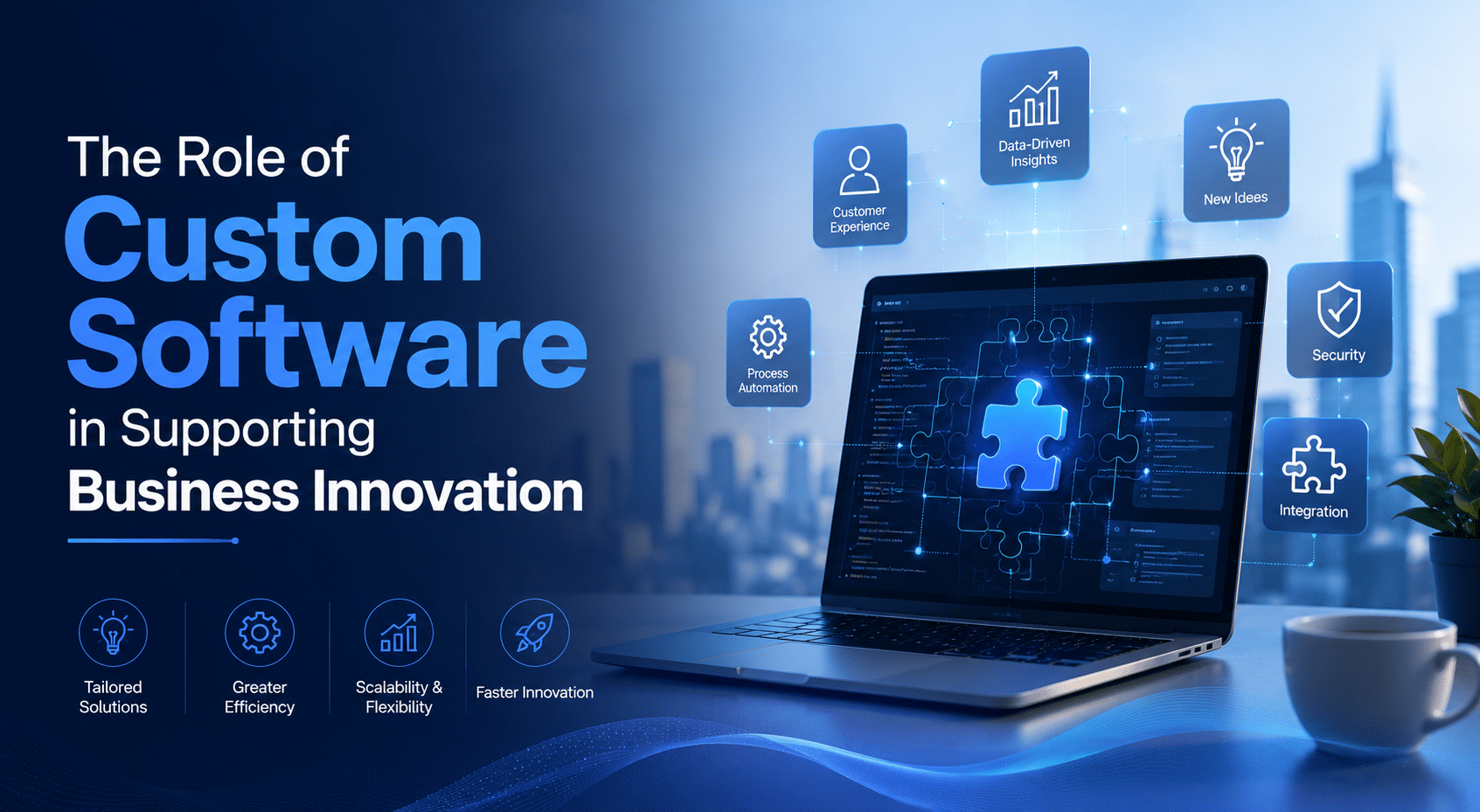
When Growth Outpaces Technology
Every growing business reaches a point where the tools that once worked begin to hold it back. A customer base doubles, new markets open up, product lines expand, and suddenly the technology stack that supported the early days starts showing cracks. Systems slow down. Integrations break. Teams work around limitations instead of through them.
This is one of the most critical and often underestimated challenges in modern business growth. The problem is rarely the ambition; it is the infrastructure beneath it.
Investing in custom software development services is one of the most strategic decisions a business can make when scaling. Off-the-shelf solutions offer convenience, but they are built for the average user, not for the specific demands of your operations, your customers, or your competitive environment.
Join The European Business Briefing
New subscribers this quarter are entered into a draw to win a Rolex Submariner. Join 40,000+ founders, investors and executives who read EBM every day.
SubscribeAs businesses expand across devices and platforms, the need for purpose-built digital solutions becomes even more pressing. Organizations that invest early in custom mobile application development services gain a significant advantage in customer engagement, operational efficiency, and real-time responsiveness.
The foundation of sustainable growth is not just good strategy. It is good software architecture.
What Defines Enterprise-Grade Applications
Not all software is created equal. Enterprise-grade applications are designed with scale, security, and longevity at their core. Understanding what separates them from basic software is essential for any leader making technology investment decisions.
Scalability means the system can handle increasing workloads without performance degradation. Whether you are onboarding 1,000 or 100,000 users, the architecture should grow with you rather than against you.
Security goes beyond password protection. Enterprise applications must incorporate data encryption, role-based access control, compliance frameworks, and proactive vulnerability management. A security breach at scale is not just a technical problem; it is a business-ending event.
Performance is non-negotiable in today’s experience-driven economy. Slow software costs money. Research consistently shows that users abandon applications within seconds of encountering lag or errors. Performance must be built into the design, not retrofitted later.
Reliability means your systems are available when your customers and teams need them. Downtime translates directly to lost revenue and eroded trust. Enterprise applications are built with redundancy, failover mechanisms, and disaster recovery in mind.
Integration capabilities allow your software to connect seamlessly with CRMs, ERPs, third-party APIs, and future tools. A system that cannot integrate becomes a silo, and silos slow businesses down.
Key Pillars for Long-Term Growth
Building for the future requires deliberate architectural decisions made early in the development process.
Modular Architecture: Microservices vs Monolith
Traditional monolithic applications bundle all functionality into a single deployable unit. This approach is simple at first but becomes increasingly difficult to update, scale, and debug as complexity grows. Microservices architecture, on the other hand, breaks the application into independent services that can be developed, deployed, and scaled separately. For businesses anticipating rapid growth or frequent product changes, microservices provide far greater flexibility and resilience.
Cloud-Native Development
Cloud-native applications are designed from the ground up to operate in cloud environments. They leverage auto-scaling, containerization, and distributed computing to deliver consistent performance at any scale. Businesses built on cloud-native infrastructure can enter new markets faster, reduce infrastructure costs, and recover from failures with minimal disruption.
Data-Driven Decision Making
Modern applications must do more than process transactions. They should generate insights. When software is architected with data pipelines, analytics dashboards, and reporting infrastructure at its core, decision-makers gain visibility that drives smarter strategy. The businesses winning today are not just collecting data; they are acting on it in real time.
Automation and AI Readiness
Future-ready applications are built to support automation workflows and artificial intelligence integrations. Whether it is automating repetitive back-office tasks, enabling predictive analytics, or deploying intelligent recommendation engines, the underlying architecture must be capable of supporting these capabilities. Building AI readiness into your foundation today saves enormous rework costs tomorrow.
Common Mistakes Businesses Make
Understanding where organizations go wrong is just as valuable as knowing best practices.
Short-Term Development Mindset
Many businesses prioritize speed-to-launch over architectural quality. The result is technical debt that compounds over time. Features that should take weeks to build begin taking months. Simple changes require complex workarounds. What seemed like a cost-saving shortcut becomes a growth barrier.
Ignoring Scalability Early
Some teams build for the business they have today rather than the business they intend to become. When the user base grows or transaction volumes spike, systems buckle under the pressure. Retrofitting scalability into an existing system is significantly more expensive and disruptive than designing for it from day one.
Choosing the Wrong Technology Stack
Technology choices have long-term consequences. A stack chosen for familiarity or short-term convenience may not support the integrations, performance requirements, or talent availability needed as the business evolves. Tech stack decisions should be made with a five-year horizon in mind, not just the next quarter’s deadline.
Best Practices for Building Future-Ready Applications
The path to a resilient, scalable software investment begins before a single line of code is written.
Strategic Planning Before Development
Define what the software needs to do today and what it will need to do in three to five years. Map your integrations, user volumes, compliance requirements, and growth scenarios. The more clearly you understand your future state, the better your architecture decisions will be.
Choosing the Right Development Partner
Not all development teams are built for enterprise-scale work. Look for partners who ask difficult questions about your architecture before offering solutions. The right partner brings experience with complex system design, not just coding proficiency. They should understand your business goals as clearly as your technical requirements.
Continuous Optimization and Iteration
Software is never truly finished. The most successful digital products are treated as living systems that require ongoing performance testing, security audits, feature refinement, and infrastructure updates. Building a process for continuous improvement is as important as building the product itself.
Real-World Example: Architecture as a Growth Enabler
Consider a mid-sized logistics company that had built its operations management platform in-house using a basic monolithic architecture. As the company expanded into new regions, the system struggled to handle simultaneous data inputs from multiple warehouses. Reporting was delayed, manual overrides became common, and customer complaints about delivery accuracy increased.
After a deliberate investment in rebuilding the platform with a microservices-based, cloud-native architecture, the results were measurable. System response times dropped significantly. The team could deploy updates to individual modules without affecting the rest of the platform. New warehouse locations were onboarded in days rather than months. And real-time data visibility allowed operations managers to make proactive decisions rather than reactive ones.
The rebuild was not without cost or disruption. But within eighteen months, the efficiency gains and customer satisfaction improvements far outweighed the investment.
Build for Where You Are Going, Not Just Where You Are
Technology is not just a cost center. When approached strategically, it is a growth multiplier.
Businesses that invest in scalable, well-architected software gain the ability to move faster, serve customers better, and adapt to change without rebuilding from scratch. Those that cut corners on architecture and infrastructure tend to find themselves in a cycle of costly fixes, system replacements, and missed opportunities.
The question is not whether to invest in quality software. The question is whether you invest wisely before limitations become visible or after they have already slowed your growth.
Working with experienced technology partners who understand both your business context and your long-term vision is one of the most important steps a decision-maker can take. The right foundation, built with the right expertise, does not just support your business. It accelerates it.






