





























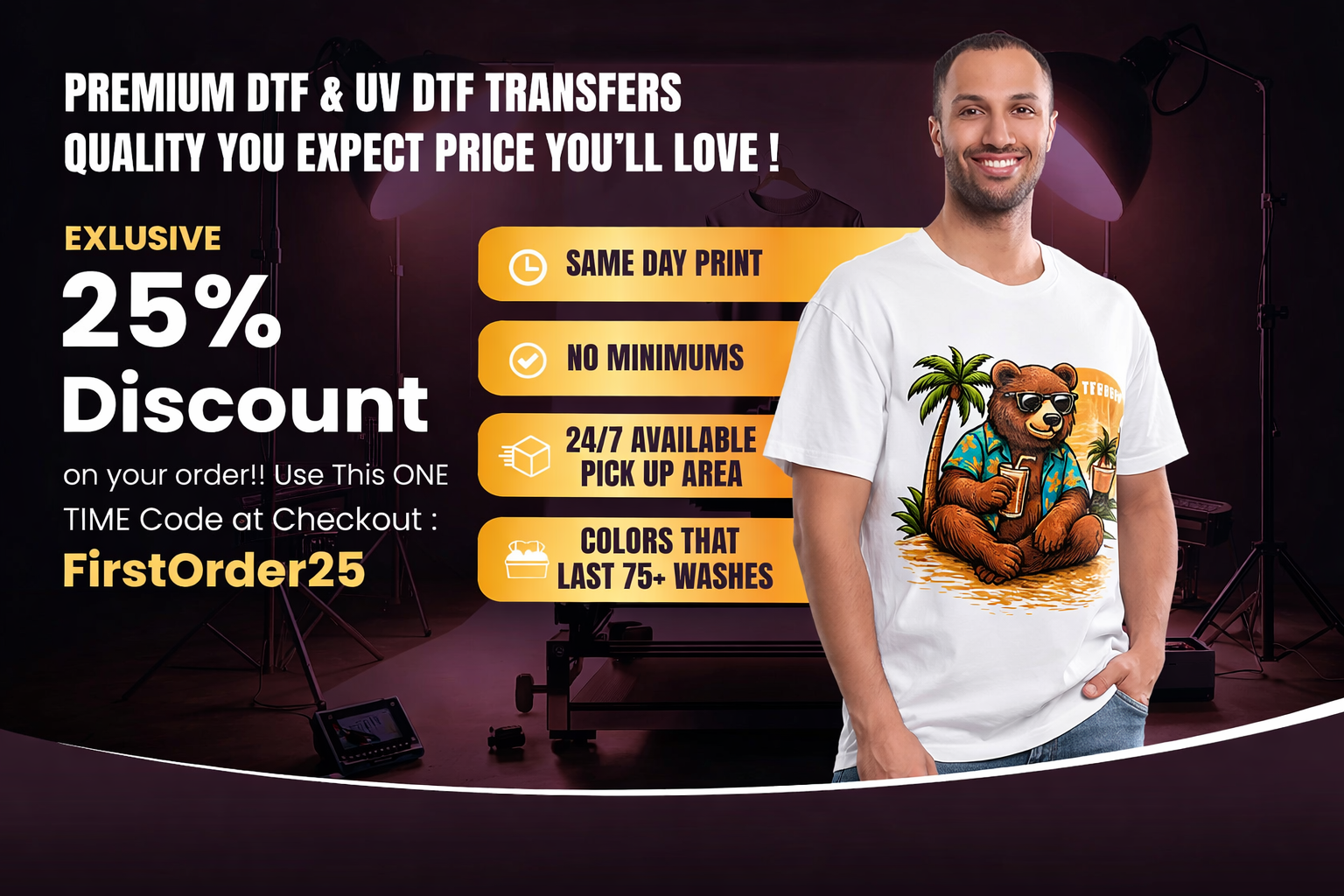
Across Europe and global markets, apparel and merchandise brands are facing a common challenge: how to scale efficiently while maintaining product quality and operational agility. The rise of e-commerce, personalized products, and rapid product cycles has significantly altered traditional manufacturing dynamics. Businesses that once relied on large seasonal production runs now need flexible systems capable of adapting to short lead times and fluctuating demand.
In response, many companies are shifting toward smarter printing models that prioritize adaptability without compromising durability. Among these evolving technologies, Direct to Film (DTF) transfer printing has emerged as a practical solution for modern apparel operations.
Rethinking Traditional Production Constraints
Conventional garment printing methods often require extensive setup time, material-specific preparation, and large minimum quantities. While effective for uniform high-volume production, these systems can restrict innovation and increase risk when market conditions change.
Join The European Business Briefing
New subscribers this quarter are entered into a draw to win a Rolex Submariner. Join 40,000+ founders, investors and executives who read EBM every day.
SubscribeDTF transfer printing introduces a more adaptable approach. Designs are printed onto specialized film and later applied to garments through controlled heat application. By separating the printing and pressing stages, businesses gain greater control over scheduling, quality control, and inventory management.
This modular workflow aligns well with contemporary business models that prioritize responsiveness and lean operational structures.
Operational Efficiency Through Flexibility
One of the most significant advantages of DTF technology is its compatibility with a wide range of materials. Cotton, polyester, blended fabrics, and performance textiles can all be used within the same system. This eliminates the need for multiple printing processes and reduces complexity across production lines.
For brands operating across different product categories, such as casual wear, sportswear, and promotional merchandise, this versatility enhances efficiency. Fewer workflow adjustments translate into reduced downtime and improved productivity.
Additionally, DTF printing supports both small and large production volumes without requiring process modifications. This scalability makes it particularly attractive to businesses navigating growth phases or seasonal fluctuations.
Enhancing Quality Control and Brand Reliability
Consistency remains a cornerstone of brand reputation. Customers expect garments to maintain color vibrancy, structural integrity, and visual precision over time. DTF printing is recognized for strong adhesion, smooth finishes, and resistance to cracking or fading when applied correctly.
Because transfers can be inspected prior to application, quality assurance processes become more streamlined. Businesses can identify potential issues earlier, reducing waste and minimizing customer dissatisfaction.
Many European brands are increasingly working with specialized providers offering DTF transfer printing solutions to maintain consistent quality while reducing internal operational burdens. This approach supports reliability without requiring capital-intensive infrastructure investments.
Supporting Lean and Sustainable Growth
Modern enterprises are placing greater emphasis on sustainable and efficient production practices. Overproduction and excess inventory not only increase costs but also conflict with sustainability goals.
DTF printing supports on-demand models where transfers are applied only once orders are confirmed. This reduces unnecessary stock and aligns production with real demand. For businesses committed to responsible growth, this capability provides both economic and environmental benefits.
By combining flexibility with operational efficiency, DTF technology represents a shift toward smarter manufacturing practices.
A Strategic Advantage for Competitive Markets
As competition intensifies across the apparel sector, operational agility becomes a strategic differentiator. Brands that can respond quickly to design trends, partnership opportunities, and consumer demand are better positioned to capture market share.
DTF transfer printing complements broader digital transformation initiatives by modernizing a traditionally rigid component of apparel production. Rather than replacing every existing system, it integrates into current workflows while providing enhanced adaptability.
For European businesses seeking to balance innovation, quality, and cost control, flexible printing technologies are no longer optional—they are foundational to long-term competitiveness.