Product marking is an important part of modern manufacturing. From serial numbers and batch codes to company logos and QR codes, clear product identification helps businesses manage production, track products, and maintain brand consistency.
Many manufacturers still use inkjet printing, labels, or mechanical engraving. However, these methods may involve consumables, regular maintenance, or limitations when marking small and detailed information. Laser marking offers another option, but switching to a new process requires more than simply purchasing a machine.
Here are several factors manufacturers should evaluate before making the change.
Join The European Business Briefing
New subscribers this quarter are entered into a draw to win a Rolex Submariner. Join 40,000+ founders, investors and executives who read EBM every day.
Subscribe1. Check Whether Laser Marking Fits Your Materials
Material compatibility should be the first consideration. Different laser sources work with different materials, so one machine may not meet every marking requirement.
Fiber lasers are commonly used for metals such as stainless steel, aluminum, copper, and iron. CO2 lasers are more suitable for non-metallic materials such as wood, leather, paper, and certain plastics. UV lasers are often selected for glass, plastics, and other heat-sensitive materials that require fine details.
Manufacturers should identify the materials they process most often and check whether the laser can produce the required marking effect. If a production line handles several materials, sample testing is especially important before selecting equipment.
2. Define the Required Marking Quality
Not every marking task requires the same level of precision. Some products only need visible batch numbers or simple text, while others require small QR codes, detailed logos, or fine serial numbers.
Manufacturers should consider the size, depth, contrast, and readability of the marks. The surface finish also matters. A polished metal component, for example, may produce a different result from a painted or coated surface.
It is best to test actual workpieces rather than rely only on machine specifications. Sample marking can help confirm whether the result meets production and quality requirements.
3. Compare Production Speed and Output Requirements
Laser marking can support fast and repeatable processing, but actual speed depends on several factors. These include material type, marking area, design complexity, laser power, and required marking depth.
For high-volume production, even a small difference in cycle time can affect overall output. Manufacturers should calculate how many parts need to be marked per hour or shift and compare this with the expected machine performance.
Automation is another factor to consider. If products move along a conveyor or production line, the marking system may need to work with sensors, fixtures, or automated loading equipment. This can reduce manual handling and make the process more consistent.
4. Calculate the Total Cost, Not Just the Purchase Price
The initial cost of laser equipment is only one part of the investment. Manufacturers should also consider electricity consumption, maintenance, replacement parts, labor, and production downtime.
Traditional marking methods may require ink, solvents, labels, or other consumables. Laser marking can reduce some of these recurring expenses because it does not require ink or labels to create a mark.
However, the actual savings depend on the existing process and the type of laser system selected. A realistic cost comparison should include both equipment investment and long-term operating expenses.
5. Understand the Advantages and Limitations
Laser marking offers several benefits, including permanent marks, high precision, and reduced consumable use. It is also a non-contact process, which means there is no physical marking tool pressing against the workpiece.
However, it is not suitable for every material or application. Some surfaces are difficult to mark, certain laser sources have limited material compatibility, and specialized systems may require a higher initial investment.
Manufacturers should compare these factors with their current marking process before making a final decision. To explore the potential benefits and limitations in more detail, you can view more.
6. Choose Equipment Based on Your Actual Production Needs
Once the marking requirements are clear, manufacturers can start comparing equipment. Important factors include laser source, power, marking area, software compatibility, machine size, and available customization options.
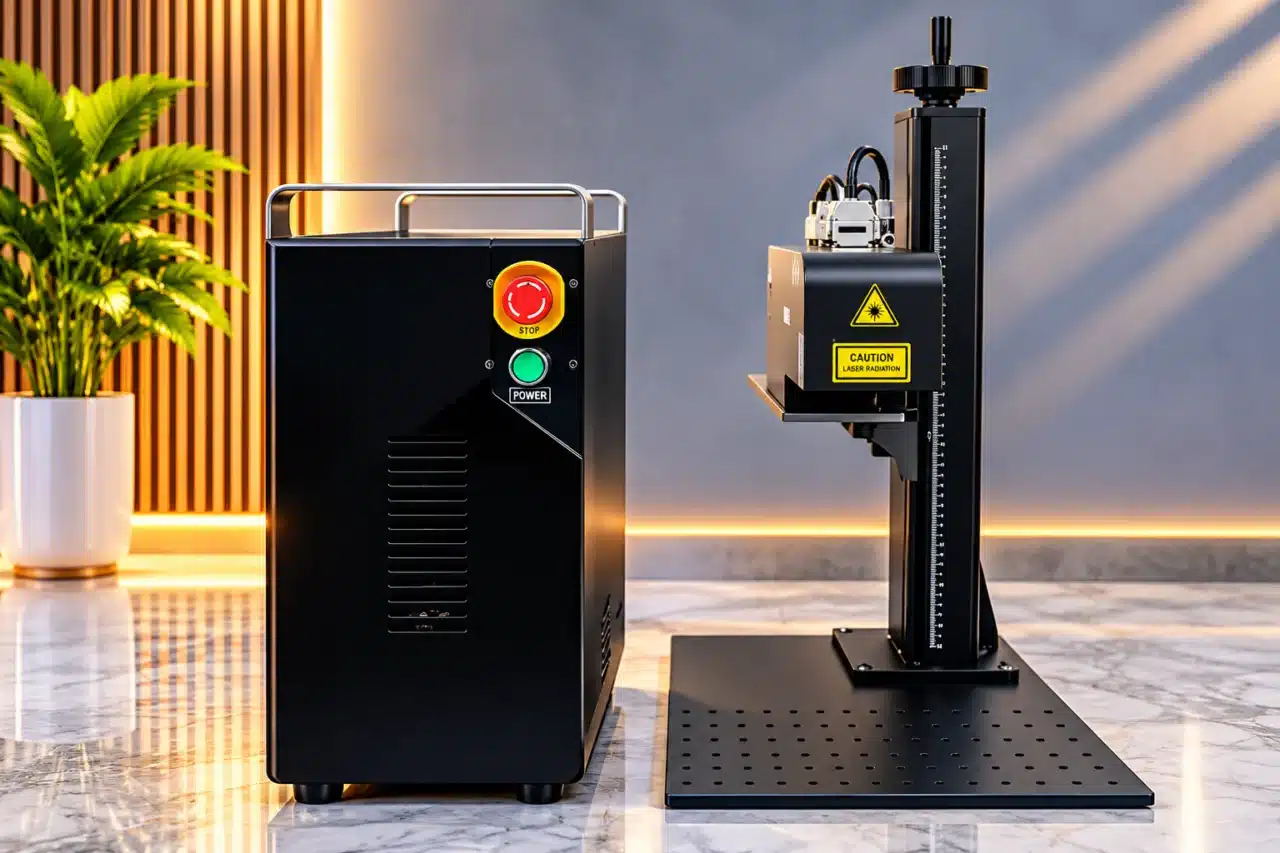
A compact desktop system may be suitable for small workshops or individual components. Larger production facilities may need an industrial system that can integrate with existing equipment.
Manufacturers looking for suitable laser marking machines should also check sample results, technical support, warranty terms, and the availability of replacement parts.
Final Thoughts
Switching to laser marking can improve product identification and simplify certain production processes. However, the right choice depends on material compatibility, marking quality, production volume, and long-term operating costs.
Rather than choosing equipment based on price or power alone, manufacturers should start with their actual products and production requirements. Testing samples and comparing the total cost of ownership can help reduce purchasing risks and ensure the new marking process delivers practical value.