
































The quantum clock is ticking. Nearly two-thirds of organizations already rank quantum computing as the most critical cybersecurity threat on their three-to-five-year horizon, according to a Capgemini global survey. Yet most boards still treat the danger as tomorrow’s problem.
Post-quantum cryptography (PQC) offers new math-based algorithms designed to stay secure even when attackers wield large-scale quantum computers. Quantum key distribution (QKD) takes a physics route, sending fragile photons so any eavesdropper instantly reveals themselves. Both aim to foil the “harvest now, decrypt later” strategy already in play.
Our goal is simple: introduce nine companies that are turning post-quantum theory into enterprise-grade products. We picked them for proven technology, market traction, and geographic diversity, and we will highlight what makes each stand out.
Join The European Business Briefing
New subscribers this quarter are entered into a draw to win a Rolex Submariner. Join 40,000+ founders, investors and executives who read EBM every day.
SubscribeNewcomers join the mix, too. Project Eleven is rolling out specialized PQC solutions for digital-asset platforms, proving how quickly niche risks such as blockchain theft are moving up the priority list.
Ready to see who is building the future of safe encryption? Let’s start the countdown.
1. Project Eleven – Quantum-safe crypto for digital assets

Project Eleven quantum-safe digital asset security platform – website screenshot
Project Eleven addresses one of the most tangible quantum weak spots: the private keys that lock up Bitcoin, Ethereum, and the expanding world of tokenized assets.
Before a single line of code changes, the team runs a deep protocol and cryptography review to surface weak signatures that won’t survive Q-day. The findings flow into migration toolkits – comprehensive post-quantum cryptography solutions – that let exchanges, wallet providers, and layer-one blockchains swap today’s elliptic-curve signatures for lattice-based, quantum-resistant algorithms without disrupting the user experience. Project 11’s public GitHub hosts “quantum-vault,” an audited reference implementation that pairs ERC-4337 account abstraction with CRYSTALS-Dilithium signatures and ships benchmark scripts to track latency on popular chains. Security teams can clone the repo and rehearse a full key migration in a sandboxed testnet before touching real assets, turning abstract guidance into a weekend proof-of-concept. Think of it as a smooth bridge from vulnerable cryptography to tomorrow’s safer standard.
Money is following the mission. In January 2026 the company closed a $20 million Series A led by Castle Island Ventures with backing from Coinbase Ventures, funding aimed at rolling out production-ready SDKs across leading crypto networks, a milestone confirmed in a PR Newswire release.
Why does that matter to you? More than four trillion dollars in digital assets already sit on chains that future quantum computers could crack. By giving the crypto sector a practical upgrade path today, Project Eleven shows how niche expertise can solve an urgent, high-value problem for finance.
2. PQShield – Cryptography R&D powerhouse
PQShield spun out of Oxford research with one mission: turn cutting-edge post-quantum algorithms into products that silicon and software engineers can drop straight into their stacks.
The team’s specialty is depth. Its cryptographers helped shape several NIST finalist algorithms, then packaged that knowledge into two offers. First, a lightweight SDK that lets cloud or mobile developers swap vulnerable RSA and ECC routines for lattice-based replacements. Second, a hardware IP block that chip makers can graft onto a processor so future devices ship with quantum-safe instructions built in.
Funding signals market confidence. A $20 million Series A in 2022 was quickly eclipsed by a $37 million Series B in 2024, giving PQShield runway to work with RISC-V designers and smart-card giants.
Why should we care? Crypto migrations fail when performance drops. By optimizing algorithms at both the software and silicon level, PQShield removes that risk, so banks, OEMs, and cloud providers can harden everything from payment terminals to data-center CPUs without a speed penalty.
3. SandboxAQ – Enterprise crypto-agility at Silicon Valley scale
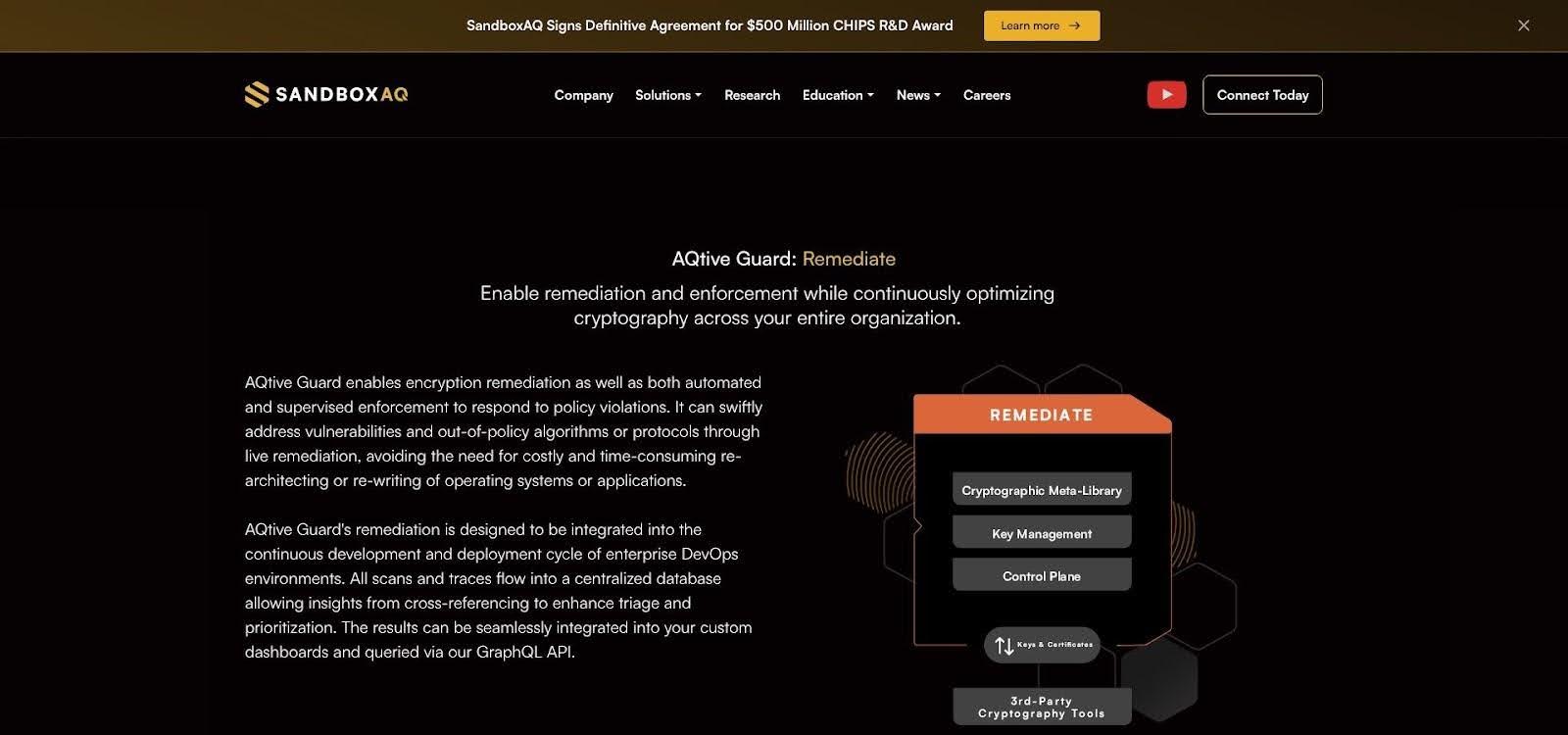
SandboxAQ enterprise cryptography management platform – website screenshot
SandboxAQ started inside Alphabet and still carries a big-idea mindset. Backed by a $500 million budget, the company blends quantum science with machine learning to help large organizations find every line of vulnerable code and swap in quantum-safe replacements without downtime.
Its flagship platform follows a two-step process. First, an automated scanner maps the hidden maze of keys, certificates, and legacy algorithms across clouds, mainframes, and mobile apps. Next, policy engines roll out NIST-approved post-quantum algorithms with a click, complete with continuous compliance reports for auditors.
That end-to-end workflow is why major banks and federal agencies are already piloting the software. They get one dashboard to track progress, proof that every handshake is quantum-ready, and the assurance of a vendor with enough talent and runway to keep pace as standards evolve.
For any CISO managing a sprawling tech estate, SandboxAQ turns the chore of crypto migration into a manageable sprint.
4. Arqit Quantum – Global key distribution via space and fiber
Arqit takes a different path to quantum safety. Instead of swapping algorithms, it focuses on how secret keys are created and shared.
The company’s platform, QuantumCloud, produces symmetric keys with a patented protocol first proven over satellite links and now delivered through terrestrial hubs. Each key exists only for the moment two endpoints need it, leaving attackers nothing durable to steal.
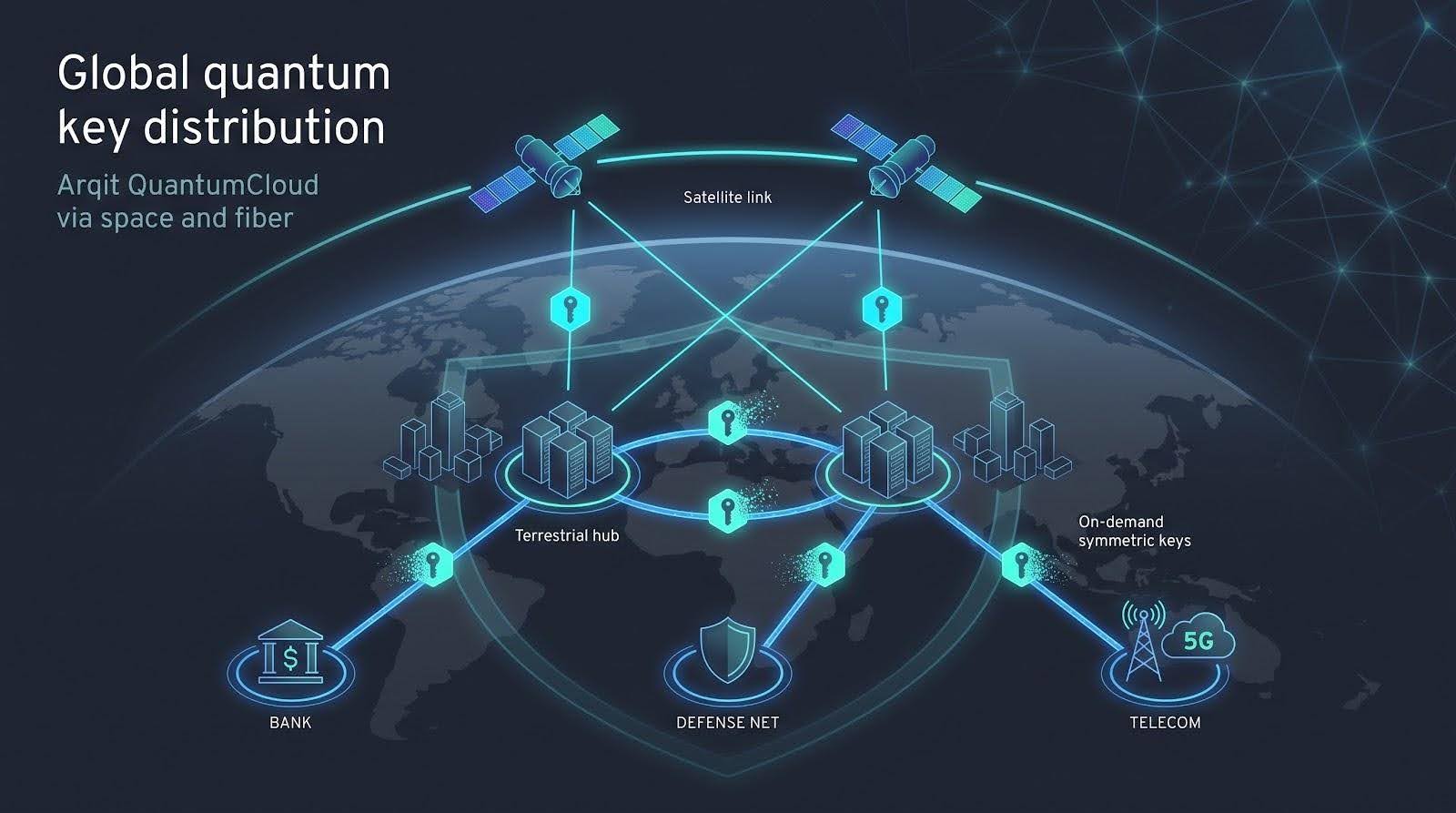
Defense ministries noticed early. The United Kingdom’s MOD selected Arqit to secure autonomous systems, and NATO pilots have explored the technology for battlefield networks. Commercial trials with major telecoms show the model scales to city-wide fiber rings.
Arqit appeals to executives who want physics-level certainty, not mathematical bets. By treating key generation as an on-demand utility, it lets banks, mobile operators, and cloud providers add quantum-safe secrecy to existing encryption schemes without rewriting a line of code.
5. Post-Quantum Ltd – VPNs and identity tested by NATO
Many vendors only promise quantum-safe code on paper, but Post-Quantum has already proven its technology on a live military network.
In 2022 the NATO Cyber Security Centre ran a post-quantum virtual private network with the firm’s software, moving classified traffic without a hitch and showing that quantum-resistant algorithms can handle mission pressure.
That validation now underpins commercial products. Banks deploy the same VPN stack to secure treasury links, while identity providers use Post-Quantum’s biometric authentication platform to future-proof customer logins. The company also entered an early algorithm in NIST’s competition, so its engineers know the standards playbook inside and out.
Security teams that want plug-and-play protection, not a multiyear rebuild, can treat Post-Quantum as a dropdown-menu upgrade. The solution already wears the badge of one of the world’s toughest testing grounds.
6. ID Quantique – Pioneers of photon-level protection
Two decades before “post-quantum” reached boardrooms, a team in Geneva was already firing single photons through fiber to secure bank traffic. That team became ID Quantique, and the company still sets the benchmark for quantum key distribution.
Its flagship encryptors rely on the laws of physics, not just clever math. A bank in Zurich links its data centers with IDQ boxes, so any eavesdropper disturbs the photons and triggers an instant alarm. Telecom operators embed the firm’s tiny quantum random-number chips in 5G base stations to protect everything from SIM provisioning to over-the-air updates.
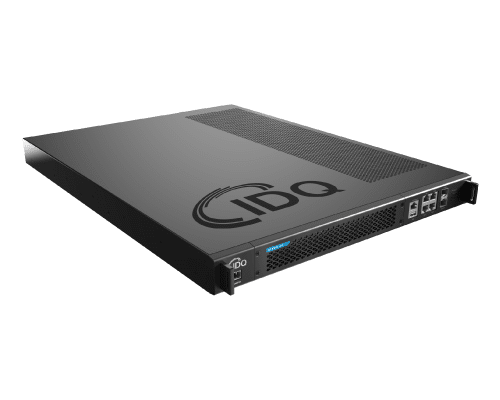
ID Quantique QKD encryptor and quantum random number generator hardware
Longevity adds credibility. Years of field deployments mean installation guides are polished, interoperability quirks are solved, and regulators trust the equipment. For organizations that move billions every second, that maturity strips away the experimental label often attached to quantum tech.
Most important, ID Quantique proves that post-quantum defense is not only about new algorithms. Sometimes the safest move is to let nature itself shield the key.
7. QuintessenceLabs – Quantum-enhanced key management from Canberra to the cloud
QuintessenceLabs fits quantum technology into a place every enterprise already knows: the key vault.
Its Trusted Security Foundation appliance looks like any other hardened server, yet a laser inside generates truly random bits that feed the vault’s crypto engines. Pair that with policy software that rotates, shards, and recovers keys, and you get a lifecycle platform where quantum physics strengthens each step.
Government backing reinforces the vision. Australia’s National Reconstruction Fund invested fifteen million dollars in 2025 to help the company scale exports, signaling that quantum-safe key management counts as critical infrastructure.
For CISOs juggling hybrid clouds, compliance audits, and supply-chain complexity, QuintessenceLabs offers a straightforward promise: keep your existing PKI and workflows, just upgrade the entropy and algorithms under the hood. It serves as a practical bridge between today’s processes and tomorrow’s threats.
8. QuSecure – Post-quantum protection as a service
QuSecure turns quantum defense into a subscription. Plug its QuProtect gateway into your network and every session, email, or API call that leaves the building is automatically wrapped in a NIST-approved post-quantum cipher.
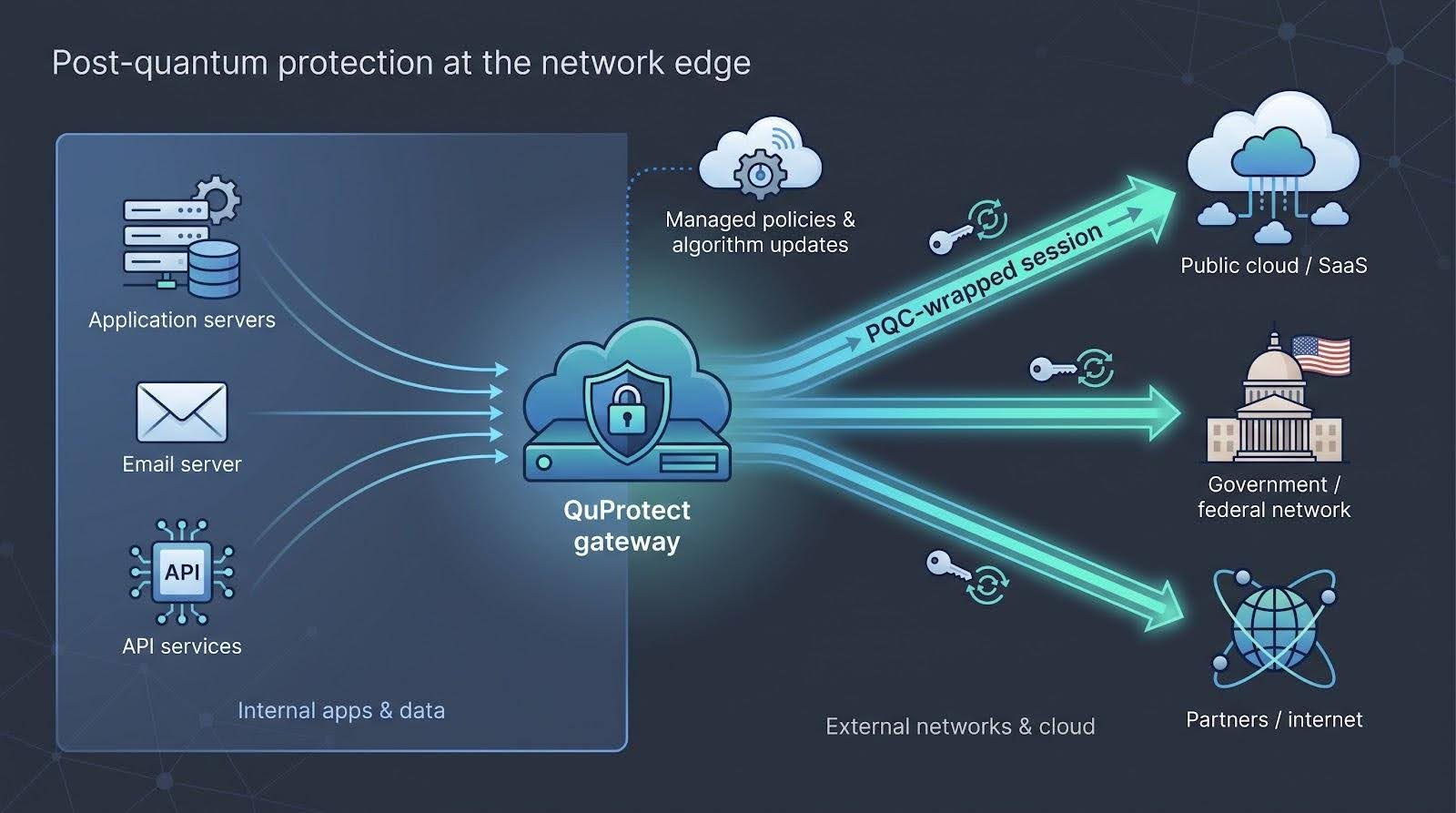
The idea earned early trust in Washington. In mid-2022 the company and U.S. federal partners completed the first post-quantum encrypted transmission over a government network, showing that sensitive data can travel securely without replacing existing hardware.
Since then, QuSecure has focused on managed delivery. Clients receive policy dashboards, continuous key rotation, and over-the-air algorithm updates as standards evolve. No in-house cryptographers needed, just a service contract.
For lean security teams, that straightforward model means you can start shielding high-value traffic today, then widen coverage as budgets allow while QuSecure handles the algorithm treadmill.
9. Quantinuum – Building the threat and the cure
Quantinuum operates on both sides of the quantum equation. As the world’s largest integrated quantum-computing company, it pushes hardware closer to breaking today’s encryption while its security division ships products that keep everyone else safe.
The flagship service, Quantum Origin, uses a trapped-ion quantum computer to generate entropy so pure that even advanced side-channel attacks falter. Banks such as HSBC load those keys into hardware security modules and layer post-quantum algorithms on top, giving their encryption a two-layer defense.

Quantinuum trapped-ion quantum computer powering Quantum Origin key generation
Quantinuum extended its reach in June 2026 with a $1.68 billion initial public offering that valued the company at more than $15.6 billion. Customers now gain a well-capitalized vendor able to fund both hardware and software innovation.
For executives, the lesson is clear: when the same company building powerful quantum machines is also hardening your data, quantum risk is no longer a distant horizon. Quantinuum’s dual role turns an abstract future into a present-day action item.
Conclusion – Turning insight into action
Quantum risk has moved from conference slides to board agendas. We just met nine companies tackling the problem from every angle: some replace vulnerable algorithms, others rely on photons, and a few deliver the journey as a managed service.
Contrast their styles. PQShield and Post-Quantum retrofit familiar protocols with fresh algorithms, while ID Quantique and Arqit use physics to expose any snooper on contact. SandboxAQ and QuSecure focus on orchestration, easing migrations for stretched teams. Quantinuum plays both attacker and defender, proving that the threat and the cure now share the same lab.
Geography adds resilience. European cryptography brains, North-American SaaS scale, and Asia-Pacific hardware innovation ensure no single region holds all the keys.
What should you do next?
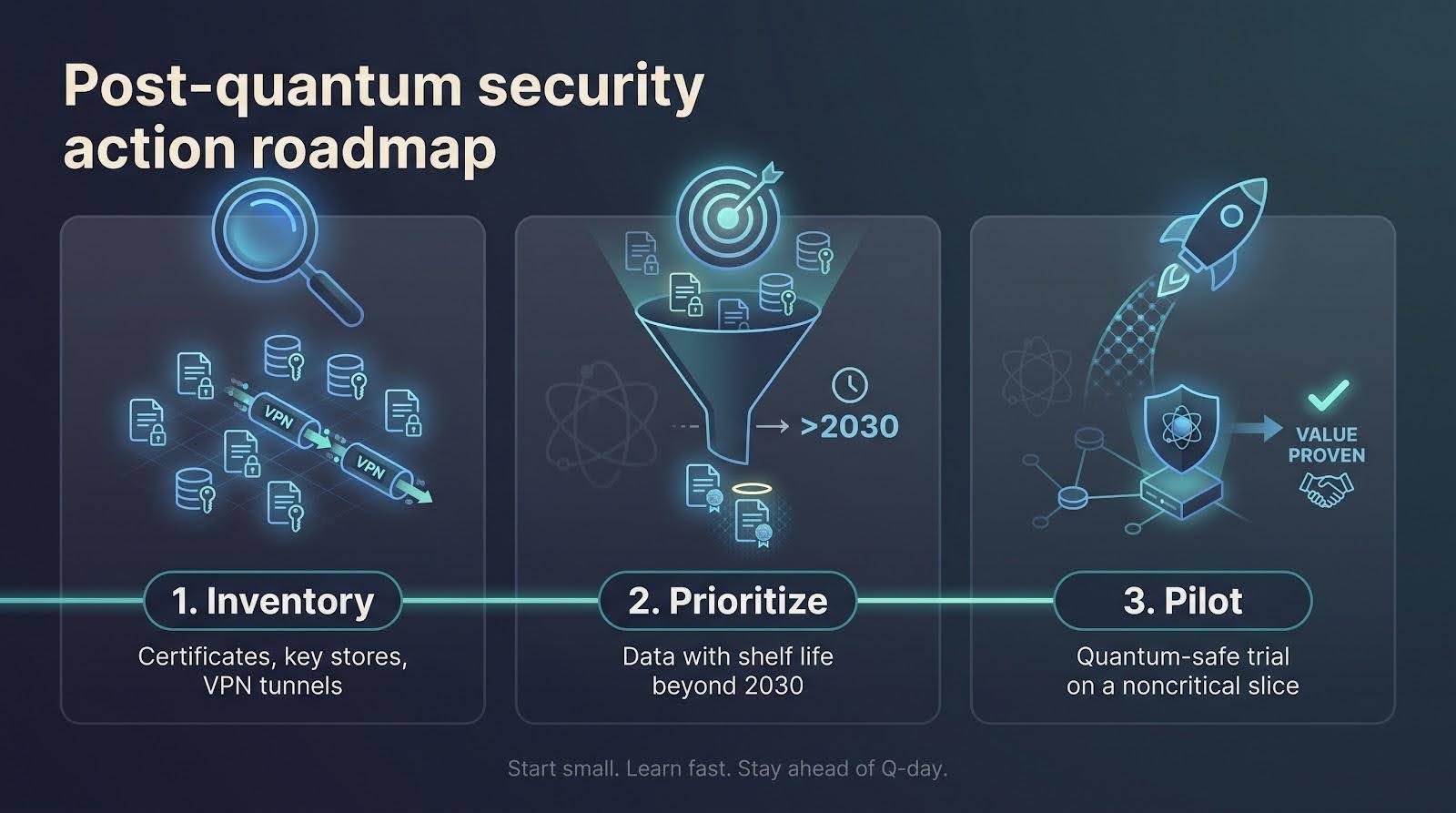
- Inventory every certificate, key store, and VPN tunnel. Unknown assets stay unpatched.
- Prioritize data with a shelf life beyond 2030. Adversaries are harvesting that information today.
- Pilot one of the solutions above on a noncritical network slice. You’ll surface integration quirks early and show value to the CFO.
Nearly two-thirds of organizations already flag quantum as their top future threat, yet few have acted. Funding momentum is clear as well, with Project Eleven securing twenty million dollars this year to protect digital assets PR Newswire.
The takeaway is simple. Quantum security is no longer experimental; it’s becoming standard due diligence. The companies profiled here give you a menu of credible, battle-tested options. Start small, learn fast, and stay ahead of the inevitable Q-day. Your future self – and your shareholders – will thank you.