































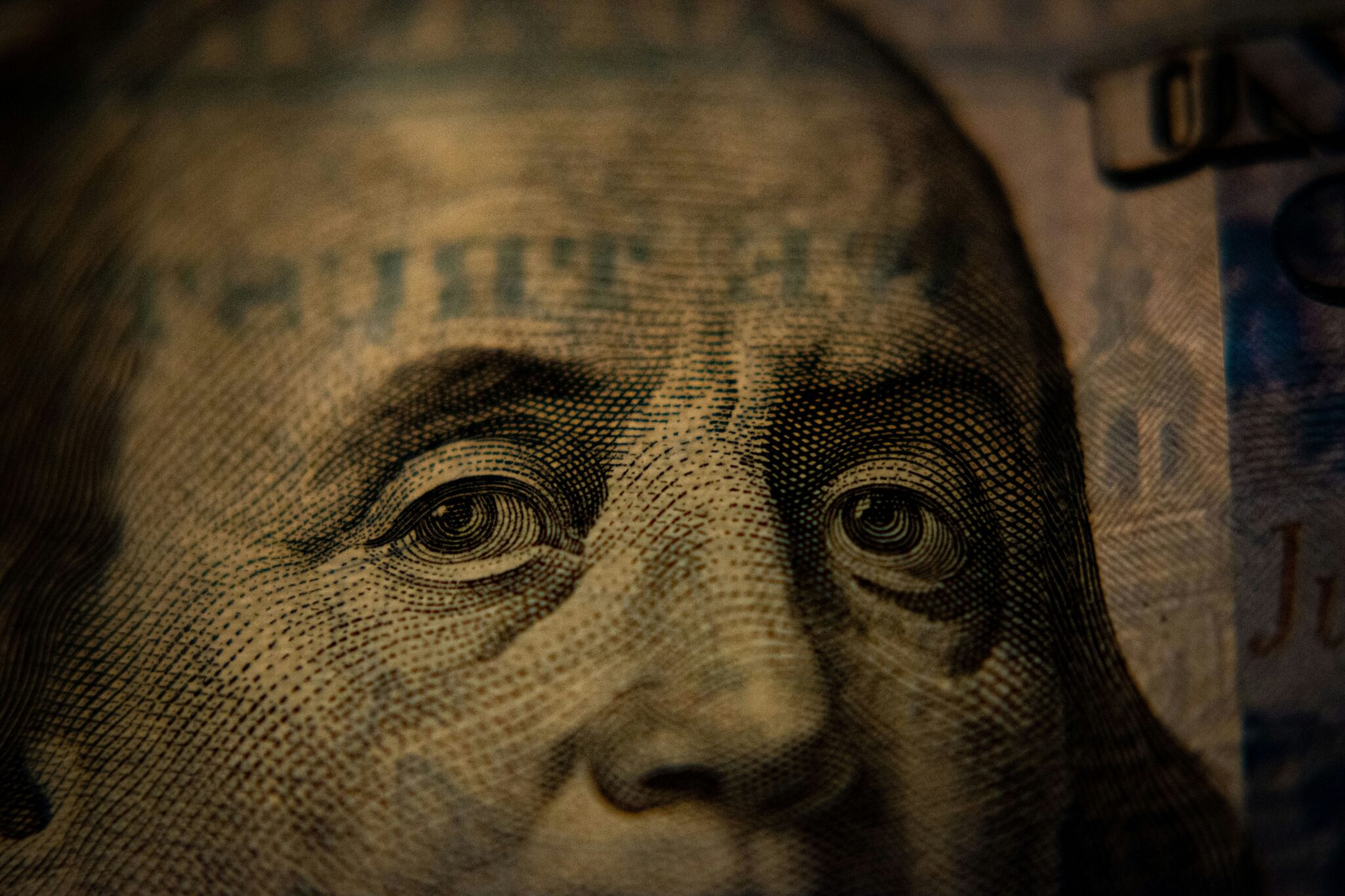
With the exception of the US dollar, the World’s Most Valuable Currencies: Why Some Are Worth More Than the US Dollar looks at the value of other currencies and explains why some are worth more than the US dollar.
The first thing that springs to mind when people think of the world’s strongest currencies is the US dollar, the euro or the British pound. But if currencies are compared by their face values in relation to the U.S. dollar, some of the currencies of the Gulf region are higher. A particular note is worth mentioning with regards to the value of the Kuwaiti dinar, Bahraini dinar and Omani rial, as they are all higher in value than the US dollar.
Join The European Business Briefing
New subscribers this quarter are entered into a draw to win a Rolex Submariner. Join 40,000+ founders, investors and executives who read EBM every day.
Subscribe
This leads to an interesting question: why would these currencies be of greater value than the currency used all over the world? The solution includes exchange-rate policies, economic structures, monetary stability, trade relationships and central-bank decision-making.
What Makes a Currency “Valuable”?
The term “valuable currency” may have different meanings. As this term is commonly used, it is the rate at which one unit of the currency can be exchanged for one unit of the US dollar. Currencies that are worth more than $1 each have a higher nominal unit value.
This does not necessarily imply that this nation’s economy is bigger or stronger than that of the United States. The value of the exchange rate has nothing to do with the domination of the international economy, but with the monetary policy and the decisions taken in the past.
For anyone researching the highest currency in the world, the Kuwaiti dinar is usually at the top of conventional rankings based on the value of one currency unit against the US dollar. Kuwait’s exchange-rate system aims to ensure relative stability and guard against imported inflation. The Central Bank of Kuwait (CBK) currently uses a non-revealed weighted average of major currencies, encompassing the significant trade and financial relations of the country, as a basis for determining the value of the dinar.
Why Is the Kuwaiti Dinar So Valuable?
One of the world’s most valuable currencies is the Kuwaiti dinar (KWD). It is partly linked to the nature of Kuwait’s economy, which is mainly oil dependent and has large stocks of foreign financial assets.
But oil is not the reason for the high value of the dinar. Kuwait intentionally controls its exchange rate instead of letting it float freely. Aiming to preserve relative stability and curb imported inflation, the Central Bank of Kuwait (CBK) announced that its exchange-rate policy is designed to protect the domestic economy, the statement said.
Previously, the Kuwaiti currency was fixed to USD, but in 2007 switched to a basket of major currencies. This strategy offers more flexibility and aids in cushioning the impact of any fluctuations in the big international currencies, the Central Bank of Kuwait said. It gives rise to a currency of high nominal value and a fairly stable exchange-rate structure.
Why Is the Bahraini Dinar Worth More Than the Dollar?
Another Gulf currency that is valued much higher than the USD is the Bahraini dinar (BHD). Bahrain has a fixed exchange rate with the dollar. Historical documents from the Central Bank of Bahrain show that the value of the Bahraini dinar was fixed around 1945 at $2.659. :chatgpt-content-reference{index=”3″}
A fixed exchange rate provides businesses with more certainty in conducting transactions across borders. Importing companies, those paying foreign suppliers and those receiving dollar revenues will find less uncertainty in their business concerning sudden changes in exchange rates.
Bahrain also has a diversified economy that is supported by a wide range of activities, including financial services, tourism, manufacturing and more in addition to energy. It’s also a regional financial centre, making the stability of the currency a significant issue for businesses that operate across borders.
Why Is the Omani Rial Worth More Than the US Dollar?
The Omani rial (OMR) provides another clear example of how exchange-rate policy can create a high nominal currency value. The Central Bank of Oman states that the rial has been fixed at US$2.6008 per rial since the last parity adjustment in 1986.
Oman’s economy is relatively open and heavily connected to international trade. The country’s central bank describes the fixed peg as its preferred exchange-rate regime and notes that exchange-rate stability has supported trade, investment, and economic growth.
The set USD rate also provides businesses with greater certainty when making calculations for costs, revenues and international contracts.
Why Are Gulf Currencies So Strong?
The high nominal values of these currencies can be attributed to several reasons. First, most of the Gulf economies have historically enjoyed high energy revenues. Oil and gas exports provide important foreign currency earnings, which help to balance external payments and finances the government.
Second, monetary authorities have given a lot of importance to exchange-rate stability. Some Gulf States have a fixed or managed exchange-rate system, rather than floating.
Third, with relatively limited currency supply and prudent monetary policies a high value per currency unit can be achieved. The denomination also matters – countries could redesign the economy’s units of currency without fundamentally changing the economy’s purchasing power.
So it’s not necessarily the case that a citizen’s ability to purchase is equal to several times that of an American citizen if the exchange rate is several dollars to one.
What Does a Strong Currency Mean for Businesses?
In business, a strong currency may be a blessing or a bane. The international planning process is facilitated by stable money. Businesses can have a more accurate idea of the expenses of importing equipment, software, raw materials, and professional services. Long-term contracts may also be easier to form with a relatively small range of exchange-rate fluctuations.
A strong domestic currency can be beneficial to importers as foreign products convert to a lower price in the domestic currency. Businesses purchasing machinery or technology from overseas can potentially reduce their local-currency costs.
But different circumstances can be faced by exporters. When the domestic currency is high priced relative to the currencies of trading partners, home-made products might be relatively more costly to foreign consumers.
An appreciation of the exchange-rate regime is thus as vital as interest in the face value of a currency for a multinational enterprise.
What Does It Mean for Travellers?
It’s not just visitors who notice this difference, but also travellers when they’re converting their money. If you are travelling from the United States to Kuwait, Bahrain and Oman, you’ll discover that you get fewer units of the local currency for your dollar.
It is important to note the difference between the value of the currency and local prices. Not all products or services are necessarily high cost when the currency is high. Local wages, taxes, supply/demand, and other economic factors affect accommodation, transportation, restaurants and entertainment.
When travelling abroad consumers should also take into account exchange fees, ATM charges, card conversion rates and dynamic currency conversion. It may make a difference when comparing these costs, especially with longer journeys.
High Currency Value Does Not Mean Global Dominance
The US dollar is still of tremendous significance in the global economy, even though it is weaker than the Kuwaiti dinar, the Bahraini dinar and the Omani rial. The dollar’s significance stems from its widespread use in international trade and commerce, international finance, international reserves, trade in commodities and cross-border transactions.
This is a significant lesson to be learned: the exchange rate and value of a currency is not the same as the currency’s overall economic weight.
It is possible for a currency to be very valuable in terms of local use but still be very limited in international use. On the other hand, a currency like the US dollar can have a small nominal unit value and yet be used extensively in the global financial system.
Conclusion
The value of a currency is not only determined by the size of an economy as is shown by the Kuwaiti dinar, the Bahraini dinar, and the Omani rial. There are many factors that affect the value of a currency, including exchange-rate regimes, monetary policy, economic structure, trade relationships, energy revenues, and financial stability.
When setting product prices, contracting with international parties, importing/exporting and assessing currency risk, it is crucial for businesses to understand these factors. The headline exchange rate is not the only factor for travellers and transaction costs and the purchasing rate also plays an important role.
The nominal exchange rate is only one method of valuing currencies and the currencies with the highest nominal exchange rates are not necessarily the currencies that are the most powerful in the world. Their high values are best explained as a product of conscious economic and monetary policy and history that have influenced their exchange rates over a long period of time.