































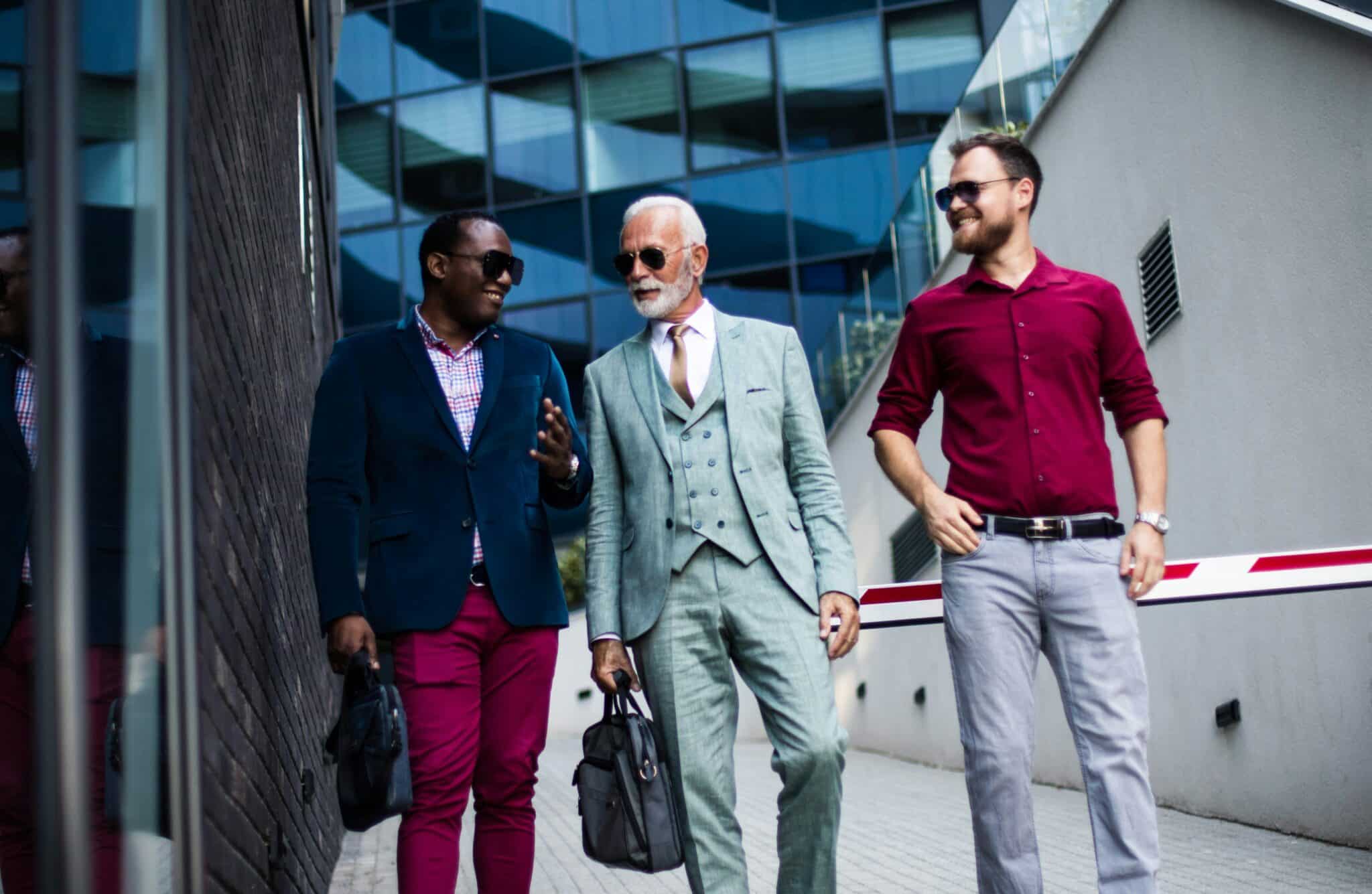
Classic menswear is making a comeback in business settings, driven by a push for authority and precision. Recent reports show strong demand growth for custom tailoring post-hybrid work normalization. Suits with defined shoulders and nipped waists signal control amid casual dress codes that have softened corporate images. Leaders in finance and law firms now favor sharp lines over hoodies, reflecting a demand for visual markers of hierarchy.
Roots in Corporate Authority
Structured tailoring draws from mid-20th-century boardroom standards, where broad lapels and padded shoulders projected dominance. This form returns as executives seek to stand out in video calls and client meetings. A Double breasted suit, for instance, adds weight to the torso through its overlapping front, creating a commanding silhouette that fits current needs for presence without excess volume. Historical photos from 1960s Wall Street show identical builds, proving timeless appeal in power dynamics.
A Shift from Casual Dominance
Athleisure took over offices after 2020, but that trend is reversing. According to HIM Business School, IWG research with over 1,000 U.S. hybrid workers shows nearly 80% of professionals dress differently post-pandemic, reviving formal business wear. Structured suits counter slim-fit trends that make the wearers look flat; their high armholes and structured canvas allow for free movement while maintaining form. Italian houses such as Zegna advocate for this classic revival with wool blends that hold shape through long days.
Join The European Business Briefing
New subscribers this quarter are entered into a draw to win a Rolex Submariner. Join 40,000+ founders, investors and executives who read EBM every day.
SubscribeMoreover, wearing structured pieces can lead to more negotiation success via perceived power. Studies confirm that people in formal clothing made around $2 million more in profits when negotiating than those who weren’t. This is why tech executives often wear these suits for investor pitches, pairing them with contemporary footwear such as sneakers for versatility.
Precision in Modern Fits
Modern versions of structured suits refine the classics, where narrower gorge lines are paired with slim trousers to balance tradition and proportion. Peak lapels draw attention upward, enhancing perceived height and presence. Particularly, world-renowned Savile Row craftsmen prioritise full-canvas construction for superior drape and longevity, bypassing fused alternatives that are prone to sagging and distortion.
Ready-to-wear models typically start at $1,500, while bespoke commissions may reach $5,000. Their high prices are justified by durability, as many can last a decade with proper care. Functional details like double side vents support fluid movement, while ticket pockets serve as a nod to early 20th-century banking attire.
Outlook for Boardrooms
Hybrid work models still leave room for authoritative presentation, which means structured tailoring continues to have a place in professional wardrobes. Months-long waitlists at top bespoke houses underscore committed demand for classic menswear. But with new techniques, such as 3D scanning for virtual fittings, wait times can be reduced to two weeks.
New materials, such as advanced merino wool from Australian sources, provide wrinkle resistance, suitable for frequent travelers in consulting and deal-making. Meanwhile, temperature-adaptive fabrics further equip these garments for variable office environments. In sum, structured tailoring delivers measurable advantages in client confidence and differentiation from casual norms.