




























Walk a European final assembly line today and the constraints are visible before anyone says a word. Product variants that would once have justified separate lines now share one. Cycle times are tighter, traceability requirements are heavier, and the operators who used to absorb the awkward parts of a process are harder to recruit and more expensive to keep. Capital committees, meanwhile, have grown noticeably less patient with equipment that arrives late and then needs a year of adjustment before it earns anything.
That pressure lands at an unflattering moment for the continent’s position in automation. According to the International Federation of Robotics, 542,000 industrial robots were installed worldwide in 2024, more than double the figure a decade earlier, and Asia took 74% of those new deployments against 16% for Europe and 9% for the Americas. Reading that as a straightforward story of decline is tempting, though it says more about where high-volume, standardised production now sits than about where European plants can realistically compete.
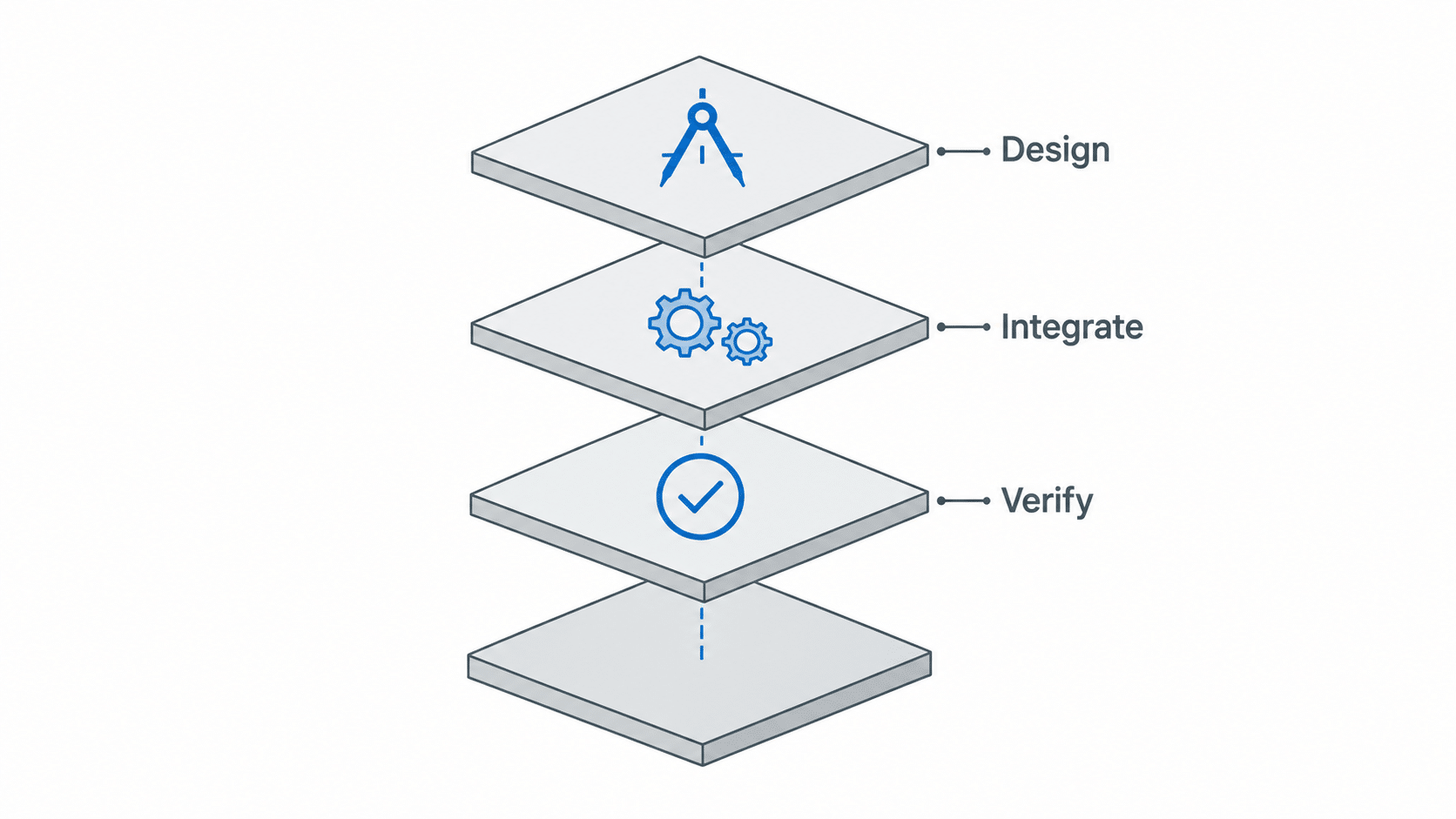
The interesting response has been a shift in what manufacturers actually buy. Rather than ordering catalogue equipment and asking the plant engineering team to make it fit, more are commissioning the system itself. Groups such as Atlas Copco ITBA run application engineering centres that assemble custom fastening and assembly systems out of standard core products, then integrate, programme and test the finished cell in their own workshop before it is shipped to the customer ready to run.
Join The European Business Briefing
New subscribers this quarter are entered into a draw to win a Rolex Submariner. Join 40,000+ founders, investors and executives who read EBM every day.
SubscribeWhere catalogue equipment stops fitting
Standard tooling handles standard joints very well, and most plants should keep buying it wherever it works. The trouble starts at the edges of a process, which is where a surprising share of quality escapes and cycle-time losses tend to accumulate:
- Multi-variant parts where one station has to handle several bolt-circle diameters or part geometries without a manual changeover
- High-torque operations that also need integrated safety and operator guidance rather than a tool plus a separate interlock scheme
- Confined working envelopes where a standard arm or fixture physically cannot reach the joint at the required angle
- Joints where the quality record matters as much as the fastening itself, and evidence has to be captured at bolt level rather than at station level
Each of these can usually be solved by a plant team given enough time. The awkward question is whether that team should be spending eighteen months solving it, and whether the resulting arrangement will still be documented and supportable once the engineer who designed it moves on.
The gap where projects actually fail
Automation projects rarely fail at the component. They fail in the space between components, where nobody’s scope quite reaches. The tool works, the fixture works, the vision system works, and the combination does something unexpected on the third shift with a part that came from the second supplier.
This is the argument for buying the integration rather than performing it. Testing a complete system in a supplier’s workshop before delivery moves the discovery of those interactions to a place where fixing them is cheap and no production is stopped. It also changes what commissioning looks like on site: the plant is confirming behaviour it has already seen, instead of encountering it for the first time with the line down.
Governance, which sounds dull and decides outcomes
For anyone signing the capital request, the structural details of how a supplier runs the project tend to predict the outcome better than the specification does. A single named point of contact across the project lifecycle sounds like a courtesy until the first change request, when it becomes the difference between one decision and four weeks of triangulation. Formal quality gates at pre-production, design approval, production and pre-shipment do similar work, catching problems while they are still design questions rather than warranty claims.
Who maintains the code afterwards
Software deserves the same scrutiny. Custom data collection and error-proofing code now sits inside these systems, and it will need to be maintained, audited and occasionally handed to someone else. Whether it was written under a recognised process standard such as ASPICE is a fair thing to ask, and a supplier that cannot answer clearly has told you something useful.
What to ask before the capital request goes up
Most of the risk in an engineered assembly project can be surfaced with a handful of unglamorous questions early in the sales conversation.
| Question | Why it matters | A weak answer sounds like |
| Will the complete system be tested as one before it ships? | Integration faults found on site cost production time, not just engineering hours | “We test the individual components thoroughly” |
| Who owns the project when scope changes? | Fragmented ownership turns small changes into schedule slips | “Your account manager will coordinate with the relevant teams” |
| Which quality gates exist, and who signs them off? | Gates convert late surprises into early design decisions | “We have a rigorous internal process” |
| What documentation transfers with the system? | Undocumented custom equipment becomes unsupportable once staff change | “Full documentation is available on request” |
None of this makes a plant competitive with a high-volume line in Shenzhen on unit cost, and it is not meant to. The advantage available to European manufacturers lies in complicated, low-tolerance, heavily documented assembly that a generic line cannot absorb, which is precisely the work that rewards spending more on engineering and less on equipment. The same logic is showing up across the continent’s older sectors as they retrofit rather than rebuild, a pattern set out in more detail in this look at how AI and automation are modernising Europe’s legacy industries.
For a board weighing its next line investment, the practical test is narrow. Ask what the supplier will have already proven before the equipment reaches the loading bay, and how much of the remaining risk is still sitting with the plant.