





























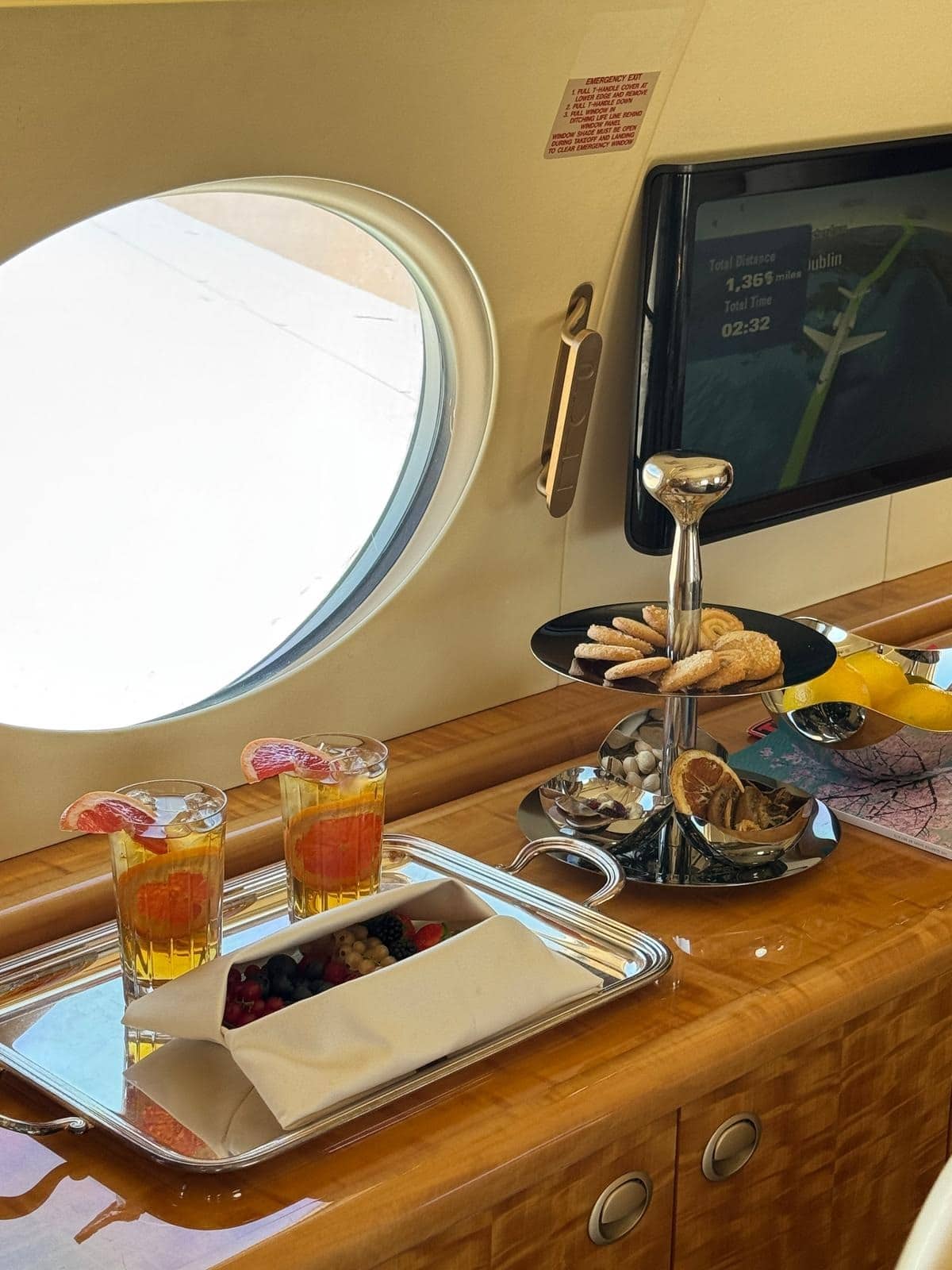
September 2026 | EBM Newsdesk Analysis
SkyDine Jet Catering explains why ordering catering for a private flight is different from arranging lunch for the boardroom, and how the aircraft, airport, timing, and passenger schedule all influence what can realistically be delivered.
Many executive assistants handle a range of tasks and responsibilities every day, including planning their boss’s meetings, knowing his favorite hotels, arranging time between appointments, and sometimes even ordering lunch. All this is great knowledge to bring to private aircraft catering. However, ordering catering for a private jet is quite different from doing it in the office or in a restaurant.
Join The European Business Briefing
New subscribers this quarter are entered into a draw to win a Rolex Submariner. Join 40,000+ founders, investors and executives who read EBM every day.
SubscribeThe order might seem simple: grilled salmon, vegetables, a special salad, and some sparkling water. The problem is that a lot of work goes into this meal: it must be done in advance, packed properly, delivered to the airport, loaded onto the aircraft, kept in the galley, and finally served onboard.
When ordering catering, a good executive assistant should tell the caterer about the passenger’s preferences and provide all necessary information so they can arrange the rest.
Start with the passenger, but consider the aircraft
The passenger’s preferences come first. The CEO can prefer light lunches, certain breakfasts, specific ingredients, and even some dietary restrictions.
However, the aircraft type can make a big difference. Large-cabin private jets and short domestic flights have different catering requirements than long-haul trips in smaller aircraft.
Catering in private aviation usually involves pre-preparation and finishing of dishes on board. So, a dish that’s perfect in a restaurant or office might become a disaster when ordered for the aircraft.
An executive assistant doesn’t need to know every detail of private jet catering. Providing the aircraft type and tail number is usually enough.
The provider should guide the request
One key difference between ordering lunch in the office and ordering it for a private jet is the catering provider’s expertise and experience.
An executive assistant should not be expected to know whether a dish will travel well, how it needs to be packaged or whether a specific ingredient can realistically be sourced near the departure airport.
The caterer needs to have this kind of knowledge. In some cases, the provider will agree with a request. However, sometimes the provider will to need to explain why a particular order will be difficult to fulfill and suggest an alternative.
For example, a passenger may want a dish from a particular restaurant, but it may not travel or reheat well. An ingredient may not be readily available locally. A complex request may also be difficult to produce on short notice.
Be precise about dietary requirements
The most distinctive feature of private aviation catering compared to restaurant meals is the number of steps involved.
In a restaurant or office, food travels just a couple of meters from the kitchen to the table. However, with private aircraft, catering must be transported to the airport, brought to the correct FBO/handling point, and loaded onto the aircraft. Several people will be responsible for delivering it to the passenger.
Thus, the packaging plays a key role in this case.
Containers must meet all requirements of the aircraft environment. Portion size should be optimal for plating. Hot and cold items must be properly distributed, and each meal must be easy to identify.
Imagine four executives traveling on board. CEO wants grilled fish, one person is vegetarian, another has an allergy, and the last passenger has a regular meal. Maintaining these differences throughout preparation, transportation, and service is crucial.
Order for the CEO’s day
The executive assistant usually knows one thing the caterer doesn’t: what happens after landing.
The CEO might leave the morning meeting, travel straight to the airport, work on board, and then go to another meeting after landing. Catering in this case has to reflect that schedule.
A heavy meal for a short flight right before an important appointment probably won’t suit. A light lunch, salad, fruit, or a smaller portion might be more appropriate. On the longer flight, something more substantial might be necessary.
In this case, the executive assistant usually has the clearest picture of the whole day. Sharing this information with the caterer lets them order something that fits the day perfectly, rather than simply repeating the passenger’s previous request.
Give the provider time to find a solution
Private aviation is all about flexibility. But catering still requires some preparation.
Earlier notice gives the provider more options, especially for specialized meals, restaurant-specific items, or unusual ingredients and requirements.
The departure airport is also an important factor, as something that can be ordered easily in one place may be harder to deliver to another airport.
However, this does not make the order impossible. It just means the provider will have to find another solution.
Knowing the airport, FBO, departure time, aircraft type, passenger count, and meal requirements early gives the caterer a chance to do this.
Don’t forget the small details
Although the main meal attracts the most attention, many frequent flyers pay equal attention to other details.
Preferred water, coffee, tea, soft drinks, fruit, and snacks can be part of an executive’s routine.
Having a simple catering profile is especially convenient for regular travelers. Such a profile can contain preferred meals, beverages, snacks, foods to avoid, portion preferences, and recurring dietary requirements.
However, it shouldn’t be used automatically, as a passenger who usually orders some heavy meals on long flights can prefer only fruit and coffee on a short morning sector.
If the aircraft is returning later the same day, it is also worth considering the return flight at the same time.
A practical catering checklist
Before confirming the order, the executive assistant should establish the passenger count, individual meal requests, allergies and dietary requirements, aircraft type, departure airport and FBO, departure time and flight duration.
Then ask the catering provider the operational questions.
Will the requested dishes travel well? Can they be stored, reheated, and served properly on this aircraft? Can unusual ingredients or restaurant-specific requests realistically be sourced within the available time?
If something cannot be delivered as requested, ask for the closest suitable alternative. Also confirm beverages, snacks, clear labeling of individual meals, and any catering required for the return sector.
Most importantly, do not try to solve every catering limitation yourself. Give the provider the passenger’s ideal request and the flight information, then allow the specialist to explain what is feasible and how best to achieve it.
Getting lunch right at 40,000 feet
Ordering lunch for the CEO at 40,000 feet begins with knowing his preferences. Successful delivery requires knowing how the order will work on board.
The executive assistant provides information about the passengers, overall preferences, and schedule. The caterer provides all the necessary knowledge about the sourcing, preparation, packaging, delivery to the airport, and serving on board.
That collaboration is what separates ordering lunch for the boardroom from arranging it for a private flight.
At 40,000 feet, getting the CEO’s lunch right is not simply about knowing what they like to eat. It is about making sure what they want can actually reach their seat the way they expect it.






