































The use of material is one of the main factors in the energy efficiency in industrial furnace. Use of the appropriate materials can limit heat loss, control operating temperatures and minimize wasteful fuel or electricity uses. However, mis-selection of materials can result in a higher energy loss, maintenance needs and operating expenses.
Industrial furnaces have very challenging thermal requirements. They need to have lining materials which are heat resistant and have good heat transfer properties. This knowledge enables the furnace manufacturers to enhance the reliability of their furnaces and to make better long term investments based on the performance of various refractory and insulation materials.
How Furnace Materials Affect Energy Consumption
Furnace materials affect the heat loss from the furnace, the amount of energy absorbed by the walls and the ability of the equipment to keep its working temperature.
Join The European Business Briefing
New subscribers this quarter are entered into a draw to win a Rolex Submariner. Join 40,000+ founders, investors and executives who read EBM every day.
Subscribe
Thermal Conductivity and Heat Loss
Thermal conductivity is one of the properties that suggests the capability of a material to conduct heat. . A lower thermal conductivity means that the material will offer greater insulation, if other factors are the same.
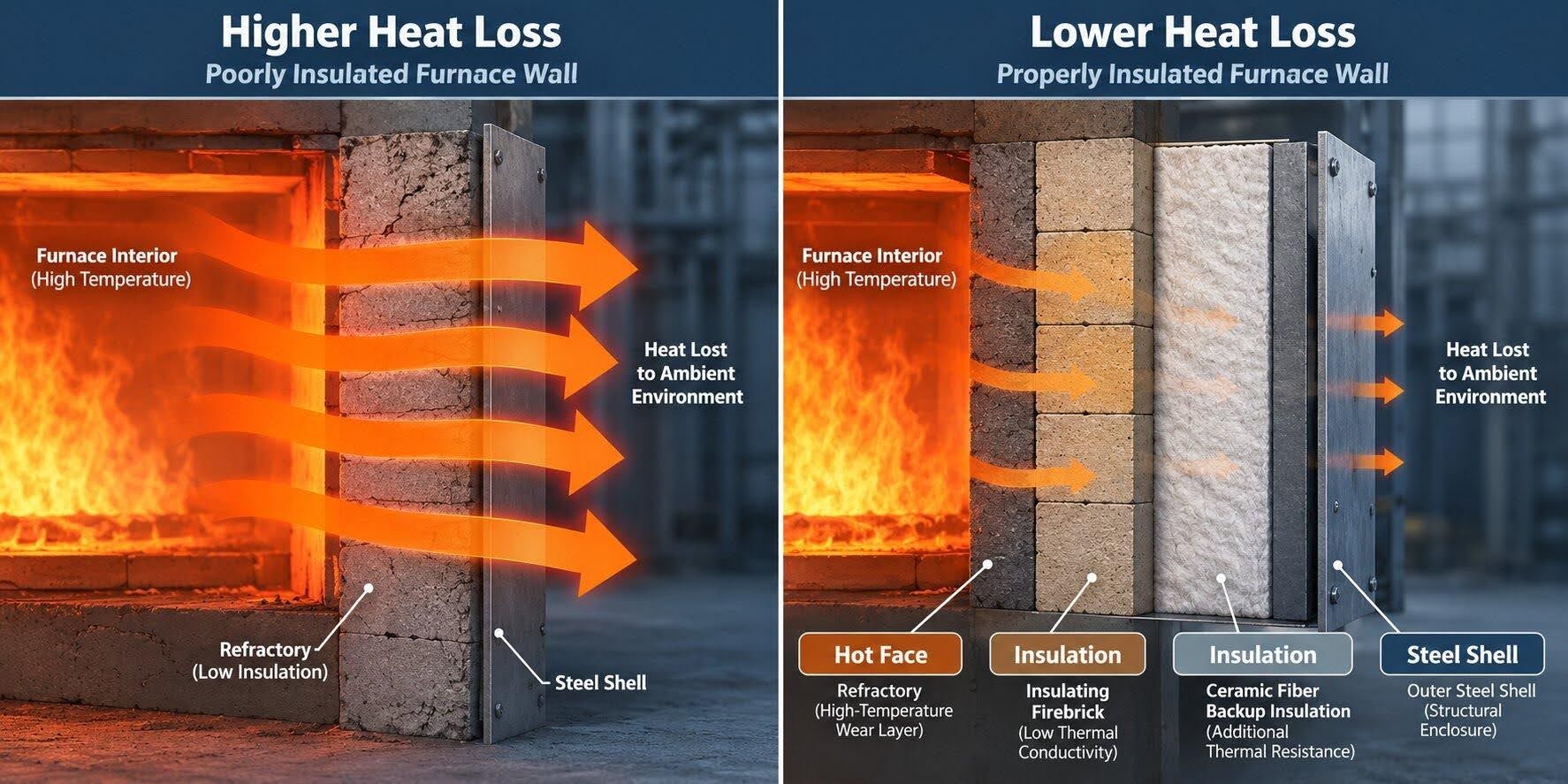
The selection of furnace insulation material for industrial furnaces is important because it can help decrease heat transfer through the furnace walls. This reduces unnecessary energy use, and contributes to a more even internal temperature.
Thermal Mass and Furnace Heating Cycles
Thermal mass is the ability of a material to retain heat. Refractory material is dense, so it will require a lot of energy to heat up, and insulation will be lighter and will store less heat.
Low thermal materials are especially recommended for furnaces that are started and stopped often. Depending on the operating requirements, different material combinations may be beneficial in continuous furnaces.
Key Material Properties That Influence Furnace Efficiency
It is not sufficient to select materials with the highest temperature rating to be used as effective refractory. There are several thermal and mechanical properties which engineers should check.
Thermal Resistance and Insulation Thickness
The thermal resistance is a measure of the effectiveness of the material layer to prevent heat flow. It is dependent upon the thickness of the insulation and the thermal conductivity.
As insulation thickness is increased, conductive heat loss will be decreased but this must be offset against space, installation cost and operating conditions.
Choosing an appropriate high temperature furnace insulation material not only increases furnace efficiency, but also does not affect the environment required for furnace work.
Temperature Limits, Thermal Shock, and Durability
Furnace material must be able to withstand continuous operating temperature and temperature fluctuation as well as physical stress. Parts that are frequently heated and cooled, such as in a furnace, are more susceptible to thermal shock.
Cracks and other deterioration can result in gaps, particularly if there is excessive movement or some sort of fit-up error. Using quality materials that provide good long term insulation and reduce premature maintenance.
Comparing Common Industrial Furnace Insulation Materials
The refractories used in furnaces of industrial applications have various properties of insulation, strength and durability.
Ceramic Fiber Blankets and Lightweight Insulation
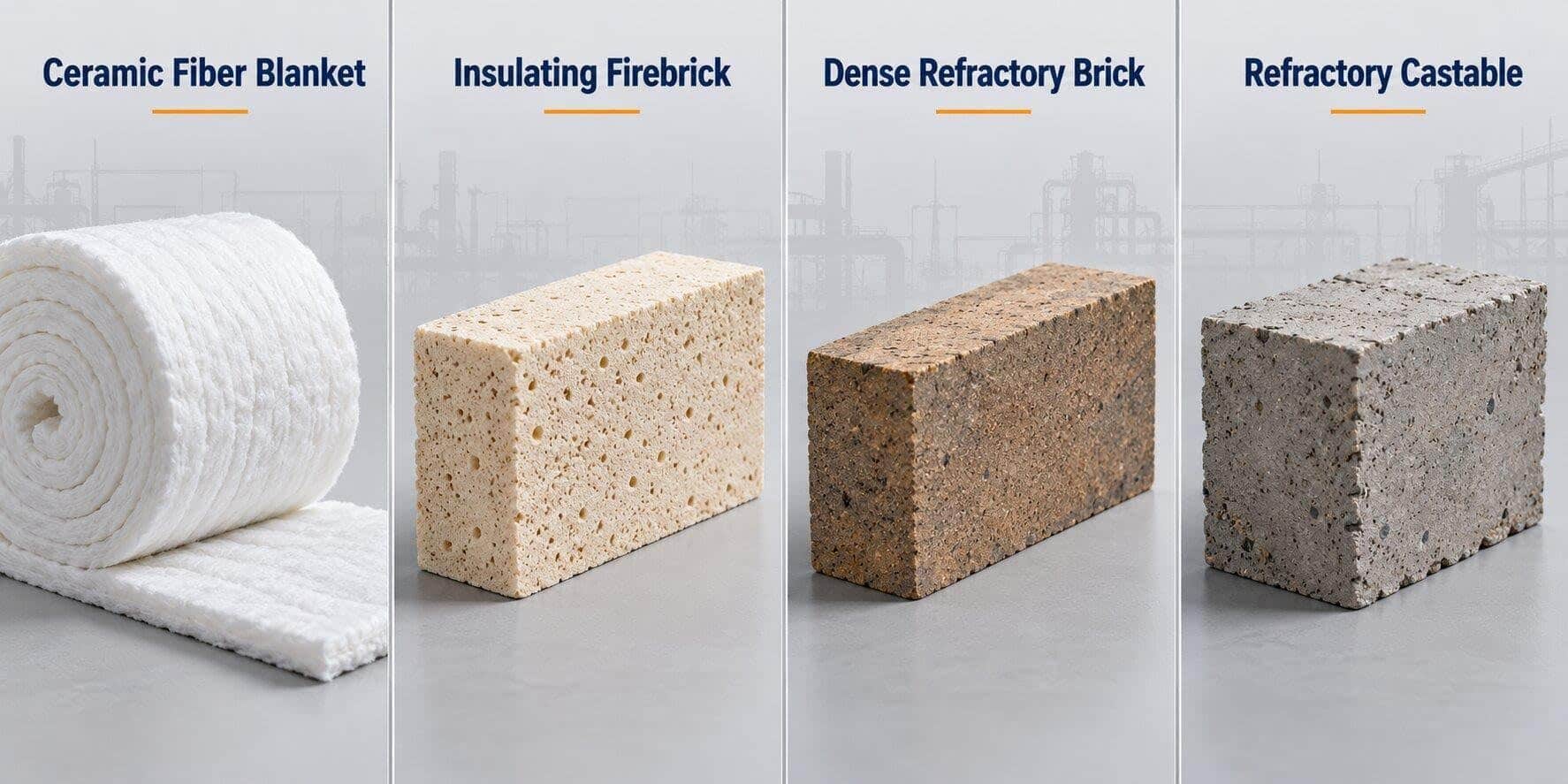
The thermal storage capability of Ceramic fibre materials is relatively low and they are light. They are also used to insulate some furnace walls, furnace doors and backup furnaces.
In appropriate furnace applications, a ceramic fiber blanket can be used to help reduce the stored heat and aid in the heating and cooling of the furnace.
But ceramic fiber is not suitable in all environments. Abrasion, chemical exposure, installation and safety for handling fibers should all be taken into consideration.
Insulating Firebricks and Dense Refractory Bricks
Insulating firebricks have the features of thermal insulation and solid structure. They are often employed in areas where structural strength and heat protection are crucial.
Dense refractory bricks have higher strength and anti-wear performance than the lightweight refractory bricks, but they can retain more heat.
The right one to use depends on the application’s specific needs – thermal or mechanical or both.
Refractory Castables and Multilayer Linings
Castable refractories can provide protective linings to furnace shapes that are complex. The properties of these will vary depending on the formulation chosen.
In a multilayer system, there is a durable hot-face material that is backed up with insulating materials to control heat loss and to insure furnace components.
| Furnace material | Main advantage | Key limitation |
| Ceramic fiber blanket | Low heat storage and lightweight insulation | Limited abrasion resistance |
| Insulating firebrick | Rigid structure with insulating properties | Greater thermal mass than lightweight fiber |
| Dense refractory brick | High mechanical durability | Higher heat storage |
| Refractory castable | Flexible installation and formulation options | Performance depends on material composition |
There is no one material that performs best in all industrial furnace applications.
How the Right Furnace Lining Reduces Energy Loss
The quality, thickness and placement of the furnace lining materials are crucial to achieving an energy-efficient furnace design.
Reducing Heat Loss Through Furnace Walls
If there is not enough insulation in furnace walls to resist heat flow, heat will escape through the walls.These losses can also be caused by cracked refractories, deteriorated seals and insulation.
Heat loss reduction and continued operation efficiency for industrial furnaces is achieved with regular inspections and the implementation of necessary repairs to linings.
Improving Heat Retention With Layered Insulation
Layered lining is a multi material lining. The hot-face layer is used to resist direct furnace conditions, and the backup insulation to minimize heat transfer to the outer shell.
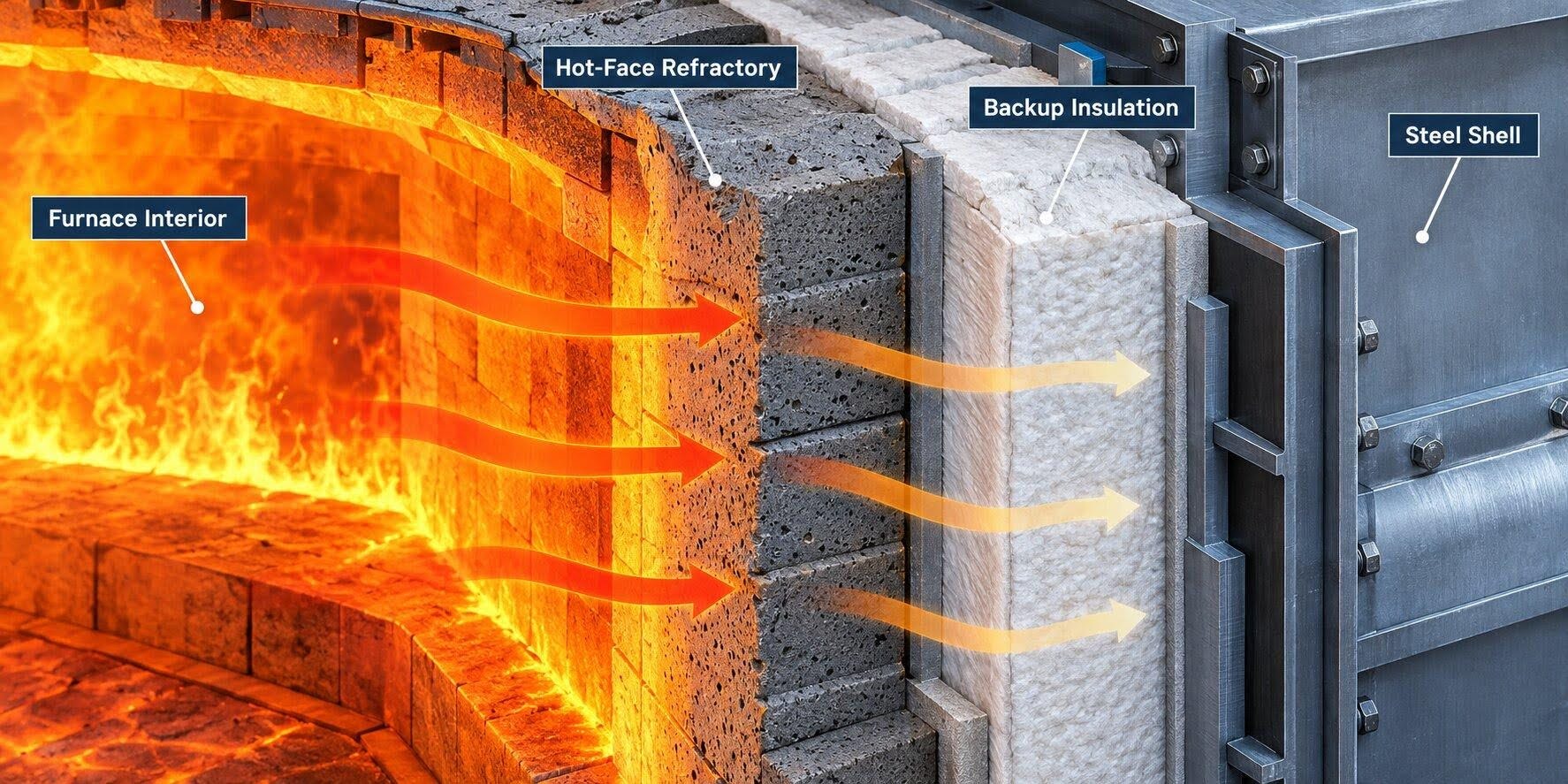
Good furnace insulation design can help to regulate the furnace’s temperature, as well as avoid too much heat exposure to protect equipment.
How to Select Energy-Efficient Materials for Industrial Furnaces
The furnace’s actual operating environment must be considered when selecting appropriate furnace lining materials—not price.
Match Materials to Furnace Temperature and Operating Conditions
The operating temperature, heating cycles, chemical exposure, abrasion and mechanical loads should be taken into account by engineers.
In such a case, light weight insulation might be suitable for a furnace that is used for many heat treatment cycles; a furnace with high abrasion might need a higher refractory working lining.
The specifications of materials should be compared with anticipated service requirements and manufacturer’s recommendations.
Compare Long-Term Energy Savings and Maintenance Costs
The first cost is just one of the costs of the investment.
All of these factors should be taken into account when performing a complete evaluation: energy usage, installation costs, maintenance needs, service life and downtime.
The U.S. Department of Energy’s process heating resources also can be used to evaluate process heating performance at facilities.
For additional guidance on industrial energy assessments, know more about available process heating tools.The cheapest material is that which is technically suitable and will yield reliable service over the life span of the material.
FAQs
How does material selection affect industrial furnace energy efficiency?
The choice of material can influence loss and thermal storage and temperature stability. Avoidable energy consumption can be eliminated using proper insulation and refractory materials.
Which insulation material is best for industrial furnaces?
The operating temperature, furnace design, thermal cycling, and mechanical requirements are all factors that determine the best insulation. There are different applications for ceramic fiber and insulating firebricks.
How do refractory materials reduce heat loss in furnaces?
Refractory lining systems of materials and insulating layers are combined to manage heat transfer through furnace walls.
Is ceramic fiber insulation more energy efficient than refractory brick?
The thermal mass of ceramic fibre is typically lower than for dense refractory brick and these are typically used in many cyclic applications. But overall efficiency is related to furnace conditions, the thickness of insulation and its thermal conductivity.
Can better furnace insulation reduce industrial energy costs?
Yes. Appropriate insulation will help to minimize unwanted heat losses and reduce the amount of energy required to maintain the operating temperatures. Actual savings will depend upon design and operating costs of furnaces.
Conclusion
The first step toward improving energy efficiency in an industrial furnace is to analyze the materials and evaluate how they are related to heat loss, thermal storage and furnace life.
They are used for various applications such as: ceramic fibers, insulating firebricks, dense refractories and castables. The knowledge of the combination of such materials can allow a manufacturer to achieve a balance between energy and reliability.
Assessing long-term costs and long-term operating conditions will allow an informed decision on when to replace a refractory and insulation lining.






