































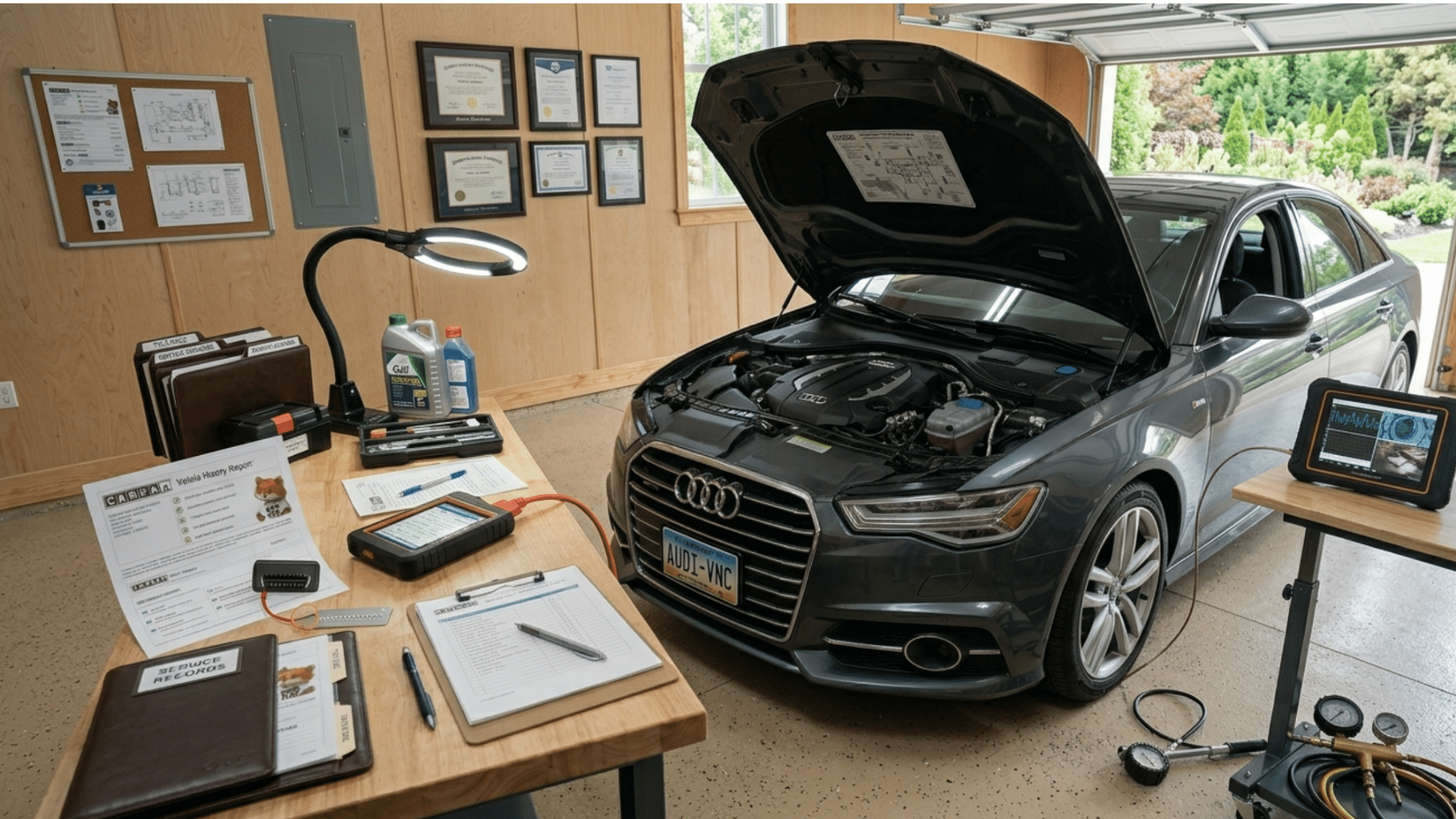
A used car can look completely fine and still have a past that changes everything about whether it’s worth buying. A flood title. An odometer that went backward somewhere in its history. Four owners in two years, each one moving it along after a few months. An accident that got repaired well enough to pass a quick look but shows up clearly in the data if you know where to find it.
All of that information exists before the purchase. It lives in the vehicle history report, in the title records, in the odometer entries logged every time the car went somewhere official. The problem isn’t that it’s hidden. It’s that nobody explains how to read it before you need it.
This does.
Join The European Business Briefing
New subscribers this quarter are entered into a draw to win a Rolex Submariner. Join 40,000+ founders, investors and executives who read EBM every day.
SubscribeStarting With the VIN Report and Understanding Its Limits
The report is the first tool, not the only one.
Carfax and AutoCheck both pull from overlapping but not identical sets of sources. DMV records across all fifty states, insurance company databases, dealer service logs, auction house records, state inspection systems. A report from either service costs around $40 to $50 and comes back as a chronological timeline of everything those sources know about that specific vehicle.
That number (The VIN) at the base of the windshield is what the whole report hangs on. Every title change, every mileage entry, every accident that got reported, all of it filed under those same seventeen characters since the car left the factory. Before the conversation with the seller goes anywhere, it is worth putting that number into a VIN decoder to confirm the basic specs match what the listing says. Make, model, year, trim, engine configuration. These details occasionally do not match and catching that early saves time before you pay for anything further.
What the report can’t do is just as important to understand as what it can. It knows what got reported. A cash repair after a private accident between two people who didn’t want to involve insurance is invisible to it. A shop that doesn’t feed into the national databases fixed the car and never filed anything. These gaps aren’t failings in the system exactly, they’re just the reality of how records work. The report reflects official channels. A lot of what happens to cars never goes through official channels.
So when a report comes back clean, that’s meaningful but not conclusive. It means no documented problems. Not necessarily no problems.
What the Ownership Section Actually Tells You
The number of previous owners is the thing buyers look at first in this section. It matters but not in the way most people think.
One person can do more damage to a car in eight years of neglect than three careful owners do in the same period combined. So the owner count by itself doesn’t really tell you anything worth knowing.
How long each owner kept it is more interesting. Someone who bought a car and sold it five months later either had a life change or had a reason. One short ownership period in an otherwise normal history is probably nothing. A car that keeps changing hands every few months, several times in a row, is a car that keeps ending up with someone who decided they didn’t want to keep it. That pattern usually means something.
Where the car was registered over its life is in here too and it’s worth a look. A vehicle that spent its first seven years in a northern state where roads get salted in winter arrived at you with a different underside than one from a dry climate state, regardless of how similar the listings look. The report shows where it was, even if the seller isn’t sure or says it was always local.
State changes in the ownership record are worth paying attention to for another reason. Disclosure requirements for certain title brands, flood damage and lemon law buybacks especially, vary by state. A car originating in a state that requires full disclosure sometimes moves to a state with weaker requirements before it gets sold. Not always deliberately. But the pattern of where it was registered and then tells a story if you read it in order.
Reading the Odometer History Before You Trust the Dash
Most buyers glance at the odometer entries in the report, see that the numbers go up, and move on. That’s the right instinct applied too quickly.
Line the entries up chronologically and read them properly. Every time a car got serviced at a dealer, registered, or went through a formal inspection, someone entered the mileage. On a normal car driven normally those numbers climb at a pace that makes sense given the time between entries. A car driven about 12,000 miles a year should show roughly that between annual registration entries.
A sensible step before paying for a full report is running the VIN through a VIN decoder first. Year, trim level, country of assembly, engine type. A listing that has any of those wrong is worth questioning before you go further and before any money changes hands.
A number that drops is the obvious flag. It means the mileage recorded at one point was higher than what was recorded later, which doesn’t happen naturally. A long gap in entries, two or three years with nothing, followed by a mileage figure that seems lower than the car should have accumulated in that time is the subtler version of the same problem.
Digital odometers are harder to tamper with than the old mechanical ones. Not impossible though. Swapping the instrument cluster from a salvage yard car showing lower miles is one method. Reprogramming the mileage module with equipment that’s sold openly online is another. The odometer history in the report is often where this surfaces because the previous entries don’t line up with the current reading.
The car’s interior fills in what the report can’t verify. Real miles leave marks that don’t come back with a detailed job. The seat bolster compressed and started to crack at the seam. Heel rest carpet that’s lost its texture. Pedal rubber worn down in the places feet actually land. A car at 55,000 miles doesn’t look like a car at 110,000 miles on the inside, not naturally, and the difference is hard to convincingly fake throughout.
The Accident History Section and Its Honest Limitations
Reported accidents appear in the timeline with whatever the reporting source included. An insurance claim, a police report that got filed, a total loss declaration. These show up as events with dates and sometimes basic descriptions of what was noted.
The word reported is doing a lot of work in that sentence.
A significant number of accidents never go through insurance at all. Two drivers exchange information and money privately and agree to skip the claim process. The repair gets done at a shop that doesn’t report anything. Nobody files anything official. That damage existed. That repair happened. None of it is in the database because none of it touched a system that feeds into the database.
This isn’t a rare edge case. It’s common enough that treating a clean accident history section as evidence of an undamaged car is a mistake. It’s evidence that no reported accidents were found. That’s different.
What the section does tell you is worth taking seriously when things are there. Structural damage in the report means the impact went deeper than the body panels. Something in the frame or underlying structure took the hit. Airbag deployment means the crash was hard enough to cross the threshold that sets them off, and that threshold exists specifically because minor impacts don’t reach it. Fire and water damage entries come with secondary consequences that develop over time and show up well after the car looks normal again.
Total loss declarations are worth cross-referencing with the title section. If the report shows a total loss event and later shows a rebuilt title, you’re looking at the complete picture of what happened to that car. Each entry on its own is informative. Together they’re the full story.
The damage that didn’t make the report lives in the car. Panel gaps that don’t match from one side to the other. A door that sounds different from the rest when you close it slowly. Paint that doesn’t quite agree with the panel next to it in afternoon sunlight. Date codes on windows that are years newer than the rest of the glass on the car. These are the records nobody filed but the car kept anyway.
Service History in the Report and What the Gaps Mean
Some reports include detailed service history. Others include almost none. It depends heavily on whether the car was regularly serviced at dealerships, which log everything into systems that feed the databases, versus independent shops, which vary considerably.
When the service history is there, it’s useful. Oil changes at consistent intervals, scheduled maintenance completed on time, warranty work and recall repairs noted. This section of a report that shows a car coming in regularly every few thousand miles for routine service is a car whose owner treated it like something worth keeping.
Gaps are the part to slow down on. A car with twelve entries over five years and then nothing for two years didn’t stop needing maintenance during those two years. Either it went to a shop that doesn’t report, or the maintenance stopped. Both of those possibilities have implications for what the car is like now.
Recall completions show up here too. Open recalls mean the manufacturer identified a problem significant enough to issue a fix and that fix hasn’t been done on this specific vehicle yet. Some open recalls are minor inconveniences. Some are safety-related. The report shows which recalls apply to the car and whether each one was completed. An open safety recall on a car you’re about to buy is worth knowing before you buy it, not after.
Using the Historical Data Alongside the Physical Car
The report and the car are two separate sources of evidence and they’re most useful when you use them together rather than treating either one as sufficient on its own.
Run the report before you go see the car. If the title history has a flood brand or a salvage brand, that’s the conversation to have before you spend time on anything else. If the odometer history has a discrepancy, bring it up at the start of the visit. If the ownership pattern shows four transfers in eighteen months, ask about it directly and watch how the seller answers.
A reasonable place to start, before the paid report, is putting the VIN into a VIN decoder and confirming the car is actually what the listing describes. Make, model, year, trim, country of assembly. Basic things that occasionally do not match and are worth knowing before you commit to anything further.
When the report is clean or close to it, use it as a baseline and then look at the car with the report in mind. A car the report shows was in a minor collision two years ago should have evidence of repair work somewhere on it. Finding that evidence doesn’t disqualify the car but it confirms the report and tells you where to look more closely.
A mechanic who actually goes through it fills the gap the report leaves. Frame, suspension, compression, anything that needs the car warm and up on a lift to show itself. Most of what gets missed in a used car purchase gets caught somewhere in that combination, the report, the inspection, and standing next to the car in afternoon sun with no particular reason to rush.
The historical data tells you what was documented. The car tells you what happened. Neither one alone is enough. Together they’re usually plentiful.
The Parts of the Report Most Buyers Underuse
Title brands and odometer history are the sections that matter most and get the least careful attention.
Title brands because the consequences of buying a salvage or flood vehicle without understanding what that means can follow you for years, in insurance costs, in resale value, in repairs that keep showing up. The brand is permanent information about the car’s past that directly affects its future. Reading it carefully takes three minutes.
Odometer history because it’s one of the only places in the report where the data can catch fraud that the car itself might not show clearly, especially on a vehicle that was otherwise well maintained and looks good. A cluster swap from a salvage yard car can look perfectly normal on the dash. The report’s previous entries are what contradict it.
The sections most buyers spend too long on are the ones that feel the most dramatic, major accidents, total loss events. These matter but they’re also the most visible entries in the report. The subtle things, a slightly odd ownership pattern, a small odometer discrepancy, a gap in service entries that lines up with a period the seller is vague about, these are the ones that take a little more reading and tend to be the more useful questions to bring into the conversation.