





























Freight has always depended on physical infrastructure. Roads, warehouses, distribution centers, ports, rail terminals, and industrial sites form the network that keeps goods moving. What is changing is how much technology now influences the way that network is planned and operated.
Real-time tracking, connected traffic systems, warehouse automation, artificial intelligence, and data analytics are giving logistics companies more visibility into their operations than ever before. Businesses can monitor shipments, identify delays, adjust routes, and coordinate deliveries with a level of precision that would have been difficult just a few years ago.
But digital tools are only part of the equation.
Join The European Business Briefing
New subscribers this quarter are entered into a draw to win a Rolex Submariner. Join 40,000+ founders, investors and executives who read EBM every day.
SubscribeA routing platform can identify the fastest path to a distribution center, but it cannot eliminate a poorly designed intersection. Warehouse automation can speed up fulfillment inside a building, but it cannot solve congestion at the facility entrance. Smart freight ultimately depends on combining digital technology with infrastructure designed to support it.
Freight Is Becoming a Connected Technology System
Modern freight networks generate enormous amounts of data.
GPS systems track trucks across regional and national routes. Fleet management platforms monitor vehicle performance and delivery schedules. Sensors can provide information about traffic conditions, equipment, cargo, and infrastructure. Transportation agencies increasingly use connected systems to understand traffic patterns and respond to congestion.
All of this information helps operators make faster decisions.
If traffic builds along one corridor, drivers can be redirected. If delivery patterns consistently show delays at a particular location, logistics teams can adjust schedules or investigate alternative routes. Over time, aggregated data can also reveal patterns that are difficult to identify from individual trips.
Artificial intelligence is adding another layer to this process. Predictive systems can analyze historical traffic, weather, shipment volumes, and other variables to anticipate potential disruptions.
Yet even the best prediction tools depend on the physical network they are analyzing.
Technology may identify where a bottleneck exists. Addressing that bottleneck often requires engineering.
Smarter Warehouses Need Smarter Sites
Much of the technology discussion around freight focuses on what happens inside the warehouse.
Automated storage systems, robotics, digital inventory platforms, and advanced fulfillment technology can dramatically improve how quickly goods move through a facility. But warehouse efficiency can quickly disappear if vehicles struggle to move around the site itself.
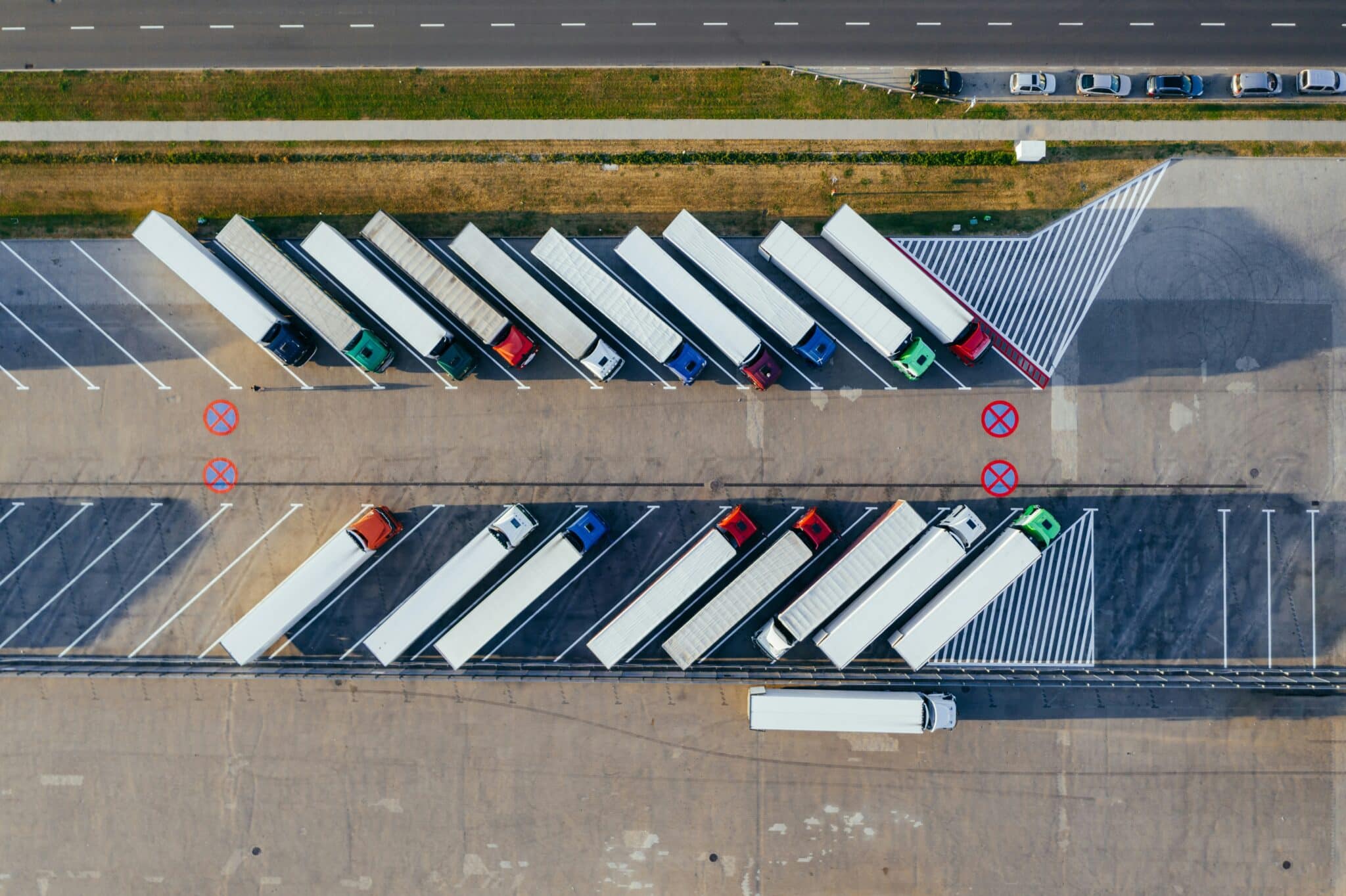
Industrial facilities must accommodate frequent truck movements while also handling employees, visitors, utilities, parking, drainage, and other operational needs.
Truck circulation is particularly important.
Drivers need enough space to maneuver safely between entrances, loading docks, staging areas, and exits. Access points should be positioned to reduce conflicts with other vehicles. Loading areas need to support the volume and type of freight moving through the property.
These considerations are difficult to correct after construction.
That is why technology-driven logistics projects still depend heavily on traditional site planning and civil engineering. The building may contain sophisticated automation, but the property surrounding it needs to operate just as efficiently.
Connected Roads Are Changing How Freight Moves
Technology is also changing the transportation network outside industrial facilities.
Intelligent transportation systems can collect information from cameras, sensors, traffic signals, and connected infrastructure. Transportation agencies can use this data to monitor congestion, identify incidents, and manage traffic more effectively.
For freight operators, these systems can improve route reliability.
A truck moving between a distribution center and an interstate may pass through several intersections before reaching the regional network. If traffic signals and roadway systems respond more effectively to changing conditions, those seemingly small improvements can reduce recurring delays.
Smart infrastructure can also provide engineers and transportation planners with better information.
Instead of relying only on periodic observations, professionals can analyze broader traffic patterns and identify where congestion repeatedly occurs. That information can help determine whether an intersection needs to be redesigned, a turn lane should be added, access should be modified, or another transportation improvement may be necessary.
Data improves the diagnosis. Engineering provides the physical solution.
Atlanta Shows Why Digital and Physical Infrastructure Must Work Together
Atlanta is a strong example of the relationship between freight technology and physical infrastructure.
The region supports extensive logistics, distribution, industrial, and commercial activity, which means new developments must function within an already complex transportation environment. A modern warehouse or industrial facility may use advanced automation and sophisticated logistics software, but its performance still depends on how effectively vehicles can move between the property and the surrounding road network.
Site selection and early development planning therefore have a direct impact on freight performance.
An industrial development civil engineer can help evaluate the physical requirements around a development, including site layout, grading, utilities, drainage, access, and infrastructure coordination. These considerations influence how efficiently the facility can operate once construction is complete.
Transportation planning becomes equally important beyond the property boundary. Experienced transportation engineers can evaluate traffic conditions, roadway connections, intersections, access points, and other factors that affect how people and freight move through the surrounding network.
The key is coordination.
Site design and transportation design should not operate as isolated processes. When they are considered together, developers can identify potential constraints earlier and make better-informed infrastructure decisions.
Why Data Alone Cannot Fix Physical Bottlenecks
The growth of AI and logistics software sometimes creates the impression that transportation problems can be solved primarily through better data.
In reality, digital optimization has limits.
Imagine a logistics platform that identifies the fastest route from a warehouse to an interstate. If every available route passes through a congested intersection, the software can only optimize within those physical constraints.
The same principle applies inside an industrial property.
A fleet management platform might schedule truck arrivals perfectly, but if the entrance cannot accommodate several vehicles at the same time, delays will still occur.
Technology is most valuable when it helps organizations understand where physical improvements are needed.
Traffic data might show that trucks consistently lose time at a specific intersection during certain hours. Engineers can then investigate the cause. The problem could involve signal timing, turning geometry, traffic volume, roadway capacity, or access configuration.
Once the underlying issue is understood, an infrastructure improvement can complement the digital solution.
Predictive Planning Could Change How Infrastructure Is Designed
One of the most promising applications of technology is not simply managing current traffic. It is helping planners understand future demand.
Transportation models can examine how new development may affect nearby roads. Historical traffic information can reveal long-term patterns. Development data can help planners anticipate where additional infrastructure may eventually be required.
AI could make these systems even more powerful by processing larger datasets and identifying relationships that traditional analysis may overlook.
For industrial development, predictive planning can be particularly valuable.
A site may operate effectively when it first opens but experience growing pressure as nearby properties are developed. Roads that currently have available capacity may become increasingly congested. Additional warehouses, residential communities, commercial centers, or infrastructure projects can change travel patterns throughout an area.
Planning with future conditions in mind can reduce the risk of designing infrastructure only for today’s demand.
Smart Freight Also Requires Resilient Infrastructure
Efficiency is only one measure of a successful freight network.
Reliability matters just as much.
Severe weather, flooding, crashes, utility failures, and other disruptions can interfere with freight movement regardless of how sophisticated the technology behind a logistics operation may be.
This is another area where physical infrastructure and digital tools increasingly overlap.
Monitoring systems can provide early warnings about weather or transportation disruptions. Real-time data can help carriers adjust routes. Predictive models may help identify areas that are more vulnerable to certain types of disruption.
But resilient physical infrastructure remains essential.
Industrial sites need effective drainage and stormwater systems. Roadway connections need to support safe and reliable access. Where possible, transportation networks benefit from alternative routes so that one disruption does not completely isolate a major facility.
Technology can help organizations react faster. Good infrastructure can reduce how often those reactions are necessary.
The Future of Freight Is Both Digital and Physical
Freight is becoming increasingly digital, but it is not becoming less dependent on infrastructure.
In many ways, the opposite is happening.
As warehouses become more automated and supply chains become more precise, weaknesses in the physical network become easier to see. A five-minute delay at an intersection matters more when every other part of the operation has been optimized. Poor site circulation becomes more noticeable when the warehouse itself can process goods rapidly.
That is why the next generation of freight infrastructure will likely be defined by integration.
Logistics platforms, connected vehicles, intelligent transportation systems, sensors, and AI will continue to improve visibility and decision-making. At the same time, civil and transportation engineering will remain essential for translating those insights into roads, sites, intersections, drainage systems, and infrastructure that can support real-world freight movement.
Smarter freight is not simply about adding more technology.
It is about using technology to better understand how goods move, and designing the physical infrastructure that allows them to move more efficiently.






