

























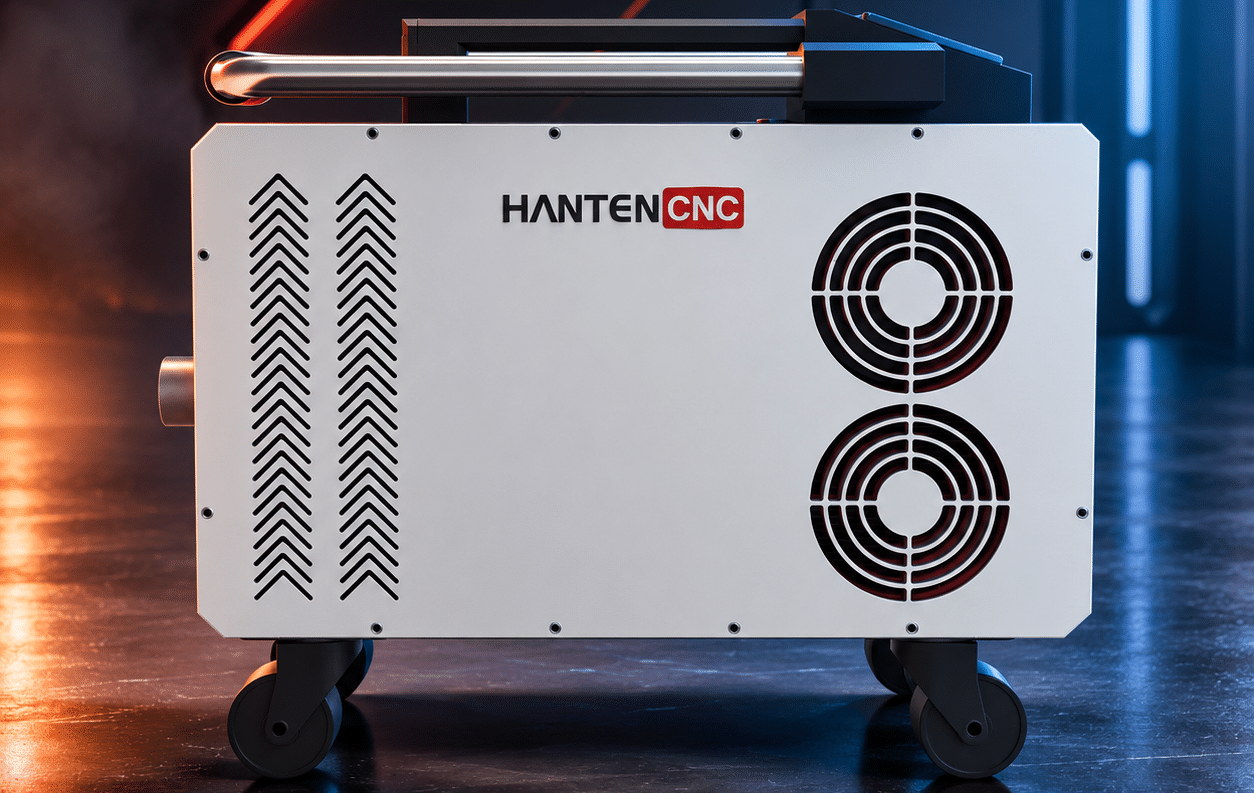
Laser cleaning machine prices range from a few thousand to hundreds of thousands of dollars, depending on the type and application. Entry-level handheld continuous laser cleaners are more affordable and suitable for rust removal, paint removal, and metal surface cleaning. High-precision pulsed laser cleaning machines cost more and are ideal for mold cleaning, aerospace maintenance, precision parts, and cultural relic restoration.
Automated robotic systems can exceed $200,000 due to advanced integration features. This article explains 2026 laser cleaning machine costs, including laser type, power, applications, hidden expenses, operating costs, and machine selection guidance.
Quick Overview of Laser Cleaning Machine Prices in 2026
Laser cleaning machine prices depend on laser type, power, configuration, automation, safety features, brand, and service. HANTENCNC prices are for reference only; final costs vary by application and machine configuration.
Join The European Business Briefing
New subscribers this quarter are entered into a draw to win a Rolex Submariner. Join 40,000+ founders, investors and executives who read EBM every day.
Subscribe| Machine Type | Common Power Range | Reference Price Range | Suitable Applications |
| Entry-level handheld continuous laser cleaning machine | 300W–1500W | About $3,000–$8,000 | Light and medium rust removal, small repairs, common metal cleaning |
| Industrial handheld continuous laser cleaning machine | 500W–3000W | About $6,000–$18,000 | Heavy rust removal, paint removal, steel structure surface treatment |
| Portable/backpack pulsed laser cleaning machine | 300W–1000W | About $5,000–$20,000+ | Precision cleaning, mold cleaning, on-site repair |
| High-power pulsed laser cleaning machine | 1000W+ | About $20,000–$50,000+ | Aerospace parts, precision molds, sensitive material cleaning |
| Automated laser cleaning system | Custom power | About $70,000–$200,000+ | Production line cleaning, batch parts processing, robot integration |
| Custom robotic laser cleaning system | Custom solution | About $20,000+ | High-efficiency industrial cleaning, large production line projects |
Why Is There Such a Big Price Difference?
The main factors that affect the price are listed below.
1. Continuous laser and pulsed laser have different prices
Laser cleaning machine prices vary by laser type, power, automation, configuration, and application. HANTENCNC prices are reference only.
For example, a 300W pulsed laser cleaning machine may cost more than a 1500W continuous laser cleaning machine. This is not because of power. It is because the laser types are different.
2. Higher power usually means a higher price
For the same laser type, the higher the power, the higher the machine price usually is. For example, a 2000W continuous laser cleaning machine is usually more expensive than a 1000W continuous laser cleaning machine. This is because it needs a higher-power laser source, a stronger cooling system, and a more stable electrical configuration.
3. Handheld machines and automated systems have different prices
Handheld laser cleaning machines have a simpler structure, so their prices are lower. Automated laser cleaning systems need robots, motion platforms, tooling fixtures, safety protection, and control software. So their prices are much higher.
4. Core configurations affect the quote
The laser source brand, cooling system, cleaning head, fiber length, control system, and safety configuration all affect the final price. Two machines with the same power may have different prices if their core configurations are different.
How Much Do Different Types of Laser Cleaning Machines Cost?
Common types include continuous, pulsed, handheld, and automated laser cleaning machines. Prices vary based on laser technology, power, machine structure, and configuration complexity.
Price of Continuous Laser Cleaning Machines
Continuous laser cleaning machines are affordable options commonly used for industrial rust and paint removal.
A common 1000W–1500W continuous laser cleaning machine costs about $3,000–$10,000. It is suitable for light and medium rust removal, common metal cleaning, and small repairs.
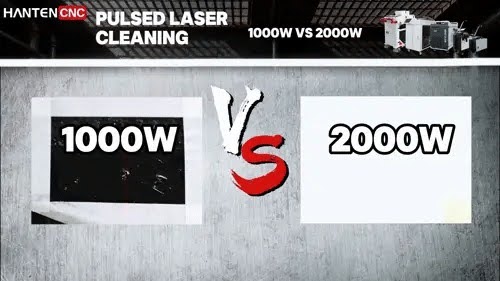
A 2000W–3000W continuous laser cleaning machine costs about $6,000–$18,000+. It is more suitable for heavy rust, thick paint, large steel structures, and industrial cleaning projects.
Price of Pulsed Laser Cleaning Machines
Pulsed laser cleaning machines usually cost more than continuous laser cleaning machines. They are more suitable for mold cleaning, precision parts cleaning, aluminum alloy surface treatment, stainless steel cleaning, and applications that need better protection of the base material.
A common 200W–500W pulsed laser cleaning machine costs about $4,000–$10,000.
A 500W–1000W pulsed laser cleaning machine usually costs about $8,000–$20,000+.
If it is a 1500W or higher high-end pulsed laser cleaning machine, the price may reach $20,000–$50,000+.
When choosing a pulsed laser cleaning machine, you should not only look at the power number. Even if its power is lower than a continuous laser machine, its price may still be higher.
Price of Handheld Laser Cleaning Machines
A handheld continuous laser cleaning machine usually costs about $3,000–$18,000+. It is suitable for rust removal, paint removal, and common metal cleaning.
A handheld pulsed laser cleaning machine usually costs about $5,000–$30,000+. It is more suitable for precision cleaning and sensitive surface treatment.
Price of Automated Laser Cleaning Systems
Automated laser cleaning systems cost more due to robots, motion platforms, safety systems, software, and testing equipment.
A semi-automatic laser cleaning workstation usually costs about $30,000–$80,000+.
A robotic laser cleaning system usually costs about $70,000–$200,000+.
If it is a custom laser cleaning system for a production line, the price may reach $100,000–$250,000+.
Why Do Machines With the Same Power Have Very Different Prices?
Different manufacturers may quote different prices for similar laser cleaning machines due to configuration, included components, customization, and service support.
1. Different laser source brands
The laser source is the core component affecting a laser cleaning machine’s price. Well-known brands usually cost more but offer better stability, performance, lifespan, and reliable after-sales support. Buyers should verify the laser source brand, condition, and actual output power before purchasing.
2. Different cooling systems
Air-cooled systems lower laser cleaning machine costs, while high-power machines require stable water cooling.
3. Different cleaning head configurations
Cleaning heads influence width, stability, scanning modes, comfort, and pricing for different surface treatment applications.
4. Different fiber lengths
Cleaning heads affect cleaning width, stability, scanning modes, comfort, and machine pricing for various surface treatment applications.
5. Different control systems
The control system affects parameter adjustment, cleaning modes, the operation interface, and ease of use. A better control system allows operators to set power, frequency, scanning width, and cleaning modes more easily.
6. Different safety configurations
Safety features like alarms, interlocks, and protection systems increase laser cleaning machine costs, especially in automated setups.
7. Different items included in the quote
Compare quotes carefully, including machine components, safety accessories, shipping, taxes, training, warranty, and after-sales support.
8. Custom prices are higher
Custom laser cleaning projects require separate pricing based on integration, automation, installation, workpiece size, and production requirements.
How to Get an Accurate Laser Cleaning Machine Quote?
To get an accurate laser cleaning machine price, you should pay attention to the following points when asking a manufacturer or supplier.
1. Material to be cleaned
Different metal materials require varying laser types and power levels, directly affecting machine pricing.
2. Material to be removed
Rust, paint, oxide layer, oil, coating, welding slag, or other dirt. Different materials have different thickness and adhesion. The needed machine power will also be different.
3. Thickness of rust or coating
Light surface rust, medium rust, heavy rust, thick paint, or multiple coating layers all have different requirements for machine configuration. The thicker the dirty layer is, the higher the power or efficiency usually needs to be.
4. Cleaning area
You should make clear how much area needs to be cleaned every hour or every day. If the cleaning area is small, you can choose a lower-power machine. If you need large-area continuous cleaning, you may need higher power or an automated solution.
5. Cleaning speed requirement
If you only clean sometimes, a standard handheld machine may be enough. If you need high-efficiency continuous work, the machine power, cooling system, and cleaning head configuration all need to be improved.
6. Surface quality requirement
For common rust removal, a continuous laser cleaning machine can usually meet the need. If the workpiece surface cannot be heated, changed in color, or damaged, you may need a pulsed laser cleaning machine. The price will also be higher.
7. Operation method
You need to clearly know whether you need a handheld, portable, semi-automatic, or robotic automated cleaning system. Different operation methods have very different machine structures and prices.
8. Destination country
The destination country will affect shipping method, customs duties, taxes, voltage standard, and plug configuration.
9. Budget range
Providing a budget range can help the supplier judge which configuration is more suitable to recommend. For example, the budget may be suitable for a handheld continuous laser machine, or it may be suitable for a pulsed laser machine or an automated system.
10. Workpiece photos or videos
Detailed photos and videos help suppliers provide accurate laser cleaning machine quotes, configurations, and power recommendations.
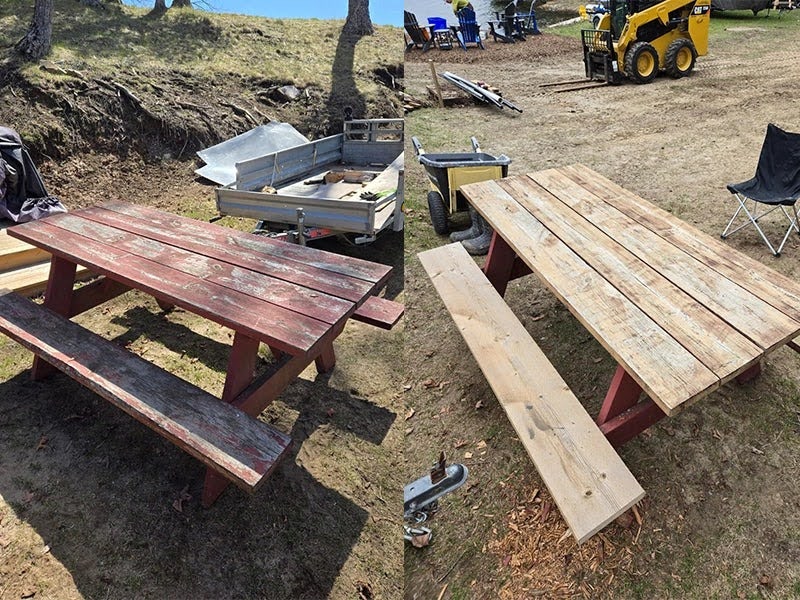
Conclusion: Don’t completely trust the price tag.
According to HANTENCNC, laser cleaning machine prices vary by type and project requirements. Handheld machines cost less, while pulsed and automated systems cost more. Accurate quotes require details like material, dirt type, coating thickness, cleaning area, efficiency needs, and workpiece photos.