





























Traditional low, middle and high-case forecasts offer limited protection when events can stall, reverse, continue or accelerate. Leaders need to understand which signals matter, test several plausible outcomes and identify the decisions available under each one.
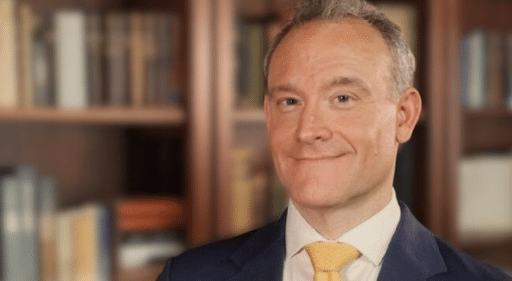
Jason Schenker is the President of Prestige Economics and Chairman of The Futurist Institute. Bloomberg News has ranked him the world’s leading forecaster in 36 categories since 2011. He is also an Adjunct Fellow at the Center for Strategic and International Studies, an adviser to the US State Department and Foreign Service Institute, and the author of Cold War Two.
Join The European Business Briefing
New subscribers this quarter are entered into a draw to win a Rolex Submariner. Join 40,000+ founders, investors and executives who read EBM every day.
SubscribeIn this exclusive interview with Champions Speakers Agency, Schenker explains which economic and geopolitical risks boards should monitor, how futurist frameworks can expose weaknesses missed by conventional forecasts and where businesses can still find growth during periods of recession and uncertainty.
How can leaders distinguish meaningful economic signals from noise when making strategic decisions?
Jason Schenker: “My talks help leaders see through the noise. There is a lot of economic data constantly coming at them, and we’re in a rapidly changing environment for the economy, technology and geopolitics.
“Being able to cut through that noise and differentiate what matters from what doesn’t is critical for making good business decisions and helping leaders be informed strategically.”
Which economic and geopolitical trends should business leaders be monitoring most closely?
Jason Schenker: “The most important economic trends and risks that business leaders need to be paying attention to right now include tariffs, inflation, trade and geopolitical risks. These uncertainties are impacting businesses across the world.
“What I’ve seen in talking to executives, corporate boards and industry groups is that focusing on the potential impacts, thinking about scenarios and considering what levers could drive different outcomes is important.
“Additionally, something like the Cold War II scenarios that I’ve worked on has been tremendously helpful for my clients to stay ahead of some of the biggest geopolitical and related impacts that we’re seeing now.”
How can scenario planning help businesses assess the economic consequences of geopolitical instability?
Jason Schenker: “Geopolitical risks are adding a lot of additional economic uncertainty. While tariffs are inflationary, tariff risks are often recessionary and deflationary, and that mix of factors is significant. The geopolitical impacts could also become more severe.
“One of the things I talk about in my presentations is futurist frameworks. These are very different from the consulting or finance forecast where there’s a low case, mid-case and high case.
“Futurist frameworks focus on four different potential scenarios that you could see in the future, where the trends we’ve been experiencing could hit a stasis, reverse, continue or accelerate.
“Thinking about those frameworks and applying them to the geopolitical situation has been helpful for sharing with clients a way to conceive of the potential risks and opportunities that lie ahead.”
How should businesses balance recession risk with identifying new opportunities for growth?
Jason Schenker: “In a high-risk environment, downside risks have increased significantly. The most important thing to know when we’re thinking about recession risks is that there are always recessions out there somewhere. Maybe it’s in a company or an industry and not just in a country.
“There are also always opportunities for growth. There might be a city, a product or some other industry where there can be a pivot and you can find those opportunities.
“This is something I focus on when talking to different industry groups. I always make sure to tailor my talks to specific industry priorities, concerns and dynamics.
“For any industry right now, focusing on ROI and fiscal discipline is critical because we’re still in a relatively high interest rate environment. We also have a high-cost environment, high inflation and high geopolitical and economic uncertainties looming over the forecasts.”
This exclusive interview with Jason Schenker was conducted by Tabish Ali of the Motivational Speakers Agency.