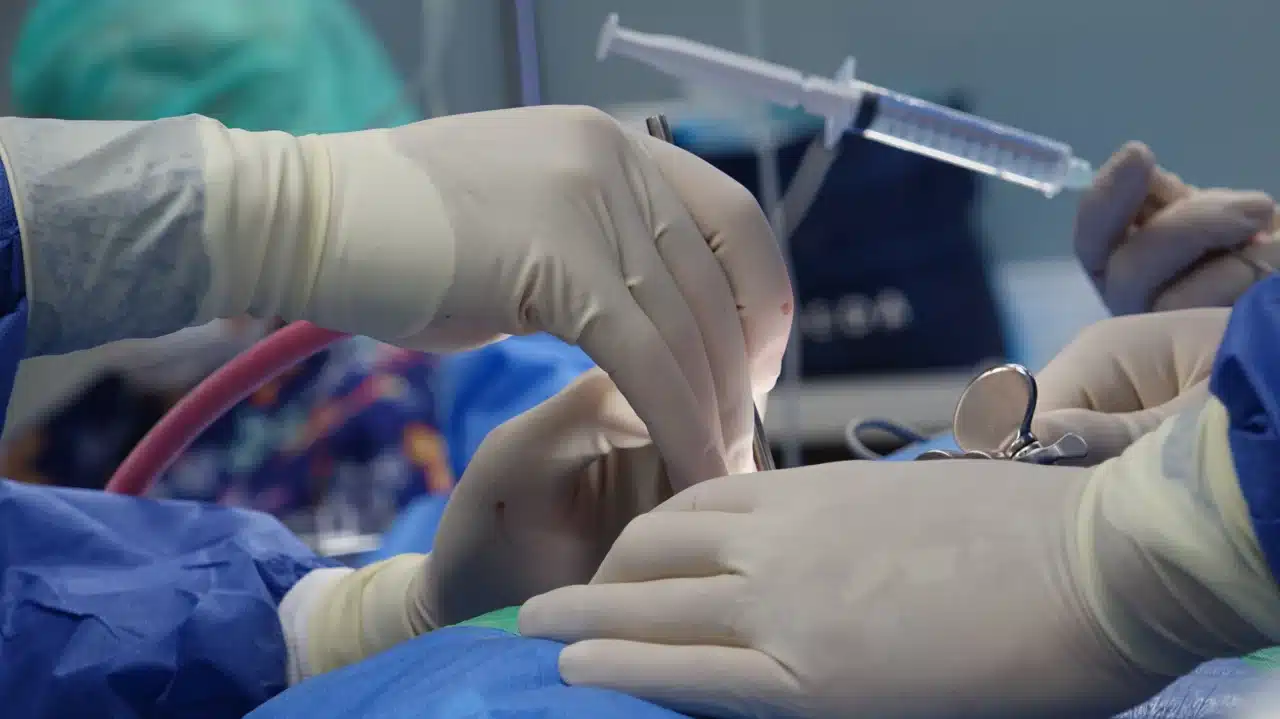
Orthopaedic conditions can affect individuals at different stages of life. An athlete may experience a torn knee ligament during training, while an older adult may develop persistent joint pain due to osteoarthritis. Although these conditions differ, both require careful assessment to understand the underlying problem and determine appropriate treatment options.
Advances in orthopaedic surgery have also introduced different approaches to managing musculoskeletal conditions, including minimally invasive procedures, joint reconstruction and robotic-assisted surgery.
In Singapore, Dr Alan Cheung, Senior Consultant Orthopaedic Surgeon and Medical Director of International Orthopaedic Clinic (IOC), has a clinical focus on sports injuries, adult joint reconstruction and robotic-assisted orthopaedic surgery. His practice draws on more than 20 years of experience, international surgical training and involvement in sports medicine.
Join The European Business Briefing
New subscribers this quarter are entered into a draw to win a Rolex Submariner. Join 40,000+ founders, investors and executives who read EBM every day.
SubscribeA Career Built on International Orthopaedic Training
Dr Alan Cheung began his medical career in the United Kingdom, where he obtained his medical degree from University College London. He subsequently completed his specialist training in Trauma and Orthopaedics in London.
To further develop his experience in reconstructive orthopaedic procedures, he undertook fellowship training in Joint Reconstruction and Musculoskeletal Oncology at Royal Prince Alfred Hospital in Sydney, Australia.
His professional qualifications include Membership of the Royal College of Surgeons of England (MRCS), Fellowship of the Royal College of Surgeons in Trauma and Orthopaedics (FRCS), and a Diploma in Sport and Exercise Medicine from the United Kingdom.
Before establishing his private practice in Singapore, Dr Cheung also served as a Consultant at Ng Teng Fong General Hospital.
His background in general orthopaedic surgery, reconstructive procedures and sports medicine forms the foundation of his current clinical practice, which encompasses musculoskeletal injuries, joint conditions and surgical treatment options.
Understanding the Demands of Sports-Related Orthopaedic Injuries
Sports injuries can range from minor muscle strains to complex injuries involving ligaments, tendons, cartilage and joints. Activities that require repetitive movements, rapid changes in direction or sudden impact can place considerable stress on the musculoskeletal system.
For instance, sports involving pivoting and jumping may increase the risk of anterior cruciate ligament (ACL) injuries, while repetitive overhead movements can contribute to certain shoulder problems.
Dr Cheung’s clinical interests include the assessment and management of sports-related injuries, with treatment options ranging from rehabilitation to surgical procedures such as ACL reconstruction, meniscus surgery and arthroscopy.
His experience in sports medicine extends beyond the clinic. He has been involved in providing medical support for local and international sporting events, including HSBC World Rugby Sevens, Super Rugby and ONE Championship events.
He is also listed as Team Doctor for the Wrestling Federation of Singapore and a World Rugby Educator.
As an active sportsperson with an interest in Brazilian Jiu-Jitsu, rugby and other physical activities, Dr Cheung is familiar with the physical demands of athletic participation.
This background provides practical context when assessing sports injuries, particularly when considering the patient’s activity requirements and expectations for returning to exercise.
However, surgical intervention is not always necessary. Some injuries can be managed through physiotherapy, strengthening exercises, bracing, and activity modification. The appropriate approach depends on the severity of the injury, joint stability, and individual circumstances.
Addressing Joint Conditions Through Reconstruction and Replacement
While sports injuries commonly affect physically active individuals, degenerative joint conditions can gradually interfere with mobility and everyday activities.
Osteoarthritis, for example, develops when changes in joint cartilage and surrounding structures contribute to pain, stiffness, and reduced movement. Depending on the affected joint and the severity of the condition, patients may experience difficulty walking, climbing stairs or performing routine tasks.
Conservative treatment is generally considered before joint replacement when clinically appropriate. This may include medication, physiotherapy, exercise modification, weight management or other measures to improve symptoms and function.
For patients with advanced joint damage and persistent functional limitations, joint reconstruction or replacement surgery may be considered.
Joint reconstruction is one of Dr Cheung’s areas of clinical focus, supported by his fellowship training at Royal Prince Alfred Hospital in Australia.
His orthopaedic practice includes knee and hip replacement procedures, which may be considered for selected patients with advanced joint degeneration or other conditions affecting joint function.
Knee replacement procedures can involve replacing the entire joint surface or a particular affected compartment. Hip replacement generally involves replacing damaged joint components with artificial implants.
The selection of a procedure depends on several factors, including the extent of joint damage, bone quality, alignment, the patient’s general health, and their functional needs.
Although joint replacement can be an option for certain patients, the decision to proceed with surgery requires an individual assessment of the potential benefits, limitations, and risks.
The Role of Robotic Technology in Orthopaedic Surgery
Technology has become an increasingly important part of surgical planning, particularly in certain joint replacement procedures.
Robotic-assisted orthopaedic surgery uses computer-based systems to support tasks such as preoperative planning, bone preparation and implant positioning.
Unlike fully independent surgical machines, these systems operate under the surgeon’s planning and supervision, although their level of automation varies.
Dr Cheung has undergone training in three robotic-assisted orthopaedic systems: MAKOplasty, NAVIO and ROBODOC.
His MAKOplasty certification was completed at the Homer Stryker Centre in Mahwah, New Jersey, United States. He also received training in the NAVIO system at Scripps Mercy Hospital in San Diego, California, and the ROBODOC system at Mirae Hospital in Busan, South Korea.
Each system uses different methods to assist joint replacement procedures.
MAKOplasty uses CT-based imaging to develop a three-dimensional surgical plan. The robotic arm then provides guidance during bone preparation based on the planned implant positioning.
NAVIO uses intraoperative mapping to create a patient-specific model of the knee without requiring a preoperative CT scan.
ROBODOC uses CT-based planning and automated bone preparation under surgical supervision for selected joint replacement procedures.
These technologies can assist surgeons in planning and executing specific steps of surgery with greater control over alignment and implant positioning.
However, robotic-assisted surgery is not necessarily appropriate for every patient, nor does it guarantee better clinical outcomes. Its suitability depends on the type of joint condition, the planned procedure, the patient’s anatomy and other clinical considerations.
Dr Cheung’s training in these systems reflects an area of his professional experience that combines reconstructive surgery with developments in orthopaedic technology.
Beyond Clinical Practice: Teaching and Professional Involvement
Orthopaedic practice involves ongoing professional education as surgical techniques, rehabilitation approaches and medical technologies develop.
In addition to his clinical work, Dr Cheung has participated in orthopaedic education and training activities in Singapore and overseas.
He previously served as a Clinical Lecturer at the Yong Loo Lin School of Medicine, contributing to the education of medical students and orthopaedic trainees.
His professional involvement also includes serving as an international instructor for Advanced Trauma Life Support (ATLS) and participating in surgical teaching programmes.
Among these activities are joint reconstruction courses in Myanmar and presentations relating to robotic-assisted surgery and sports injuries.
Dr Cheung has also contributed to peer-reviewed medical publications and presented at international orthopaedic conferences.
His participation in education and professional development forms another aspect of his work alongside patient care and surgical practice.
Bringing Different Areas of Orthopaedic Care Together
Sports injuries, degenerative joint conditions and complex musculoskeletal problems may require different treatment approaches, but they share a common need for accurate diagnosis and appropriate clinical management.
For example, a younger patient with a sports-related ligament injury may have different treatment requirements from an older patient experiencing advanced knee osteoarthritis.
Similarly, not every patient with a damaged joint requires surgery, and not every surgical procedure requires robotic assistance.
An orthopaedic assessment typically considers the patient’s symptoms, medical history, physical examination findings, imaging results, and daily activity requirements before treatment options are discussed.
Dr Cheung’s clinical background encompasses different areas of orthopaedic care, including sports injuries, adult joint reconstruction and robotic-assisted procedures. These areas inform his practice in managing musculoskeletal conditions across different patient groups.
Orthopaedic Services at International Orthopaedic Clinic
As Medical Director of International Orthopaedic Clinic in Singapore, Dr Alan Cheung provides orthopaedic assessment and treatment for patients with sports injuries, joint conditions and other musculoskeletal concerns.
IOC offers services covering knee, hip, shoulder, foot and ankle conditions, orthopaedic trauma, sports-related injuries and joint replacement procedures.
The clinic’s treatment approaches include non-surgical management, minimally invasive techniques and reconstructive surgery, depending on the patient’s clinical needs.
Its practice locations include Mount Elizabeth Novena Specialist Centre and Farrer Park Hospital in Singapore.
With a professional background spanning international specialist training, sports medicine, joint reconstruction and robotic-assisted surgery, Dr Cheung’s practice reflects the range of approaches available in modern orthopaedic care.
For individuals experiencing ongoing joint pain, restricted movement or sports-related injuries, a medical assessment can help identify the underlying condition and determine which treatment options may be appropriate.
Medical Disclaimer: This article is intended for general educational purposes and does not replace professional medical advice, diagnosis, or treatment. Individuals experiencing musculoskeletal symptoms should seek assessment from a qualified healthcare professional for recommendations appropriate to their condition.