


























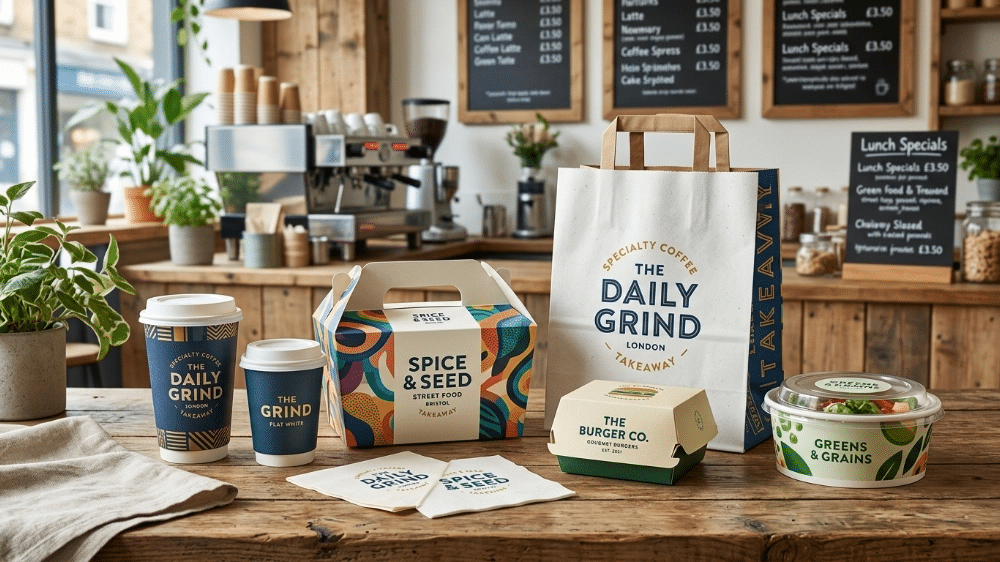
For years, discussions about foodservice packaging have often come down to a familiar question: plastic or paper?
That question is becoming less useful.
Restaurants, coffee shops and takeaway brands now have to think about several things at once. Packaging needs to protect food, survive delivery, fit into busy operations and make sense once it has been thrown away. Cost matters too, particularly for businesses buying packaging at scale.
Join The European Business Briefing
New subscribers this quarter are entered into a draw to win a Rolex Submariner. Join 40,000+ founders, investors and executives who read EBM every day.
SubscribeThe result is a more practical approach to sustainability. Instead of simply choosing a material because it sounds greener, businesses are starting to look at how the whole packaging system works.
Simpler packaging is gaining attention
One noticeable shift is towards simpler packaging structures.
Extra films, windows, inserts, mixed-material lids and other components may improve presentation or performance in certain situations, but they can also make disposal more complicated.
For food businesses, fewer components can bring another advantage: simpler purchasing and inventory management.
A restaurant does not necessarily need a different container for every menu item. Well-designed packaging can sometimes work across several products, reducing the number of sizes and formats that staff have to store and use.
This may not sound like a major sustainability measure, but reducing unnecessary variation can make a packaging operation easier to manage from beginning to end.
Recyclability is about what happens after use
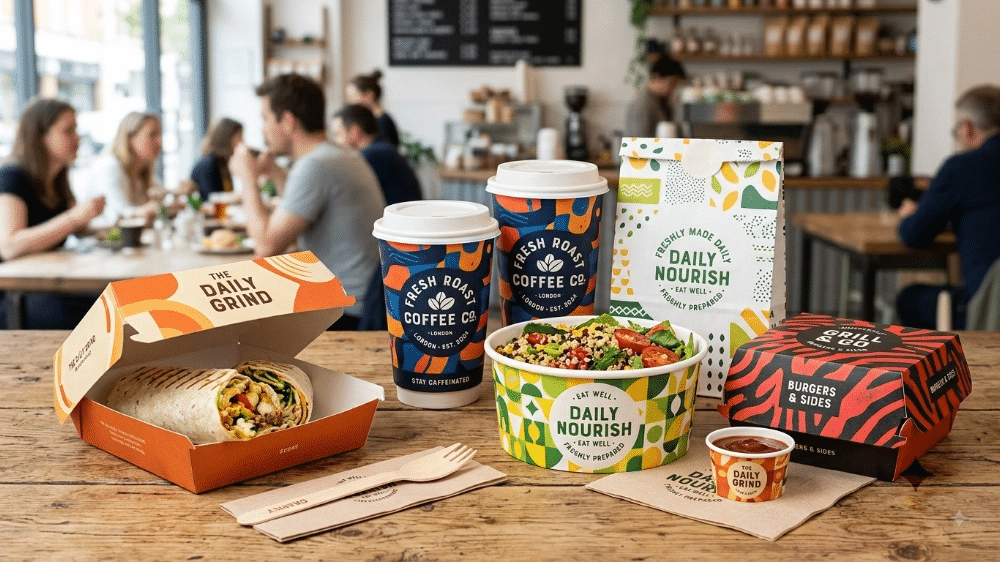
A package can be technically recyclable without being particularly easy to recycle in practice.
That distinction is becoming more important as businesses pay greater attention to what happens after a meal is finished. A package may leave the restaurant looking perfectly sustainable, but the real question is whether the customer, waste collector or recycling facility can process it correctly.
This makes local collection systems part of the packaging decision.
For businesses, a useful process is to ask three basic questions before placing an order: what is the package made from, how should it be disposed of, and is that material actually accepted through the relevant collection route?
That is often more useful than relying on a sustainability label alone.
Coffee cups show why one solution rarely fits all
Coffee shops offer a good example of how complicated the issue can become.
A takeaway cup is not simply a cup. There is the cup structure, the barrier layer, the lid and sometimes a sleeve. Each part affects heat handling, leakage, customer comfort and what happens after use.
Some newer fibre-based and alternative barrier technologies are being developed with the aim of improving end-of-life options. At the same time, reusable cups are gaining attention in locations where customers can realistically return them.
But reuse is not automatically better in every setting.
A reusable system needs collection, washing, storage, logistics and a high enough return rate to work effectively. A system that works well in an office, campus or event may be much harder to manage for an order delivered to an individual home.
The more useful question is therefore not whether reusable packaging or disposable packaging is better in general. It is which model fits the way the business actually operates.
Delivery changes the packaging requirements
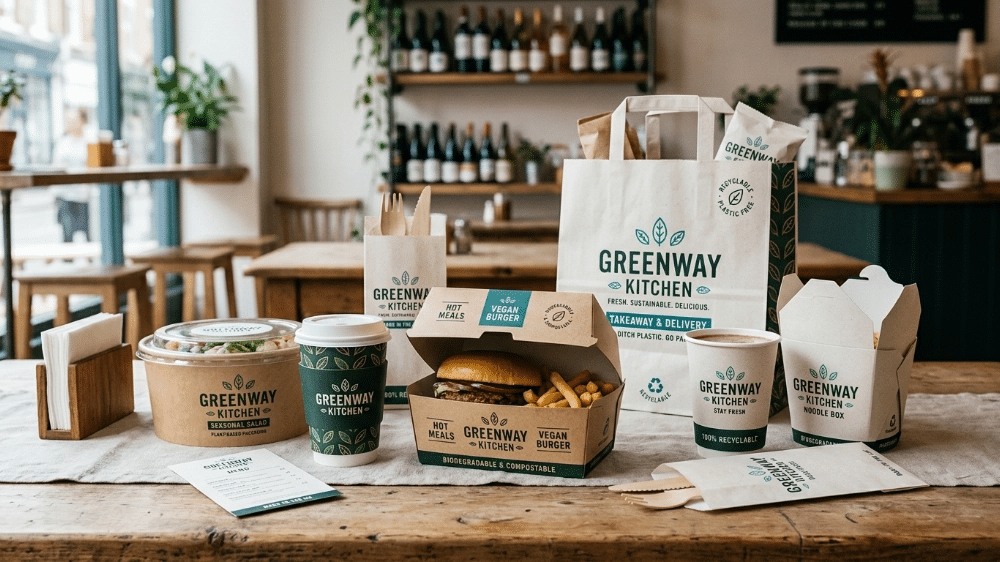
Takeaway packaging also has a different job from packaging used for dine-in service.
A box that works perfectly when carried across a restaurant can perform very differently after being stacked inside a delivery bag. Hot food produces steam, greasy food creates pressure on barriers, and sauces can find their way into even small gaps.
This is why packaging decisions increasingly begin with the food itself.
Burgers, fried chicken, pizza, salads and hot meals all create different challenges. A container may need ventilation, stronger board, moisture resistance or better lid security depending on what is inside.
Choosing the material first and thinking about the food later can create problems. Starting with the application usually leads to a more realistic solution.
Cost and sustainability are becoming harder to separate
Sustainability decisions are also becoming business decisions.
A packaging option that costs less per unit may not necessarily be cheaper overall. Storage space, shipping weight, damaged orders, excess packaging and complicated inventory can all add hidden costs.
The same applies to oversized packaging. Using more material than necessary can increase both purchasing costs and the amount of waste generated.
This is why material efficiency is becoming just as relevant as material choice.
For a high-volume operator, reducing unnecessary packaging sizes or standardising compatible lids can sometimes deliver a more measurable result than switching every item to a completely different material.
The next step is better packaging systems
The most interesting packaging trend for foodservice businesses in 2026 may not be a particular new material at all.
It is the move towards better decision-making.
Instead of asking whether paper, plastic, compostable or reusable packaging is the “best” option, businesses are starting to look at the complete journey: production, transport, storage, use, waste collection and final disposal.
That approach also leaves room for different solutions in different situations. Fibre may make sense for one application, plastic for another, and reuse where return logistics are strong.
For restaurants and coffee brands, sustainability is becoming less about choosing the packaging with the best marketing claim and more about choosing the one that performs well, uses resources sensibly and has a realistic end-of-life route.
That is a less dramatic story than the old plastic-versus-paper debate, but it is probably a more useful one.