






























Recent Russian missile strikes against Ukraine have once again highlighted the challenge posed by hypersonic weapons. Momentum has been building in Europe since 2022, and 2026 is set to mark a significant milestone in selecting projects to counter this threat. The HYDIS consortium began its work in 2023, coordinated by European missile manufacturer MBDA, which announced in May that its Final Concept Review is finally ready.
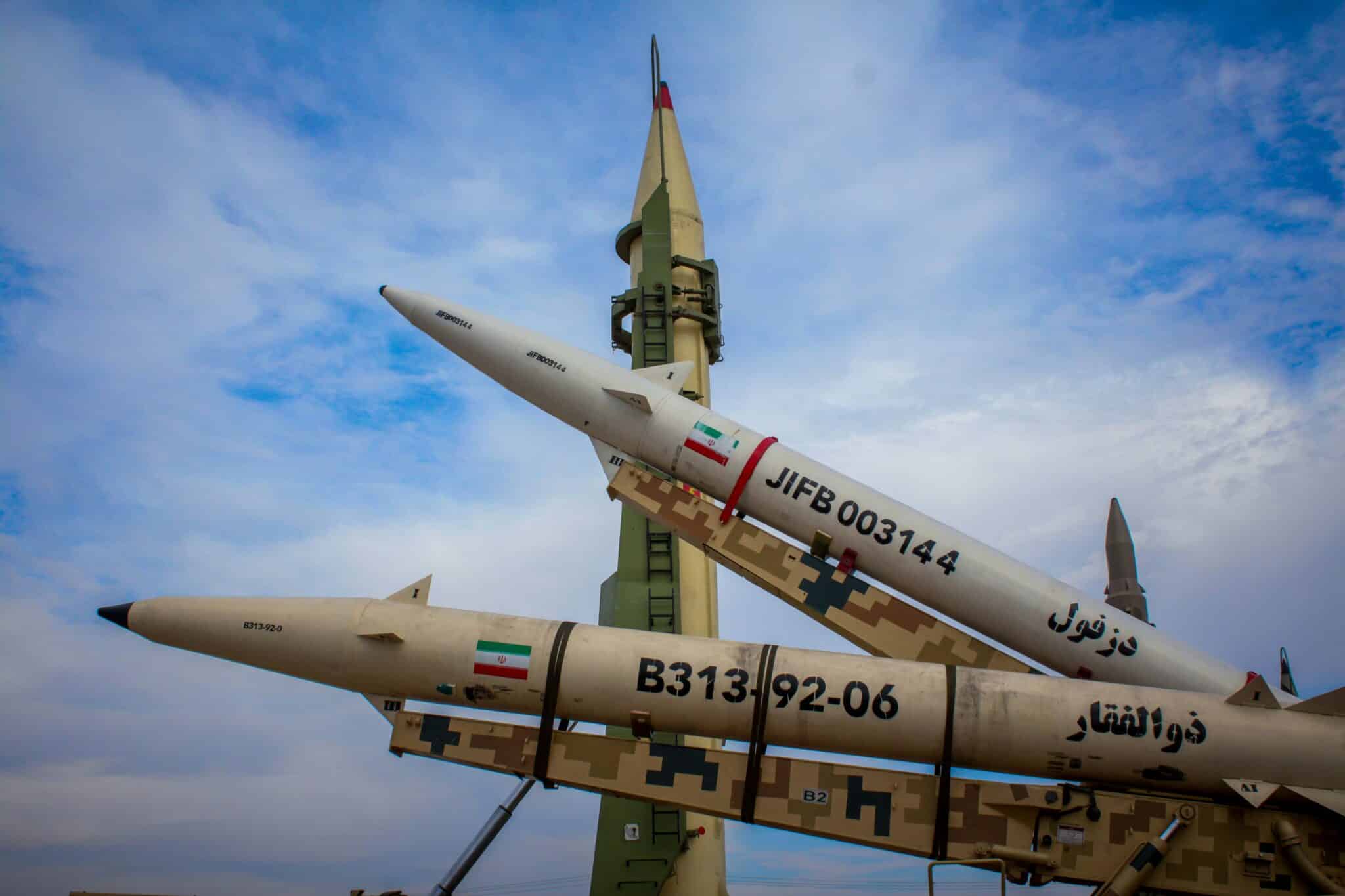
The destructive capability of hypersonic missiles has been laid bare by Russia’s use of Kinzhal missiles in Ukraine, and China has been busy developing its high-cadence hypersonic testing regime. Despite limited access to some of the world’s most advanced technologies, Iran has succeeded in fielding systems such as the Fattah-2, described by Tehran as a hypersonic missile and reportedly used in strikes against Israel, highlighting the growing sophistication of missile threats confronting modern air defence networks. These phenomena have served to increase anxieties among European policymakers about the continent’s ability to defend itself against a new generation of threats. Indeed, countries around the world including the USA, India, Iran, Israel, Japan, North Corea and France are now pursuing offensive hypersonic capabilities of their own.
What makes hypersonic weapons particularly challenging is not simply their speed. Traditional ballistic missiles far exceed Mach 5. The real difficulty lies in the combination of high velocity and manoeuvrability. Unlike conventional ballistic missiles, whose trajectories can often be predicted after launch, hypersonic weapons can alter their course during flight while travelling at extreme speeds. This dramatically reduces reaction times and complicates interception. Europe recognised this capability gap as early as 2019, but since 2022 the need to accelerate the development of a hypersonic interceptor solution has only intensified.
Join The European Business Briefing
New subscribers this quarter are entered into a draw to win a Rolex Submariner. Join 40,000+ founders, investors and executives who read EBM every day.
SubscribeThe hypersonic challenge facing Europe
Questions about how to counter the hypersonic threat were being asked before the Russian invasion of Ukraine. In 2019, the European Union launched TWISTER (Timely Warning and Interception with Space-based Theatre Surveillance), under the Permanent Structured Cooperation (PESCO) framework. The programme sought to prepare Europe for future missile threats by combining advanced surveillance capabilities with the development of interception concepts.
The European Defence Fund’s (EDF) 2021 call for proposals reflected these original concerns. It identified the need for future European capabilities able to protect land and naval assets against advanced threats expected beyond 2030, including hypersonic glide vehicles and hypersonic cruise missiles. The strategic rationale behind TWISTER has only become more compelling in the last two years, with assessments predicting a possible direct confrontation with Russia, in which Moscow would obviously deploy hypersonic weapons.
From TWISTER to HYDIS
The 2021 EDF call for proposals was designed as a competition to support the development of a future endo-atmospheric interceptor capable of addressing emerging hypersonic threats. Two major groups submitted bids. The first was EU-HYDEF, coordinated by the Spanish consortium Spanish Missiles Systems (SMS), with technological support provided by the German defence company Diehl. The second was HYDIS, led by European missile manufacturer MBDA.
The European Commission initially selected EU-HYDEF, with a budget of €100 million, supplemented by a further €10 million from the participating countries.
Following Russia’s full-scale invasion of Ukraine in 2022, however, Brussels decided to support a second programme in parallel. Rather than reopening the competition, the Commission provided direct funding to the second multinational consortium, HYDIS, led by MBDA in 2023, “in order to maximise the chances of successfully developing an EU capability to counter hypersonic threats in the shortest possible timeframe”, as underlined by Thierry Breton for the European Commission. This funding was to the tune of €80 million.
While the Commission did not elaborate on the rationale behind this additional award, the decision may have been influenced by two considerations closely aligned with both the spirit of the European Defence Fund and the urgency of the current geo-strategic environment, reflected since 2025 in the ReArm Europe / Readiness 2030 initiative.
MBDA is a company whose creation was itself rooted in the logic of European defence industry integration, being jointly owned by Airbus (France and Germany), Leonardo (Italy) and BAE Systems (United Kingdom). The consortium is structured around 19 partners in four participating states (France, Italy, Germany and the Netherlands) including its various national subsidiaries and brings together around 30 subcontractors from 14 countries. An additional €60 million is added by the four participating states to the EDF funding. Within this ecosystem, some cross-border industrial partnerships have deep roots. Eurosam, for example, the Franco-Italian joint venture involving MBDA and Thales, developed the Aster family of missiles. The recent operational and commercial successes of the SAMP/T system, praised by Ukraine for its performance and selected by Denmark over the US Patriot system, as well as its effective use in the Red Sea against anti-ship ballistic missiles, demonstrate a reliability that may justify, a posteriori, Brussels’ decision in 2023.
One MBDA source described how “HYDIS is structured according to an industrial set-up based on a best athlete logic managing their risks and responsibilities, and balanced non-overlapping work shares aligned with participating States’ co-funding.” The HYDIS consortium is built around integrated technological blocks and expertise developed through successive programmes, while incorporating new European capabilities as requirements evolve. This includes, for example, Thales Netherlands with strong competences in Weapon Systems architecture and advanced long-range sensors, or Italy’s AVIO SpA, which brings expertise that spans solid-propellant rocket motors for both space launchers and defence missile programmes. The consortium also leverages scientific expertise from ONERA (France), TNO (Netherlands) and CIRA (Italy), or academics like the University of Aalborg (Denmark) bringing different perspectives and know-how.
In terms of tangible progress, and while hypersonic interception represents a far more demanding technological challenge, the consortium has reported several key milestones, including the successful completion of its Mission Definition Review (MDR) and subsequent concept maturation phases. While very little information has been made public about a programme of such strategic sensitivity, these developments suggest that work is advancing beyond the purely theoretical stage and towards the gradual reduction of technological risk.
At the ILA Berlin air show, for example, MBDA Germany unveiled HYROGLIVE (Hypersonic Radar and Optical Signature Collecting Glide Vehicle), an experimental hypersonic glide vehicle designed to collect real-world flight data, including radar and optical signatures as well as trajectory profiles. The programme represents a significant step beyond simulation-based research. The data gathered during flight tests will directly support the development of HYDIS2 and its Aquila interceptor, helping engineers refine detection, tracking and engagement solutions against future hypersonic threats.
The 2026 decision
The year 2026 is expected to be decisive. The European Defence Fund’s latest work programme includes a €100 million call for a future high-end endo-atmospheric interception capability, with only one proposal expected to receive funding. But this decision goes far beyond the allocation of a budget that remains relatively modest compared with the billions of euros likely to be required for subsequent development and procurement phases.
Its significance is both military and industrial. From a military perspective, it will help determine whether European armed forces can eventually field a sovereign defence system against a major threat for which no off-the-shelf solution currently exists. From an industrial perspective, it is tied to the broader question of how Europe intends to organise its defence technological and industrial base in strategically sensitive sectors.
This broader industrial dimension has become a recurring theme in the speeches of Andrius Kubilius, the European Commissioner for Defence and Space. Speaking in April 2026, he argued that Europe must strengthen its defence industrial base if it is to meet future security challenges, stating: “If we really want to deter Russia, we need to outproduce Russia!”