
























European Business Magazine caught up with the Chairman and co-founder of KCI Group who we have featured on the Front cover for this Spring edition. We speak to him about sustainability , global supply chains , their 8 lines of strategic business and group ethics.
How seriously has the global disruption on supply chains affected KCi Group’s clients, in terms of operations?

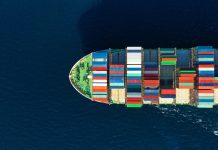
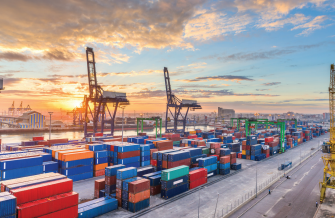
KCi is a multinational Group of companies and therefore it’s not easy to describe a general effect on our business or the operations of our partners and clients in numbers. However, what we can say is that everyone in our sector was facing serious challenges especially because of logistical matters. For example, we’re shipping bulk as well as containers. While bulk shipments were not so much a concern for us even during the high peak of the pandemic situation, the container rates of the main carriers went crazy. A typical reaction in the market as demand was high and availability low. So, we were also sometimes in a situation where we needed to postpone smaller shipments which we ship with the big liners. For some of our clients a delayed shipment is a serious issue as they try to keep storage at their facilities small. So, no deliveries means reducing or even interrupting production. So, as a result of certain delays, which were either accepted to reduce logistical costs or were just created by logistical delays, our clients shifted to reducing their dependency on very timely deliveries by increasing their material storage locally. We’re supporting our clients in these matters with improved contract terms and wherever possible the delivery of larger quantities per lot.
Join The European Business Briefing
New subscribers this quarter are entered into a draw to win a Rolex Submariner. Join 40,000+ founders, investors and executives who read EBM every day.
SubscribeOut of the eight strategic business lines KCi currently operates within, which has seen the most growth and why?
 KCi Group are very proud to be a conglomerate, meaning we have a very diversified structure and several types of revenue streams. This is a result of our ‘go for it’ business culture. I once read a quote from the LinkedIn Co-Founder, Reid Hoffman – ‘An entrepreneur is someone who jumps off a cliff and builds a plane on the way down’, and this describes KCi’s DNA 110% as I take it to mean: if there’s a challenge, start working on the solution immediately and don’t worry about why it happened.
So, to get back to your question, our Mining and Metals line has definitely seen the biggest development in recent times. Despite coming from a purely trading background, in this area we understood very early on during the pandemic that in every challenge there is an opportunity. We took a chance to secure supply directly by financing and acquiring mining operations mainly in the southern part of Africa. So, from a major metals trading company we grow to be a mining company, thus being in control of our own supply chain for critical metals. To be fair, we’re still not in a position to supply our clients solely with KCi mined material, however this has also never been our strategic approach. The idea of acquiring and operating our own mining assets was about securing the bread and butter and being able to help our partners and clients with a very reliable source.
According to Michael Dausab, Director of Namibia 360KCi, KCi Group is able to ‘satisfy the market’ through the opening of mines in Namibia – how was the business able to promote a positive outcome?
 (Laughs) I love Michael for his optimism but, to be honest, KCi and its brands are still a very small mining operator, compared to our colleagues from the far east or North America. However, we have been able to create a serious footprint within a very short time frame, which was mainly supported by a friendly regulatory environment and the good reputation we’ve earned in the market. KCi Group is about adjusting quickly to market needs, as I said before, but this doesn’t come with short-term thinking. We’ve grown with a business culture which I describe as Arabic-German. We commit long-term to our business relationships with trust, as the culture of the UAE taught my team. At the same time, we go into the details as I have learned from being raised in Germany, and making sure there are no surprises. What is true about Michael’s quote is that Namibia is offering our group a lot of opportunities, and we’ve been very active in the past three years and acquired a serious amount of assets. Namibia is one of the very few untouched places where you can find critical metals like Lithium or Niobium, which are playing a crucial role in the development towards an eco-friendly global society.
Namibia’s government described mining as the ‘best prospect industry sector for this country’ – what are your thoughts on this?
 The government is always right, isn’t it? But seriously, Namibia’s main mining products as of now are high quality diamonds and uranium. Gold, zinc, salt, and tin follow far behind. Diamonds alone account for almost 28 percent of total exports. These numbers show how important the mining industry has been in the past, this situation will also remain in the future. My personal expectation is that mining will always be a major source of income for Namibia, only the importance of certain metals and minerals may slowly change. For instance, it will be very interesting to see how the numbers for lithium exports grow during the next five years. The challenge isn’t in the mining, the challenge for Namibia is in the processing of the beneficiation of the material. It’s crucial for Namibia to develop an understanding of expecting its miners to process the material in the country and not just ship it to facilities overseas. This will create jobs and help the Namibian community to grow slowly to a more educated, wealthier, and more socially secure nation. For our company, this is an important topic and one of the reasons why we decided to put a focus on this country, there’s huge potential and the right mindset to achieve change.
How has KCi worked with the Namibian government to lessen the environmental impact of mining in the area? And what is the effect on local communities, whether positive or negative, including work ethics and sustainability?

I won’t claim that KCi are the ‘good guys’, we’re in mining and metals to generate disproportionate profits, and I feel there should be no need to hide this. However, we are very proud that this target comes with respect to each and every one of our environmental responsibilities and, of course, the people who are working with us, be it as a staff member or as a local partner. Looking into our strategic planning and forecasting of the responsible colleagues, I find a lot of things which should be self-evident, but to be honest I don’t know of any similar initiatives trying to bring about change.
What exactly do you mean? What does ethics and sustainability mean for KCi Group?
 KCi Group is Dubai based, so we’ve developed with a healthy amount of the Arabic business mentality, which means we take a certain amount of care of our team, as well as all other people we work with, be it suppliers or clients. So, whether locally or internationally we follow a set of policies, which we wouldn’t describe as ethics, but you could call them that. As you’re asking specifically about Namibia, I’ll give a few examples from our local activities: 1, we hire locally wherever possible, which sadly is not the standard. 2, KCi tries to engage with the local communities on an eye-to-eye level. In cooperation with a local foundation, we take care of elderly people, for example, while in another of ‘our’ towns we recently agreed to help build an elementary school. 3, it’s self-explanatory that we should follow all regulatory requirements regarding the environment, to the smallest detail and openly account for any and all damage we may cause to nature. All in all, our policy is simple and short – to understand that we are guests in this country and need to go the extra mile to show that we’re worthy of being considered a friend and partner.
How important is it for a global business to minimise its impact on the environment, whether on the land, the air, sea, or wildlife?
 There’s no doubt about the negative impact on the environment every global business has, we read about it every day in the newspapers. What has changed in recent years is that companies take responsibility for the damage they cause through their operations, and this is a good development in my opinion. KCi mainly operates in the B2B field, but for our clients it’s becoming more and more of a challenge to satisfy their customers with answers regarding the origin of a product and the environmental footprint it creates. Sustainability has become a factor in making a sales decision and all indicators show that this development will continue, making it ever more important to create a balanced supply chain, reducing emissions and other environmental impacts down to the minimum.
What can you tell us about KCi’s history? What drove the passion behind creating supply chain solutions?
Oh, we’re not creating any supply chain solutions, we’re just committed to our business partners’ success. KCi never aimed to be a provider of logistical solutions or anything like that. We’re just a commodities trading company going the extra mile for our clients. Our focus has always been to deliver products that meet specifications on time, this is exactly where we want to be and what we are good at. Creating a full ‘supply chain’ is what happens when the market needs to meet your basic idea of what your part should look like. In order to manage the challenges we were facing, we needed to become more integrated, more self-controlled, more reliable. We didn’t want to risk that someday soon we would not be able to deliver and meet our own expectations.
How important is Dubai, UAE, as a promoter of business environments for entrepreneurs young and old, and as a place with supportive regulations?
KCi Group proudly calls Dubai home. Indeed, operating in several countries on five continents we can confirm that we’ve never seen a more business friendly environment. Most people will think our main focus is about taxes, but this is only a very minor aspect considering the unique set of conditions the UAE offers to Emirati as well as expat entrepreneurs. There’s a wide variety here, both culturally and financially, a stable and enabling political system, a supportive financial system, and the simple fact that trade laws are highly favourable for an internationally active organisation.