































Sovereign AI company says its autonomous research system scored 96.6% on UC Berkeley’s CyberGym, the highest result recorded to date
Dream, the sovereign AI company for governments and critical infrastructure, has claimed the top global position on one of cybersecurity’s more demanding AI benchmarks, announcing on 3 September that its autonomous cybersecurity research system, Hero, scored 96.6% on UC Berkeley’s CyberGym evaluation.
The score places the company, with offices across the Middle East and Europe, ahead of previously published results from leading frontier and cybersecurity-specialised AI systems, a notable outcome for a firm founded only three years ago, and one that competes for attention against far larger, better-capitalised general-purpose model developers.
Join The European Business Briefing
New subscribers this quarter are entered into a draw to win a Rolex Submariner. Join 40,000+ founders, investors and executives who read EBM every day.
SubscribeCyberGym is designed to test practical capability rather than recall. The benchmark evaluates AI systems against more than 1,500 real-world security challenges drawn from open-source projects. Unlike benchmarks that primarily test theoretical knowledge or coding ability, it assesses whether AI systems can perform the practical work required for vulnerability research, analysing code and binaries, using security tools, tracing crashes, and developing working proof-of-concept exploits.
Dream’s result reflects the performance of its complete autonomous research system rather than the underlying model in isolation, a distinction the company is explicit about. Hero is built to emulate an elite cyber research team, orchestrating complex investigations across specialised AI agents and security tools. At its core sits Hercules, Dream’s specialised cybersecurity model, which drives the reasoning behind the research, analysing code and binaries, dynamically debugging software, tracing data flows, investigating crashes, developing proof-of-concept exploits, and generating remediation.
The provenance of that model is itself of interest to anyone tracking how open weights are being repurposed at the frontier. Hercules was developed using the open weights of GLM-5.2 as its starting point. From those weights alone, Dream built Hercules into a new, purpose-built cybersecurity model through extensive additional training on real-world vulnerability research generated by Hero itself.
That created something of a closed loop. Dream ran Hero across open-source codebases, binaries and firmware to generate detailed examples of real cybersecurity research, including reasoning, investigation, exploitation and remediation processes. The resulting data was filtered through automated and human review before being used to train Hercules specifically for advanced cybersecurity research.
The evaluation conditions speak directly to the company’s commercial positioning. The CyberGym run was conducted entirely on Dream-controlled NVIDIA infrastructure, with no public internet access and no external AI model APIs. All data, model activity and research remained within an environment fully controlled by Dream; a constraint that would rule out most competing approaches, which depend on external model providers.
“The CyberGym result demonstrates that the AI race will not be determined solely by who builds the largest general-purpose model,” said Shalev Hulio, co-founder and CEO of Dream. “Specialized systems, deeply trained for a specific mission and equipped with the right tools, can achieve extraordinary capabilities.
“This matters especially in cybersecurity. Hero can autonomously perform one of the field’s most complex tasks without relying on internet access or external AI models, while remaining entirely under the user’s control. For us, that is what true sovereign AI means.”
According to the company, Hero’s capabilities extend beyond what CyberGym measures. The system can reverse-engineer closed-source software, bypass obfuscation and packing techniques, conduct advanced forensic and threat-hunting investigations, support end-to-end remediation, and operate entirely within sovereign, on-premises environments.
The timing is not incidental. Governments and critical infrastructure operators are facing cyber threats at unprecedented speed and scale, increasingly amplified by AI itself. National cyber defence now extends well beyond power, water and physical infrastructure to the digital systems underpinning citizen services, healthcare, financial systems and government itself.
Hero forms part of a broader suite of sovereign AI capabilities Dream markets for national defence, built on the premise that governments should be able to run advanced AI on their own infrastructure, on their own data, and entirely under their own control.
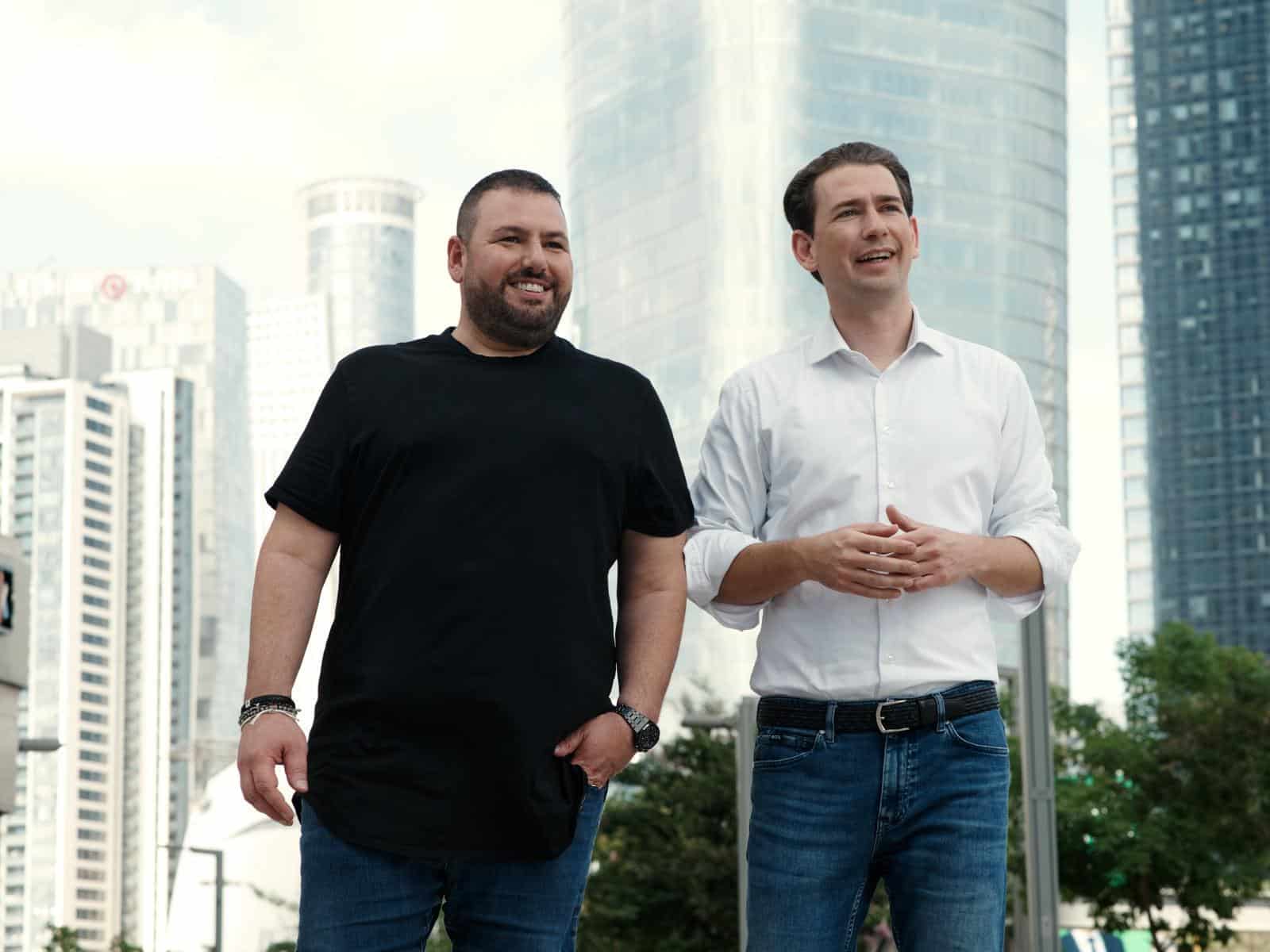
Founded in 2023 by Hulio, former Austrian Chancellor Sebastian Kurz and Gil Dolev, Dream serves governments and critical infrastructure organisations across Europe, the Middle East and Southeast Asia. The company employs approximately 350 people across Tel Aviv, Abu Dhabi and Vienna, drawing on expertise in AI, cybersecurity, intelligence and government technology.