
































Buying an e-bike is easier when the decision starts with the rider, not a list of headline specifications. A comfortable frame, a natural riding position and equipment that suits everyday trips will matter on every ride. The broad E-bike range lets shoppers compare different formats, while a city ebike is built around paved streets, errands and regular urban journeys. The right option is the one that fits your body and your routine, rather than a model marketed with a gender label alone.
Searches for women’s e-bikes often lead to lists of “best” models, but a useful shortlist starts with a few practical checks. Before comparing motors or battery claims, think about how you will get on and off the bike, where you will ride, what you will carry and where the bike will be stored. Those answers narrow the field quickly.
Join The European Business Briefing
New subscribers this quarter are entered into a draw to win a Rolex Submariner. Join 40,000+ founders, investors and executives who read EBM every day.
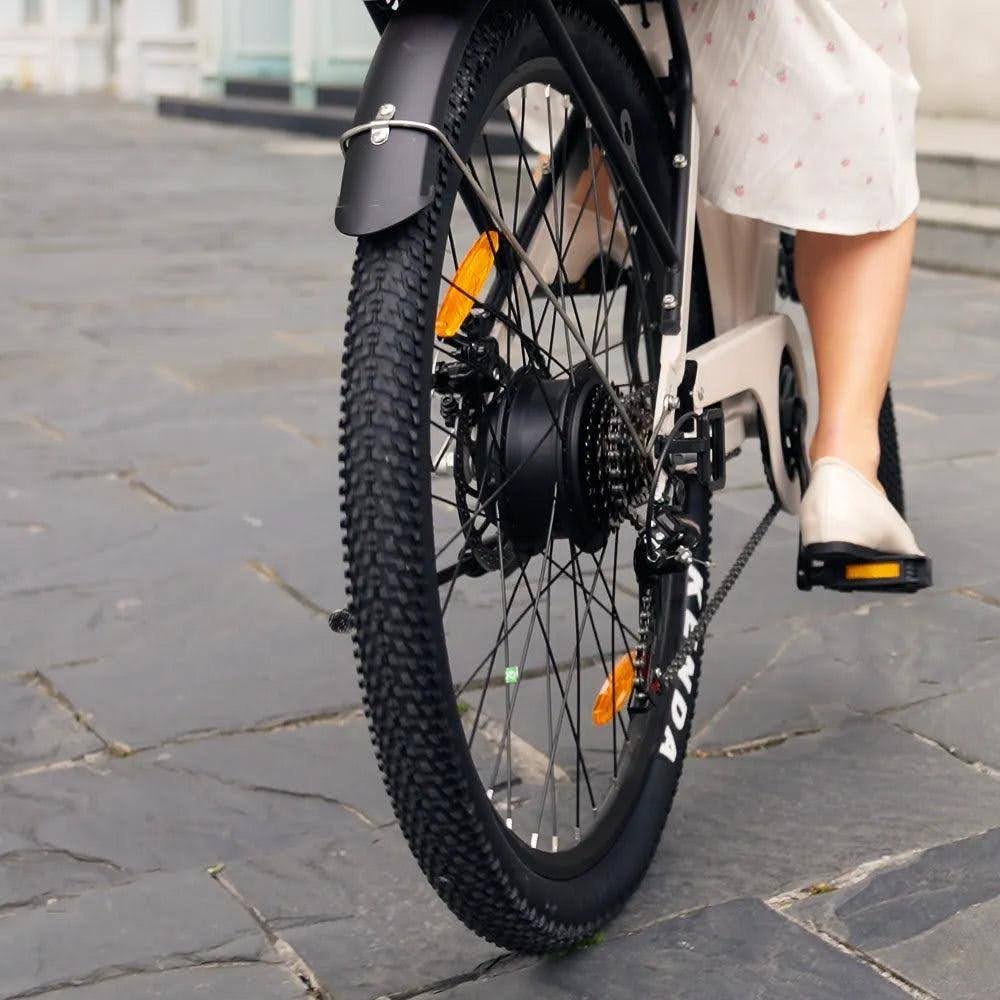
SubscribeImage: PIXAR C1 city e-bike on an urban street.
What should women look for when choosing an e-bike?
The phrase “women’s e-bike” is useful when searching, but it does not describe one universal body shape or riding style. Riders vary in height, leg length, arm reach, strength and experience. A good fit depends on the individual and the intended use. Frame shape can make a difference, but so can saddle adjustment, handlebar reach, brake-lever position and the bike’s total weight.
Start by checking the manufacturer’s rider-height guidance and the frame measurements. If possible, compare the standover height and the lowest saddle position with your own measurements. Being able to touch the ground comfortably when stopped can help a rider feel more in control, but the saddle should still be high enough for an efficient pedalling position. A bike that is too small or too large can feel awkward even if its advertised height range seems to include you.
Is a step-through frame easier to use?
A step-through frame removes the high top tube found on many traditional diamond frames. This can make mounting and dismounting more convenient when wearing everyday clothing, carrying a bag or stopping frequently. It may also suit riders who prefer not to swing a leg high over the rear of the bike. The frame design does not determine whether a bike is “for women”; it is simply one option to test against personal comfort and the bike’s intended load.
Look at the complete frame and riding position rather than judging the bike by the top tube alone. Check that the handlebars are not too far away, that the saddle can be adjusted to a suitable height, and that you can reach the brakes without stretching. If two people plan to share the bike, both should test or carefully check the fit settings.
Choose the bike around your real city trips
Write down the journeys you expect to make most often: a commute, a station connection, grocery shopping, school drop-off or a weekend ride. For each one, note the approximate distance, hills, road surface, traffic and what you need to carry. A city model with practical mounting points and everyday equipment may make more sense than a bike designed mainly for rough trails. If your route includes broken pavement or longer leisure rides, consider how the tyres, suspension and riding position will feel over that distance.
Also consider how frequently you will stop. Urban riding can involve traffic lights, junctions, bike racks and short errands. In that setting, easy starts, clear visibility, predictable braking and a comfortable position are part of the overall experience. A specification sheet cannot tell you whether the bike feels balanced when you set off; a test ride, when available, is valuable.
What equipment matters for commuting and errands?
For regular city use, check whether lights, mudguards, a kickstand and a rear rack are included or sold separately. These items can affect the final cost and how quickly the bike is ready for daily use. If you expect to carry shopping, review the rack’s stated load limit and how bags can be attached. Do not assume that a photograph shows the exact package included in the price; confirm the selected configuration on the product page.
Brakes and tyres deserve attention too. Hydraulic and mechanical disc brakes have different maintenance needs and feel, while tyre width and tread influence comfort and rolling feel. The best choice depends on your routes and how the bike will be used. Ask the seller for the exact component specification if a listing uses broad terms such as “all-weather” or “premium.”
What should buyers in Germany check before riding?
If you plan to use the bike on public roads in Germany, check the exact model and accessory package against current road-use requirements. Confirm that the lighting is approved for road use and that the bike has the required braking setup before your first trip. Also check the manufacturer’s documentation for the precise motor and assistance configuration; a broad marketing label may not explain every detail that matters to a buyer.
How much range does a woman’s e-bike need?
There is no separate range requirement for women. Estimate the distance you will actually ride, including the return journey, then allow a practical reserve for hills, wind, colder weather, cargo and battery ageing. A maximum range figure is usually a reference under particular conditions, not a promise for every rider and route. Assistance level, rider and luggage weight, tyre pressure, terrain and temperature all affect energy use.
Battery capacity is only one part of the decision. Check whether the battery can be removed, how it is charged and how much it weighs. A removable battery can be convenient if the bike is parked in a shared garage or outdoors and charging is easier indoors. Confirm how long a full charge takes and whether the battery can be replaced through the seller if needed. Those details help you judge whether the range and ownership setup fit your routine.
If most of your trips are short, paying extra for a very large battery may not be worthwhile. If you plan longer rides or cannot charge at your destination, additional capacity may be useful. Compare realistic day-to-day needs rather than selecting a model solely because it advertises the largest number.

Image: PIXAR Largo touring e-bike on a mixed-surface route.
Does e-bike weight matter for everyday use?
Weight matters most when the bike is not moving under motor assistance. Think about carrying it up steps, turning it in a narrow hallway, lifting it onto a car rack or manoeuvring it into a storage space. Check the bike’s stated weight and, if the battery is removable, the weight with and without the battery. Then compare those figures with what you can realistically lift and with the load rating of any rack you plan to use.
A lighter bike is not automatically the best choice. The frame, battery size, motor, suspension and accessories all contribute to weight, and removing equipment to reduce weight may make a bike less useful for your routes. The better question is whether you can handle the bike in the places where you will store and transport it. If you cannot test it first, request clear dimensions and ask the seller how the weight is measured.
How much should you spend on a city e-bike?
Set a total budget before comparing discounts. Include the bike, delivery, assembly if needed, a secure lock, bags or a basket, and routine maintenance. If the bike will be carried on a vehicle, include any rack cost. Compare the final checkout price for the exact colour and configuration you want, not just the largest discount displayed beside a product.
A higher price may pay for features you will use regularly, such as stronger brakes, a larger battery or more practical equipment. It can also pay for components you do not need. Make a short list of essential features and nice-to-haves, then compare the same items across each model. This keeps a purchase decision focused on usefulness rather than a long list of technical terms.
Check delivery, warranty and service before ordering
Online buyers should understand what happens after checkout. Check whether the bike arrives assembled or requires setup, what tools are needed and where to find the assembly instructions. Before riding, safety-critical components such as the brakes and wheels should be checked and adjusted according to the manufacturer’s guidance.
Read the warranty and return terms for the specific product. Confirm how to contact support, whether you should seek approval before arranging a repair, and how replacement parts are supplied. For returns, check the time limit, condition requirements and shipping arrangements. Keeping the original packaging until you are satisfied with the fit and condition can make the process easier.
A quick checklist before you buy
Before choosing, make sure you can answer these questions:
- Does the frame suit your height and feel comfortable to mount?
- Can you reach the handlebars and brakes naturally?
- Does the riding position suit the length and surface of your usual routes?
- Are the lights, rack, mudguards and other expected items included?
- Is the battery arrangement practical for charging and storage?
- Can you handle the bike at home, at work and during transport?
- Do you understand delivery, setup, warranty and return terms?
- Does the final price include the accessories you need?
The best e-bike for a woman is not defined by a label or a single specification. It is a bike that fits the rider, makes common journeys manageable and can be stored and maintained without unnecessary friction. Compare models against the same checklist, and ask the seller to clarify any measurement or component that is missing from the listing. For a model-by-model look at comfort, riding position and city use, see PIXAR’s guide to cruiser e-bikes for women.