































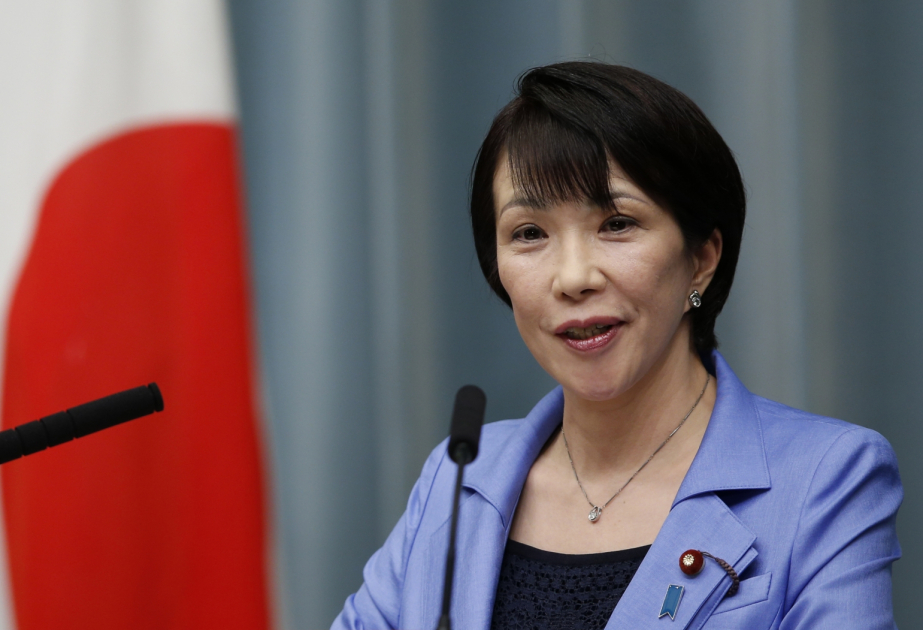
Japan entered a new chapter in its political history this week as Sanae Takaichi won the parliamentary vote to become the country’s first female prime minister, breaking a long-standing gender barrier in one of the world’s most male-dominated political systems. The 63-year-old conservative politician, known for her nationalist views and admiration for the late British leader Margaret Thatcher, now faces the complex challenge of leading Asia’s second-largest economy amid sluggish growth, demographic decline, and geopolitical tensions.
Takaichi’s victory marks a remarkable rise for a figure once viewed as a political outsider. A longtime member of Japan’s ruling Liberal Democratic Party (LDP), she secured leadership of the party earlier this week after a fiercely contested internal election, paving her way to the premiership through a majority vote in parliament. Her appointment has been hailed as a symbolic breakthrough for women in Japanese politics, though her ascent also reflects the LDP’s internal balancing act between continuity and reform.
Born in Nara Prefecture in 1961, Takaichi studied policy science at Kobe University before entering politics in the early 1990s. She served multiple cabinet roles under former Prime Ministers Shinzo Abe and Yoshihide Suga, including as communications minister and internal affairs minister, and was a key player in advancing Japan’s digital infrastructure policies. Over her three-decade career, she has built a reputation as a disciplined, outspoken, and unapologetically conservative lawmaker, often positioning herself as the ideological heir to Abe’s brand of nationalism.
Takaichi’s rise is significant not only for its gender milestone but also for what it signals about the direction of Japan’s leadership. She has promised to pursue a “strong and self-reliant Japan”, echoing Thatcher’s emphasis on economic independence and national pride. Her policy agenda focuses on revitalising the economy through innovation and productivity rather than stimulus spending, coupled with a tougher stance on national security and defence. Takaichi has called for increasing Japan’s defence budget beyond the current 2% of GDP target and strengthening ties with democratic allies amid growing regional competition with China.
Join The European Business Briefing
New subscribers this quarter are entered into a draw to win a Rolex Submariner. Join 40,000+ founders, investors and executives who read EBM every day.
SubscribeAt the same time, her victory raises questions about how much change she can realistically deliver within Japan’s entrenched political structure. While her leadership shatters a glass ceiling, Japan remains ranked among the lowest of the OECD nations in terms of female political representation. Women make up less than 10% of lawmakers in the lower house, and systemic barriers — from workplace norms to social expectations — continue to impede gender equality in public life. Takaichi has pledged to promote more women into cabinet and executive roles but has been cautious not to define her leadership primarily through gender politics.
Beyond politics, Takaichi’s personality and interests have drawn public fascination. A self-professed admirer of Margaret Thatcher, she has described the British leader’s conviction-driven style as an inspiration for her own political ethos. At the same time, she is an avowed fan of heavy metal music, particularly Iron Maiden, often referencing the band’s discipline and creativity as parallels to political life. Her blend of hard-nosed realism and cultural individuality has made her one of Japan’s most distinctive political figures — part policy hawk, part pop-culture enthusiast.
Her immediate challenges are formidable. Japan’s economy continues to wrestle with deflationary pressures and wage stagnation, even as inflationary forces complicate monetary policy. The country’s ageing population and shrinking workforce threaten long-term fiscal sustainability, while external pressures — from regional security tensions to shifting trade alliances — demand deft diplomacy. Takaichi has signalled continuity in Japan’s foreign policy, maintaining close ties with the United States and the G7, while advocating for a more assertive posture in Asia.
The symbolism of her leadership will not be lost on a nation that has long debated the pace of change. For decades, Japan’s political establishment has been criticised for its homogeneity and resistance to reform. Takaichi’s rise, while rooted in conservative politics, nevertheless reflects a generational and cultural shift in how leadership is perceived — more diverse, more visible, and more global in tone.
Whether her tenure ushers in lasting transformation or merely a symbolic milestone remains to be seen. But in a country where no woman had ever before held the premiership, Sanae Takaichi’s ascent represents a moment of genuine historical resonance — a new face at the helm of a political system slowly beginning to evolve.