Latest research highlights companies moving from a cost-driven to a value-driven approach when assessing their manufacturing footprint globally.
- Countries that embrace this shift will enhance their attractiveness for foreign investment. By adopting innovative manufacturing policies, these countries are likely to experience improved growth, including higher GDP and a larger share of global value chains.
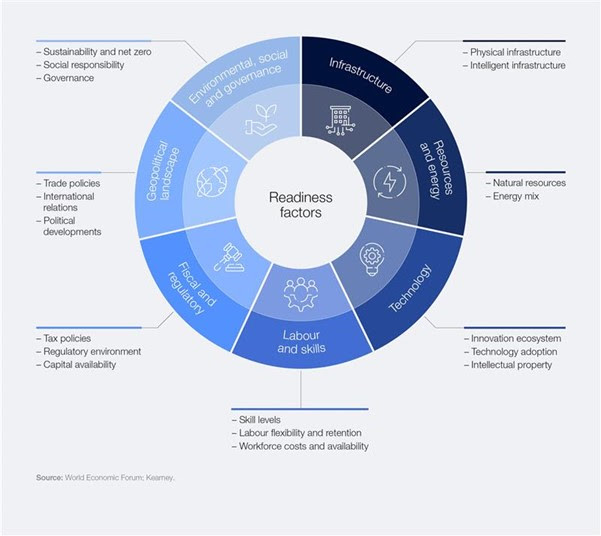
- The report identifies seven critical country-readiness factors driving private sector decision-making and shaping countries’ attractiveness amidst the rewiring of global value chain for the evolving industrial landscape to guide policy-makers and industries.
- Read the report here.
Geneva, Switzerland, 10 December 2024 – A new report released today by the World Economic Forum provides a comprehensive framework for governments and companies identifying the factors that make a location attractive for investment in manufacturing and supply chains.
Ongoing geopolitical, technological and environmental disruptions are prompting companies to rethink their supply chain network design, with over 90% of leaders prioritizing regionalization and close to two thirds of manufacturers adopting a “power-of-two” geographical approach, ensuring the majority of their direct spending is sourced from two separate regions.
Join The European Business Briefing
New subscribers this quarter are entered into a draw to win a Rolex Submariner. Join 40,000+ founders, investors and executives who read EBM every day.
Subscribe
Five key trends are driving this shift – including a move to more regionalized hubs, a transition to a digital-first model of operations, the adoption of more innovative approaches to sustainability and a deeper focus on skills and customer value.
“As global value chains undergo a profound transformation, countries and companies have a unique opportunity to redefine their competitive edge,” said Kiva Allgood, Head of the Centre for Advanced Manufacturing and Supply Chains, World Economic Forum. “This report highlights how countries that deploy innovative policies and invest across these seven factors can position themselves as leaders in the evolving manufacturing landscape, driving economic growth and societal progress.”
Amidst this rewiring and a shift towards regionalization, companies are looking beyond the cost advantage to consider resilience, performance and sustainability. The report, Beyond Cost: Country Readiness for Manufacturing and Supply Chains, released in collaboration with Kearney, finds that foreign investment is increasingly favouring countries that proactively invest in and adopt policies in seven key readiness factors – Infrastructure; Energy and resources; Technology; Labour and skills; Fiscal and regulatory policies; Geopolitical landscape; Environmental, social and governance. |