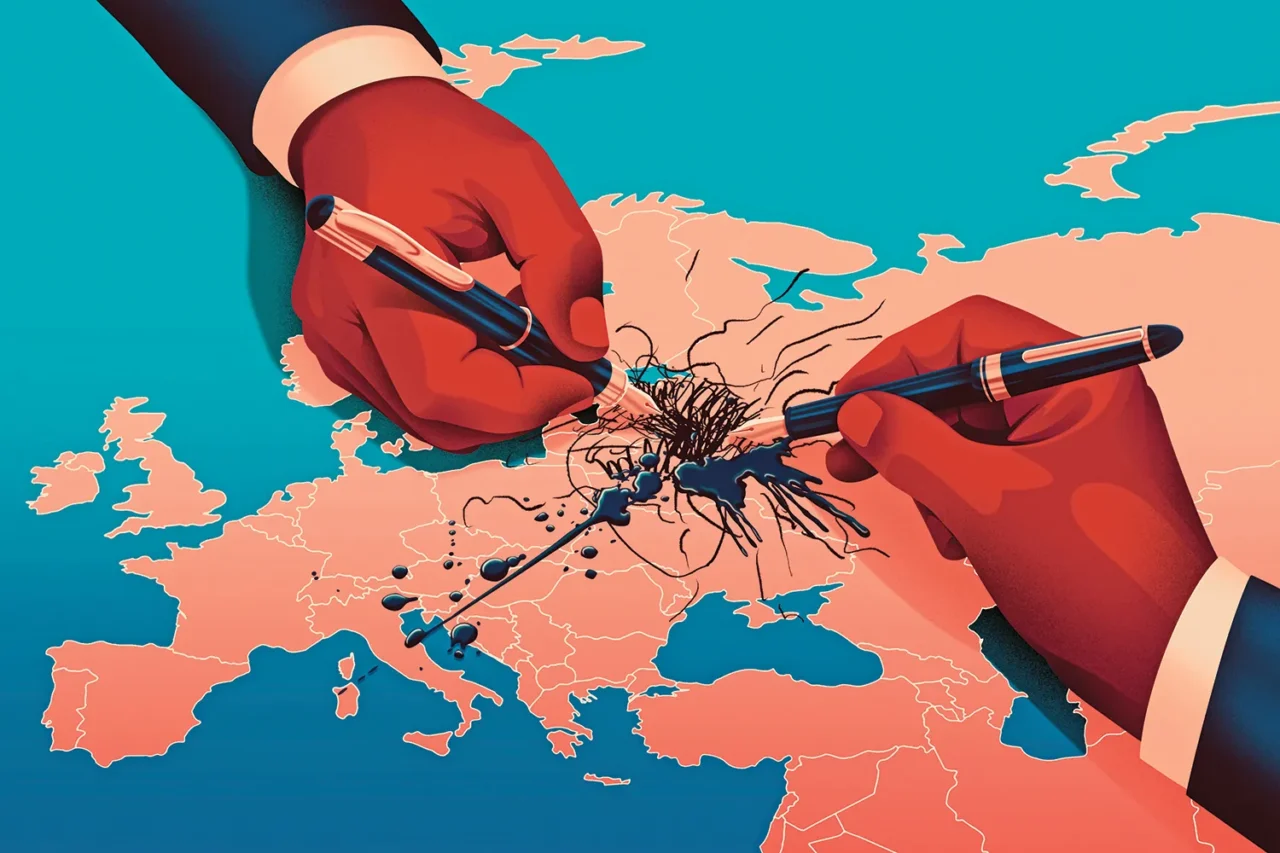
The UK, France, Germany, Italy, the Netherlands, Japan and Canada have issued a joint statement condemning Iran’s attacks on commercial shipping and civilian energy infrastructure, expressing readiness to contribute to military efforts to secure safe passage through the Strait of Hormuz, and welcoming the IEA’s decision to release strategic petroleum reserves to stabilise energy markets.
Seven of the world’s leading economies have moved from expressing concern to issuing a formal collective warning — and for the first time, they have put military readiness on the table.
The joint statement issued on Thursday by Britain, France, Germany, Italy, the Netherlands, Japan and Canada represents the most significant multilateral diplomatic response to the Iran conflict since it began on 28 February. Its language is precise, its condemnation unambiguous, and its signal to Tehran deliberate: the Western-aligned world is preparing to act in the Strait, not merely observe.
Join The European Business Briefing
New subscribers this quarter are entered into a draw to win a Rolex Submariner. Join 40,000+ founders, investors and executives who read EBM every day.
SubscribeWhat the Statement Actually Says
The seven nations condemned Iran’s attacks on commercial vessels, strikes on civilian oil and gas infrastructure, and the effective closure of the Strait of Hormuz in the strongest possible terms. They called on Iran to immediately cease mine-laying, drone and missile attacks, and any other interference with commercial shipping — citing UN Security Council Resolution 2817 as the legal framework for their demands.
Freedom of navigation, they stated, is a fundamental principle of international law. Iran’s interference with it constitutes a threat to international peace and security. The statement called for an immediate comprehensive moratorium on all attacks on civilian infrastructure — a demand that directly addresses the strikes on Qatar’s Ras Laffan complex and the targeting of Saudi Aramco’s SAMREF refinery that have driven gas prices to their highest levels since the Ukraine war began.
The Military Signal
The most consequential line in the statement is this: the seven nations expressed their readiness to contribute to “appropriate efforts to ensure safe passage through the Strait” and welcomed the commitment of nations “engaging in preparatory planning.”
This is not a guarantee of military intervention. It is a formal statement of intent to participate in one if circumstances require. The distinction matters — but so does the fact that seven major economies have now publicly placed themselves on a trajectory toward direct involvement in Hormuz security. The $15.2 billion in emergency US arms transfers to the UAE, Kuwait and Jordan announced this week provides the military context within which that readiness statement should be read.
Energy Markets and the IEA
On the economic side, the statement welcomed the International Energy Agency’s decision to authorise a coordinated release of strategic petroleum reserves — the first such coordinated release since the Ukraine war — and committed to additional steps to stabilise energy markets, including working with producing nations to increase output. With Brent crude at $108 and gas futures more than 10% above pre-escalation levels, the pressure on governments to demonstrate they have tools available is acute.
The statement also committed support for the most affected nations through the UN and International Financial Institutions — an acknowledgement that the economic consequences of the conflict are falling disproportionately on smaller, energy-importing economies with no strategic reserves and no diplomatic leverage.
Iran has been told, by seven governments simultaneously, that its actions in the Strait of Hormuz are unacceptable and that the nations making that statement are preparing to do something about it. Whether Tehran changes course will determine what comes next.