



























EBM Newsdesk Analysis
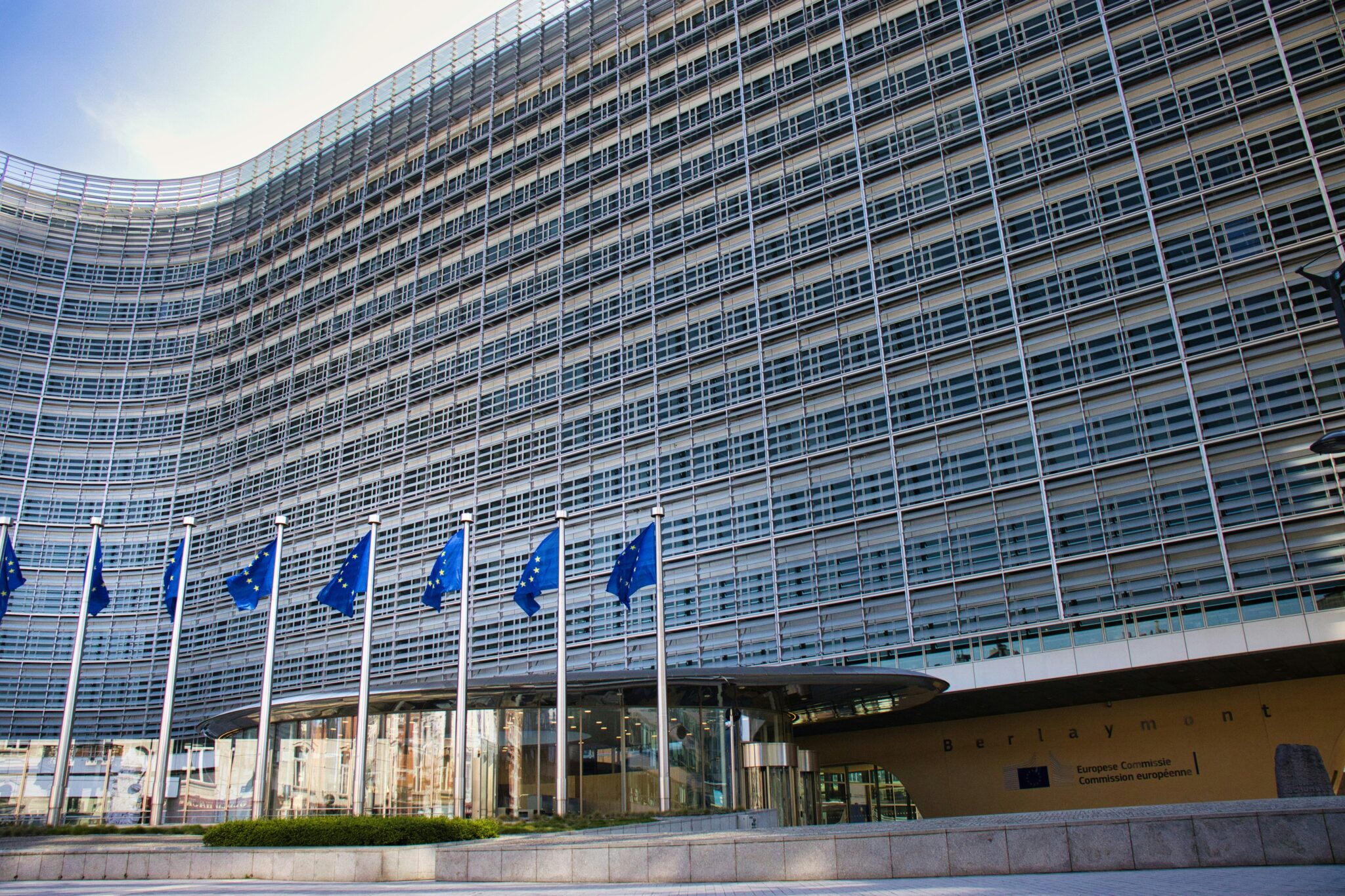
BRUSSELS, May 6 — Brussels has begun the most serious attempt in three decades to dismantle its own bureaucracy. Spurred on by two landmark reports from former Italian prime ministers Enrico Letta and Mario Draghi, all 27 EU national governments jointly agreed in March that deepening the single market is “an urgent, shared responsibility.” The European Commission’s “One Europe, One Market” roadmap, presented at the February 12 leaders’ retreat, commits the bloc to a fully integrated single market by the end of 2027. Maria Luís Albuquerque, the EU’s financial-services commissioner, has set the tone: “There cannot be minor tweaks. We need fundamental changes.” A Commission official involved in the reforms put it more bluntly: “We have to eliminate the crimes of the past five years.”
The numbers driving the urgency are stark. The IMF estimates internal EU barriers are equivalent to tariffs of 44 per cent on goods — three times the US figure of 15 per cent — and a remarkable 110 per cent on services. EU companies dedicate 1.5 times more senior staff to compliance work than US rivals. European industrial electricity costs two to three times what it costs in America or China. The IMF projects the EU’s share of global GDP falling to just 12.91 per cent by 2030, against China’s 20.36 per cent and the US’s 13.86 per cent. The bloc has identified the disease. The question now is whether it can swallow the medicine.
For the first time in a generation, Brussels is treating its own bureaucracy as the problem rather than the solution.
Join The European Business Briefing
New subscribers this quarter are entered into a draw to win a Rolex Submariner. Join 40,000+ founders, investors and executives who read EBM every day.
SubscribeWhat Letta and Draghi Actually Diagnosed
The intellectual foundation for the reform push is two reports. Enrico Letta’s Much More Than a Market, published in April 2024, argued that Europe’s competitive decline is rooted in the failure to integrate financial, energy and electronic communications markets. Mario Draghi’s The Future of European Competitiveness, published in September 2024, diagnosed the productivity gap with the US and China and laid out the structural reforms needed to close it.
Both reports converge on a single uncomfortable conclusion. Europe has 27 different regulatory realities masquerading as a single market. Companies face a “market of 27” rather than the genuinely unified bloc the Treaty of Rome envisaged. The result is that European firms cannot scale, cannot innovate at the pace of their American rivals, and cannot compete on price with their Chinese ones. The €1.7 trillion European private credit market has filled some of the gap left by underdeveloped capital markets, but capital availability is not the same as scale.
The Letta-Draghi consensus is also why Europe’s largest tech CEOs — the heads of ASML, Mistral, Siemens, SAP and four other firms — published a joint op-ed this week demanding regulatory simplification. They are pushing on the door Brussels has just opened.
The “Terrible Ten” and the One Europe, One Market Roadmap
The Commission’s response, the One Europe, One Market framework, focuses on dismantling what it calls the “terrible ten” — the ten regulatory barriers identified as most damaging to the single market. They cover everything from professional qualification recognition across borders to incompatible national rules on services, data transfer and corporate insolvency.
The framework runs across five pillars: regulatory simplification, unified market, trade, digital and energy. Ursula von der Leyen’s framing at the launch was striking. She called for a “deep house cleaning on the acquis” — the body of EU law accumulated since 1957 — and promised “less directives and more regulations” so that the bloc stops generating 27 different national interpretations of the same rule.
The most concrete deliverable is the “28th regime” — formally proposed as EU Inc. It would create an optional corporate framework allowing companies to register and operate under a single set of EU-wide rules rather than navigating 27 national systems. Online incorporation within 48 hours at a cost of under €100. Standardised insolvency procedures. Application of the “once-only principle” so businesses do not have to submit the same information to multiple authorities. If it works, EU Inc would do for European corporate law what the euro did for European payments.
The Politics That Could Wreck It
The risk is that the reforms collide with member-state politics. Two examples make the danger concrete.
The first is the proposed merger between Germany’s Commerzbank and Italy’s UniCredit, voraciously opposed by Berlin despite obvious cross-border banking benefits. About 75 per cent of European banks’ lending portfolios are still invested in their home markets — a structure that would not survive a serious capital markets union, but which national regulators continue to protect. The Commission has asked the competition commissioner to “modernise EU competition policy” to allow European champions to emerge. National governments are not yet willing to let go.
The second is energy. European industrial electricity is structurally more expensive than American or Chinese alternatives, and the Iran war’s effect on UK borrowing costs shows how quickly geopolitical shocks can compound the underlying gap. The 2024 electricity market design reform helped at the margins. The full reform — completion of the energy union, integration of national grids, harmonisation of carbon pricing — has been promised since 2014 and has not yet happened.
Mario Draghi’s recommendations on competition policy faced precisely this problem. Member states rhetorically endorse single market deepening, then block individual mergers and reforms when they threaten national champions. The question for 2026 and 2027 is whether the political will generated by the Letta-Draghi reports can survive contact with national politics.
Why This Matters for European Business
For European corporates, the reform agenda is the most consequential change in the operating environment since the introduction of the euro. Three things are worth tracking.
First, the 28th regime. If EU Inc launches in usable form by end-2026, every European company with multi-country operations should evaluate whether to convert. The compliance and corporate-services savings are material. Early movers will set the standard.
Second, the merger pipeline. If competition policy genuinely loosens, expect a wave of cross-border consolidation in banking, telecoms, defence and energy. The same logic that made the European startup acquisition wave gather pace through 2025 applies at the corporate level: scale, not specialisation, is now the strategic priority.
Third, the regulatory simplification timeline. The first omnibus simplification package was tabled in February 2026. If subsequent packages follow at quarterly intervals through 2027, the cumulative effect on European corporate compliance costs could approach €40 billion annually by Draghi’s own estimate. That is a meaningful tailwind for European margins, particularly for European banks already projected to deliver a €30 billion net interest income rebound through to 2027.
The wider strategic point is that Brussels is, for the first time in years, working with European business rather than against it. The seven tech CEOs’ op-ed this week was a constructive intervention into a process the Commission has invited them to shape — not a hostile attack on a regulatory regime determined to ignore them. The signal for European boards is to engage now, while the door is open. Reform windows in Brussels do not stay open long.
The next test arrives at the European Council meeting later this year, where the Commission’s first batch of simplification proposals goes for member-state approval. If the Council waters them down, Brussels will have proved its critics right. If it does not, the most ambitious single-market reform agenda since 1992 begins to take shape — and the capital rotation already underway into European stocks gets the structural underpinning it currently lacks.
Related Analysis